Division of Gastroenterology and Hepatology, University Hospital Zurich, Zurich, Switzerland.
PLoS One. 2013 Aug 26;8(8):e72384. doi: 10.1371/journal.pone.0072384. eCollection 2013.
Variations within the gene locus encoding protein tyrosine phosphatase non-receptor type 22 (PTPN22) are associated with the risk to develop inflammatory bowel disease (IBD). PTPN22 is involved in the regulation of T- and B-cell receptor signaling, but although it is highly expressed in innate immune cells, its function in other signaling pathways is less clear. Here, we study whether loss of PTPN22 controls muramyl-dipeptide (MDP)-induced signaling and effects in immune cells.
MATERIAL & METHODS: Stable knockdown of PTPN22 was induced in THP-1 cells by shRNA transduction prior to stimulation with the NOD2 ligand MDP. Cells were analyzed for signaling protein activation and mRNA expression by Western blot and quantitative PCR; cytokine secretion was assessed by ELISA, autophagosome induction by Western blot and immunofluorescence staining. Bone marrow derived dendritic cells (BMDC) were obtained from PTPN22 knockout mice or wild-type animals.
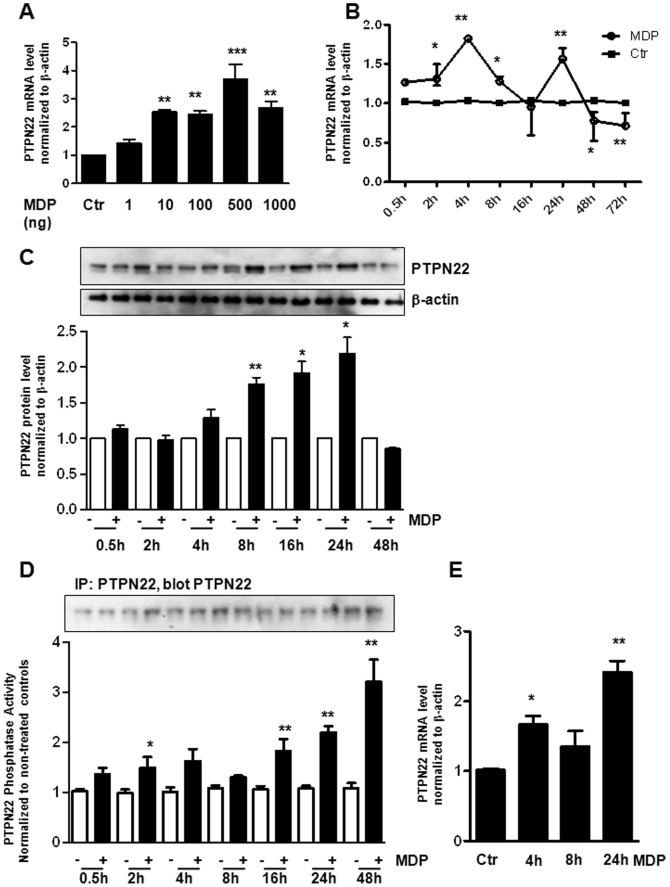
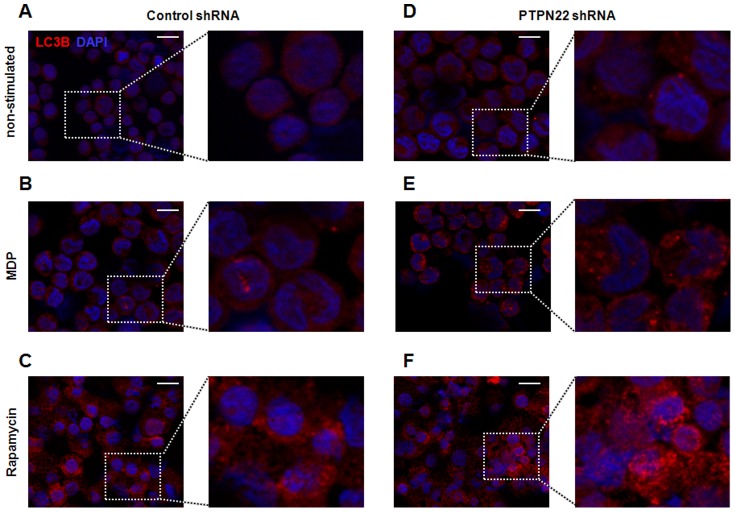
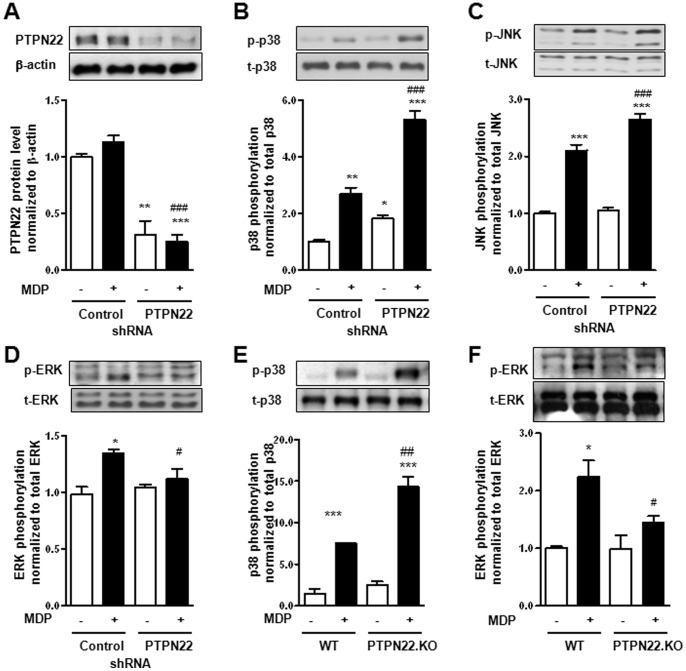
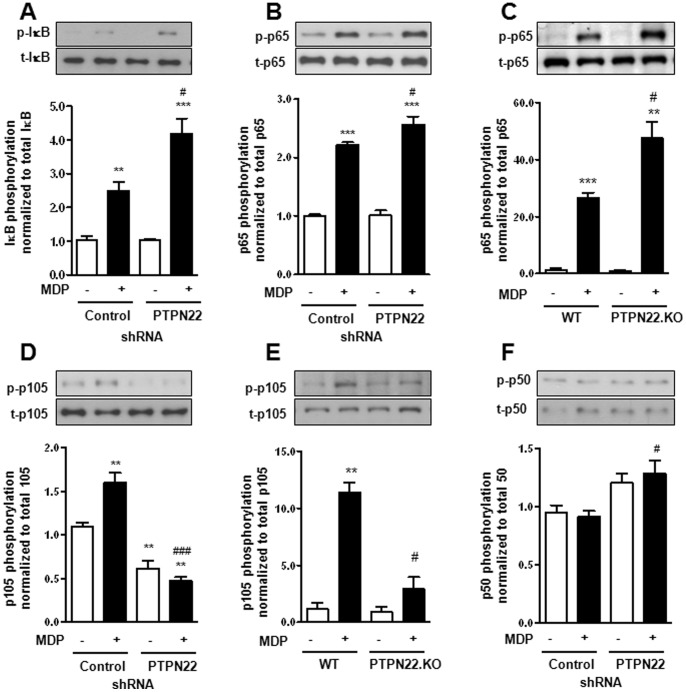
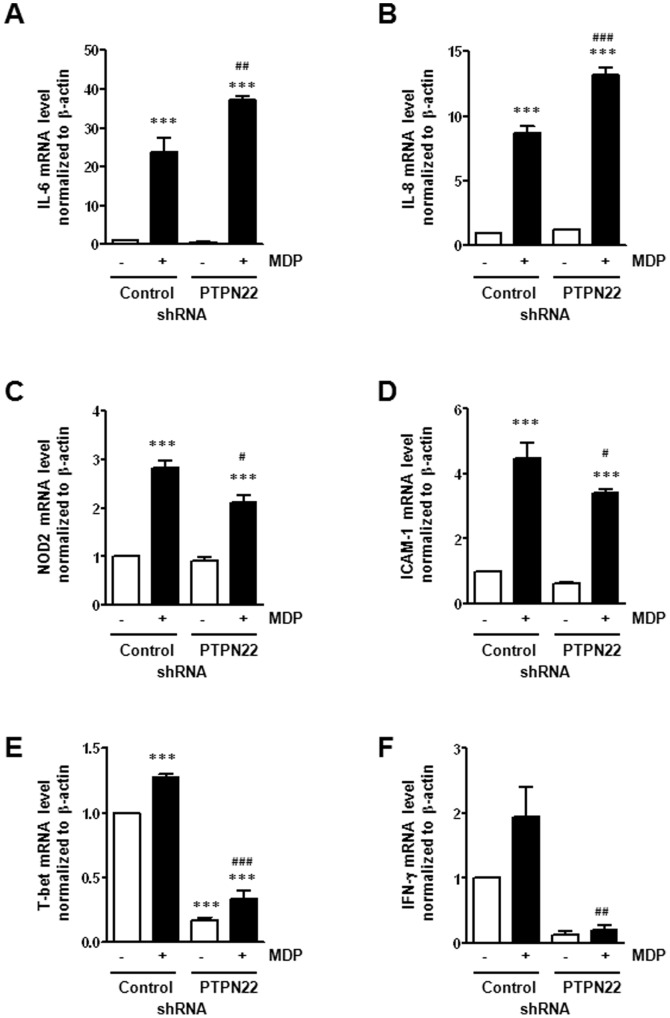
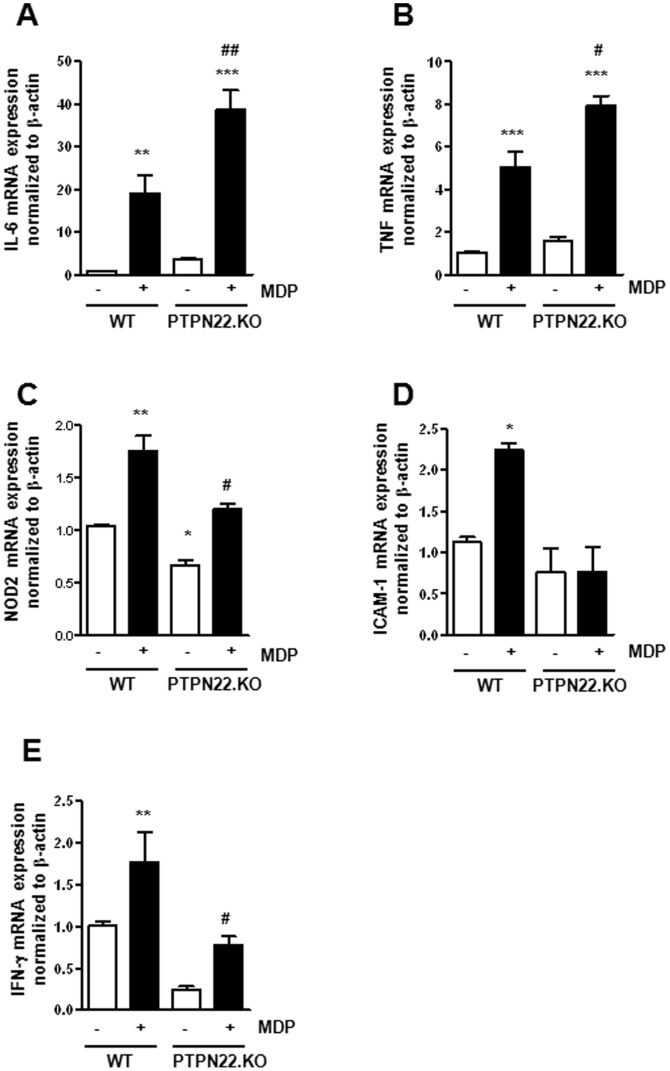
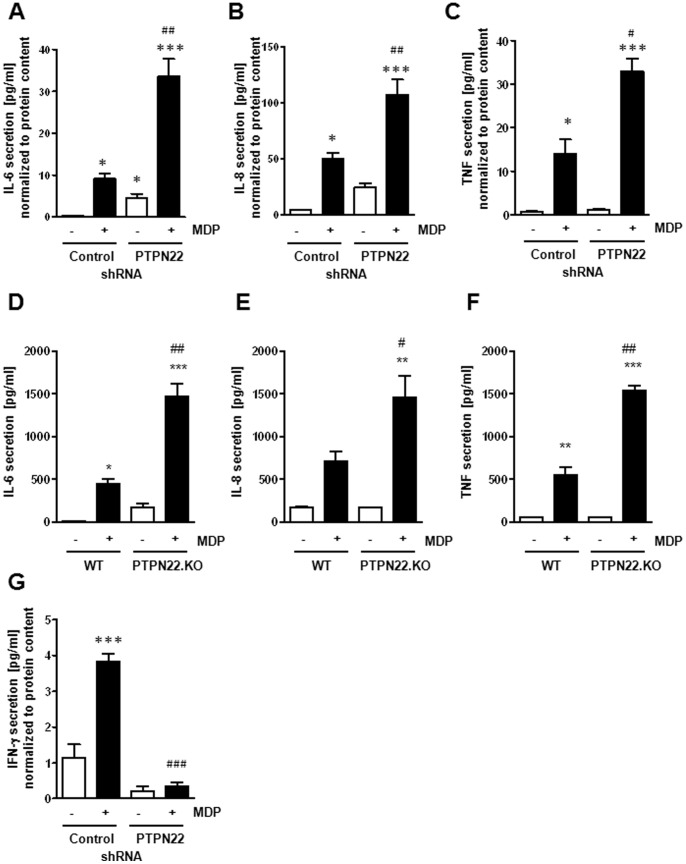
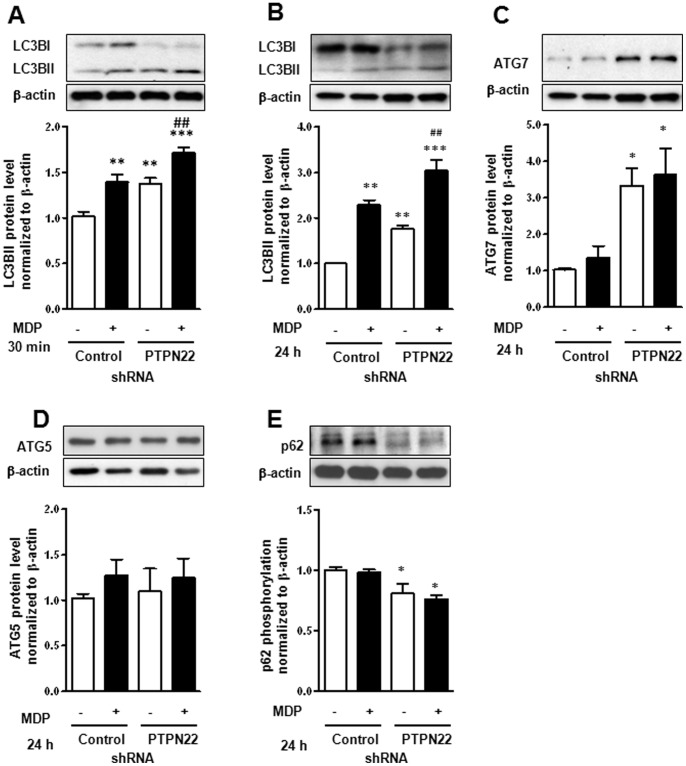
MDP-treatment induced PTPN22 expression and activity in human and mouse cells. Knockdown of PTPN22 enhanced MDP-induced activation of mitogen-activated protein kinase (MAPK)-isoforms p38 and c-Jun N-terminal kinase as well as canonical NF-κB signaling molecules in THP-1 cells and BMDC derived from PTPN22 knockout mice. Loss of PTPN22 enhanced mRNA levels and secretion of interleukin (IL)-6, IL-8 and TNF in THP-1 cells and PTPN22 knockout BMDC. Additionally, loss of PTPN22 resulted in increased, MDP-mediated autophagy in human and mouse cells.
Our data demonstrate that PTPN22 controls NOD2 signaling, and loss of PTPN22 renders monocytes more reactive towards bacterial products, what might explain the association of PTPN22 variants with IBD pathogenesis.
编码蛋白酪氨酸磷酸酶非受体型 22(PTPN22)的基因座内的变异与发生炎症性肠病(IBD)的风险相关。PTPN22 参与 T 和 B 细胞受体信号的调节,但尽管它在先天免疫细胞中高度表达,但它在其他信号通路中的功能尚不清楚。在这里,我们研究了 PTPN22 的缺失是否控制了 muramyl-dipeptide(MDP)诱导的信号转导和免疫细胞中的作用。
通过 shRNA 转导在 THP-1 细胞中稳定敲低 PTPN22,然后用 NOD2 配体 MDP 刺激。通过 Western blot 和定量 PCR 分析细胞中信号蛋白的激活和 mRNA 表达;通过 ELISA 评估细胞因子分泌,通过 Western blot 和免疫荧光染色评估自噬体诱导。从 PTPN22 敲除小鼠或野生型动物中获得骨髓来源的树突状细胞(BMDC)。
MDP 处理诱导人源和鼠源细胞中的 PTPN22 表达和活性。在 THP-1 细胞和 PTPN22 敲除小鼠来源的 BMDC 中,敲低 PTPN22 增强了 MDP 诱导的丝裂原活化蛋白激酶(MAPK)同工型 p38 和 c-Jun N-末端激酶以及经典 NF-κB 信号分子的激活。PTPN22 缺失增强了 THP-1 细胞和 PTPN22 敲除 BMDC 中白细胞介素(IL)-6、IL-8 和 TNF 的 mRNA 水平和分泌。此外,PTPN22 的缺失导致 MDP 介导的自噬增加,无论是在人源细胞还是鼠源细胞中。
我们的数据表明,PTPN22 控制 NOD2 信号转导,PTPN22 的缺失使单核细胞对细菌产物更具反应性,这可能解释了 PTPN22 变体与 IBD 发病机制的关联。