Laboratory of Fruit Quality Biology/The State Agriculture Ministry Laboratory of Horticultural Plant Growth, Development and Quality Improvement, Zhejiang University, Zijingang Campus, Hangzhou 310058, China.
Int J Mol Sci. 2013 Aug 29;14(9):17744-66. doi: 10.3390/ijms140917744.
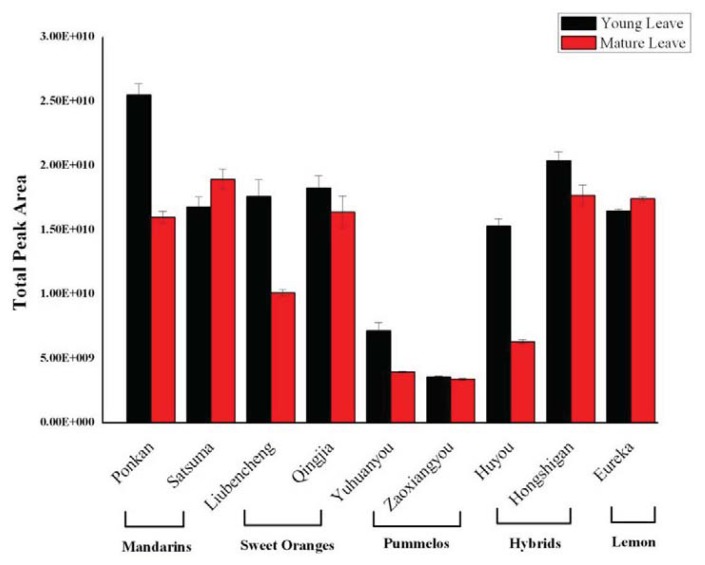
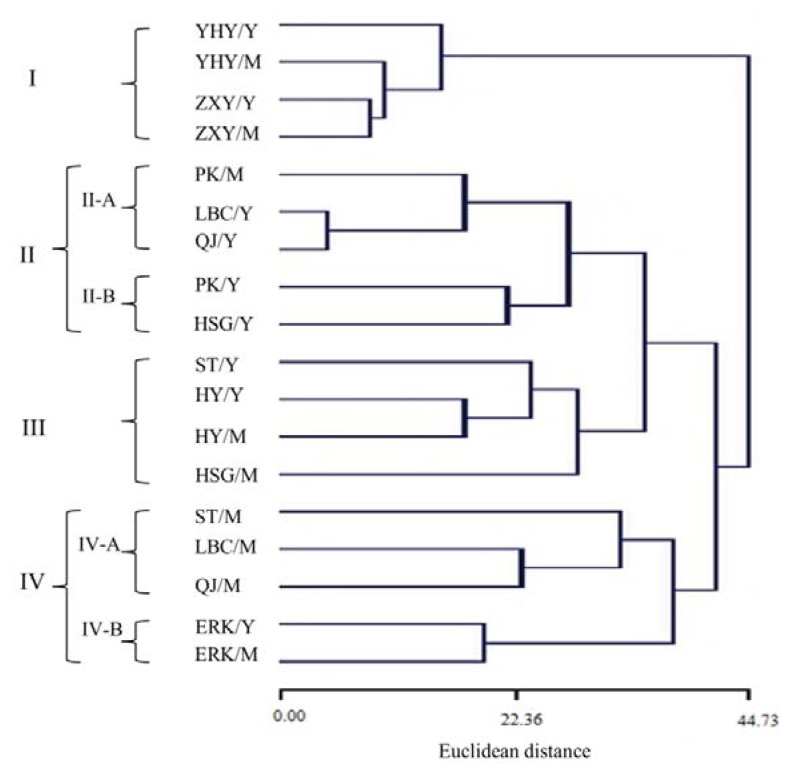
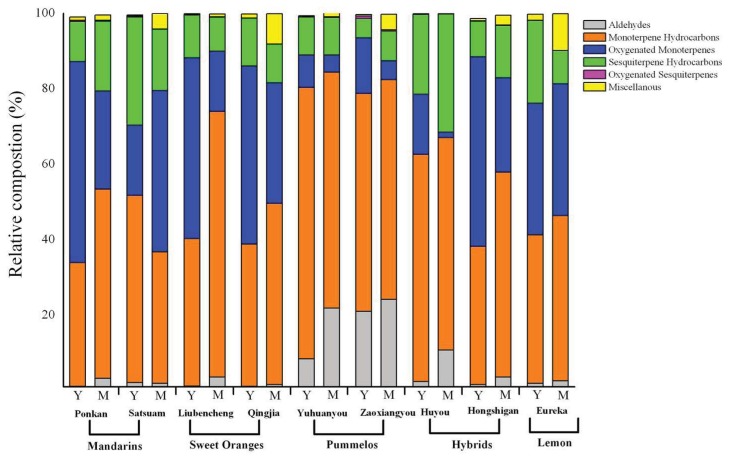
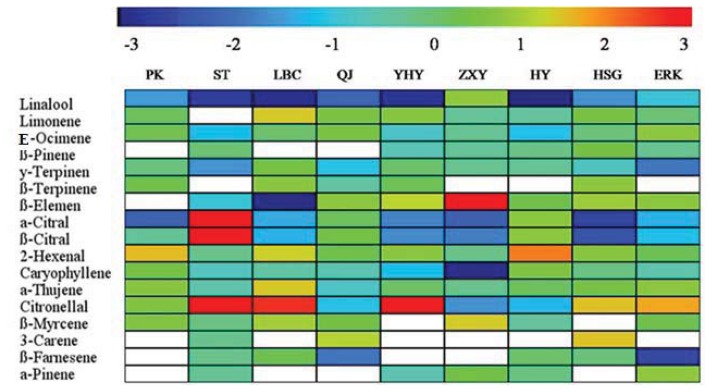
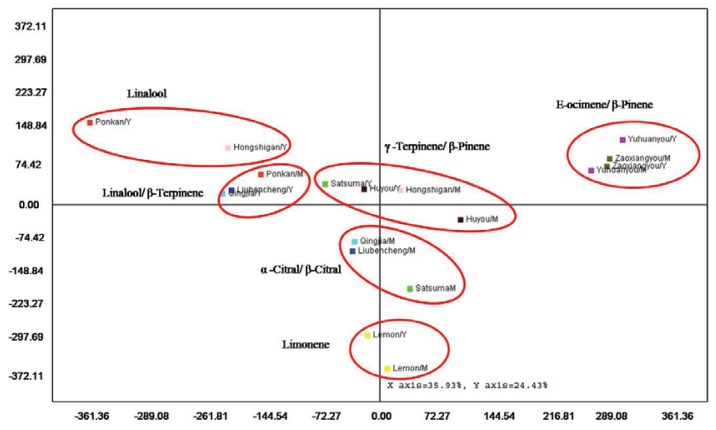
Major volatiles from young and mature leaves of different citrus types were analyzed by headspace-solid phase microextraction (HS-SPME)-GC-MS. A total of 123 components were identified form nine citrus cultivars, including nine aldehydes, 19 monoterpene hydrocarbons, 27 oxygenated monoterpenes, 43 sesquiterpene hydrocarbons, eight oxygenated sesquiterpenes, two ketones, six esters and nine miscellaneous. Young leaves produced higher amounts of volatiles than mature leaves in most cultivars. The percentage of aldehyde and monoterpene hydrocarbons increased, whilst oxygenated monoterpenes and sesquiterpenes compounds decreased during leaf development. Linalool was the most abundant compound in young leaves, whereas limonene was the chief component in mature ones. Notably, linalool content decreased, while limonene increased, during leaf development in most cultivars. Leaf volatiles were also affected by genetic types. A most abundant volatile in one or several genotypes can be absent in another one(s), such as limonene in young leaves of lemon vs. Satsuma mandarin and β-terpinene in mature leaves of three genotypes vs. the other four. Compositional data was subjected to multivariate statistical analysis, and variations in leaf volatiles were identified and clustered into six groups. This research determining the relationship between production of major volatiles from different citrus varieties and leaf stages could be of use for industrial and culinary purposes.
采用顶空固相微萃取(HS-SPME)-GC-MS 对不同柑橘类型的幼叶和成熟叶中的主要挥发物进行了分析。从 9 个柑橘品种中鉴定出 123 种成分,包括 9 种醛类、19 种单萜烃、27 种含氧单萜、43 种倍半萜烃、8 种含氧倍半萜、2 种酮类、6 种酯类和 9 种杂类。在大多数品种中,幼叶产生的挥发物多于成熟叶。随着叶片的发育,醛类和单萜烃的比例增加,而含氧单萜和倍半萜烃化合物的比例下降。芳樟醇是幼叶中含量最丰富的化合物,而柠檬烯是成熟叶中的主要成分。值得注意的是,在大多数品种中,随着叶片的发育,芳樟醇的含量下降,而柠檬烯的含量增加。叶片挥发物也受到遗传类型的影响。一个或几个基因型中含量最丰富的挥发性化合物可能在另一个基因型中不存在,例如柠檬幼叶中的柠檬烯和 Satsuma 蜜橘中的柠檬烯,以及 3 个基因型成熟叶中的β-蒎烯和其他 4 个基因型中的β-蒎烯。对组成数据进行了多元统计分析,确定了叶片挥发物的变化,并将其聚类为 6 组。本研究确定了不同柑橘品种和叶片发育阶段主要挥发物产生的关系,可为工业和烹饪目的提供参考。