1] The Mitochondrial Genetics Group, Centre for Genetic Diseases, Monash Institute of Medical Research, Monash University, 27-31 Wright Street, Clayton, Victoria 3168, Australia [2] Molecular Basis of Metabolic Disease, Division of Metabolic and Vascular Health, Warwick Medical School, The University of Warwick, Clifford Bridge Road, Coventry, CV2 2DX, UK.
Cell Death Differ. 2013 Dec;20(12):1644-53. doi: 10.1038/cdd.2013.115. Epub 2013 Aug 30.
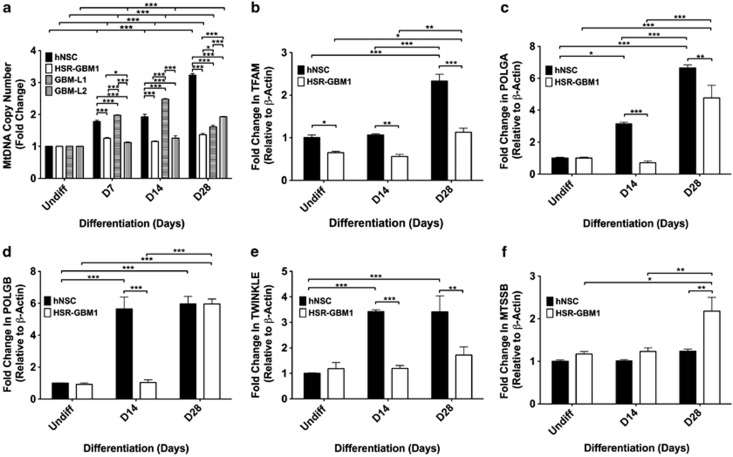
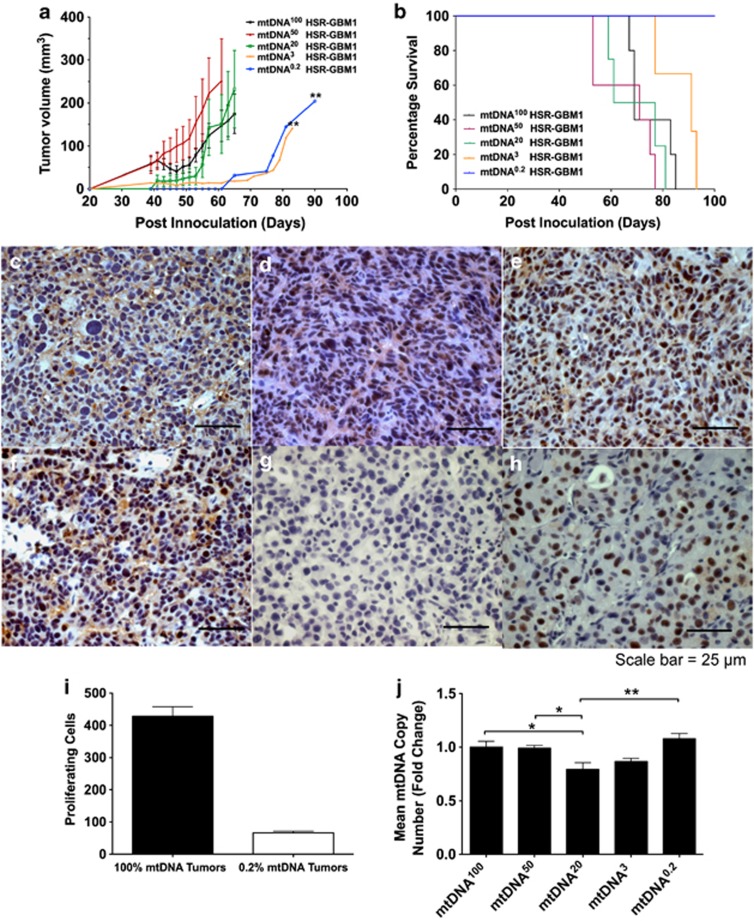
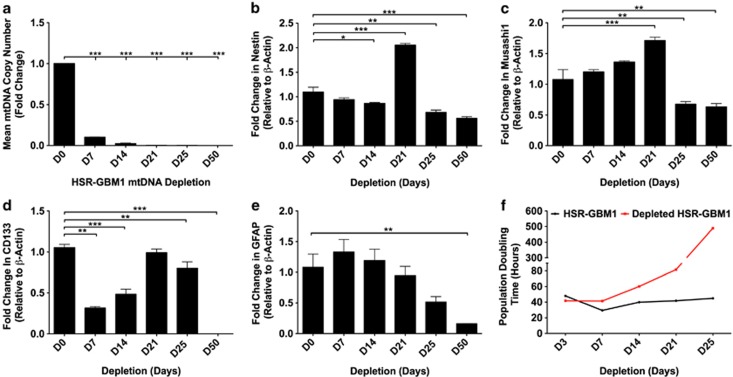
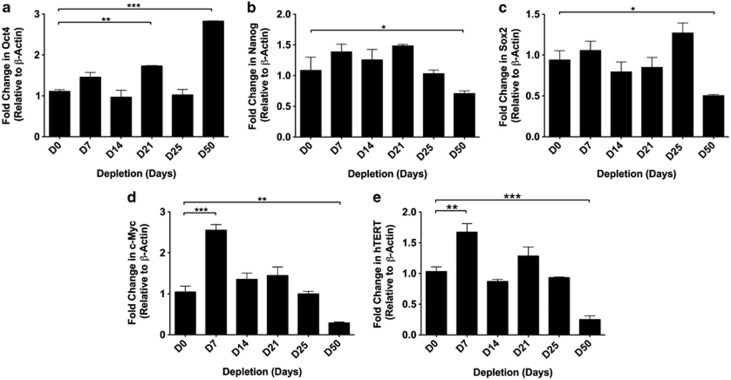
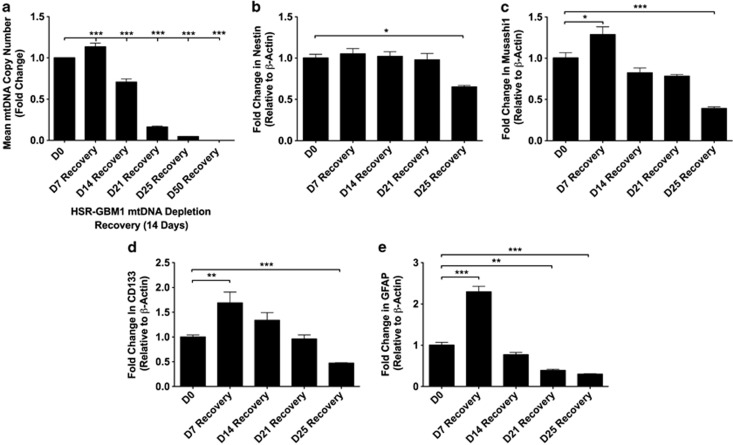
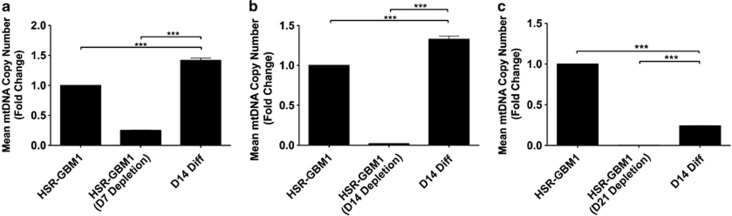
As stem cells undergo differentiation, mitochondrial DNA (mtDNA) copy number is strictly regulated in order that specialized cells can generate appropriate levels of adenosine triphosphate (ATP) through oxidative phosphorylation (OXPHOS) to undertake their specific functions. It is not understood whether tumor-initiating cells regulate their mtDNA in a similar manner or whether mtDNA is essential for tumorigenesis. We show that human neural stem cells (hNSCs) increased their mtDNA content during differentiation in a process that was mediated by a synergistic relationship between the nuclear and mitochondrial genomes and results in increased respiratory capacity. Differentiating multipotent glioblastoma cells failed to match the expansion in mtDNA copy number, patterns of gene expression and increased respiratory capacity observed in hNSCs. Partial depletion of glioblastoma cell mtDNA rescued mtDNA replication events and enhanced cell differentiation. However, prolonged depletion resulted in impaired mtDNA replication, reduced proliferation and induced the expression of early developmental and pro-survival markers including POU class 5 homeobox 1 (OCT4) and sonic hedgehog (SHH). The transfer of glioblastoma cells depleted to varying degrees of their mtDNA content into immunocompromised mice resulted in tumors requiring significantly longer to form compared with non-depleted cells. The number of tumors formed and the time to tumor formation was relative to the degree of mtDNA depletion. The tumors derived from mtDNA depleted glioblastoma cells recovered their mtDNA copy number as part of the tumor formation process. These outcomes demonstrate the importance of mtDNA to the initiation and maintenance of tumorigenesis in glioblastoma multiforme.
随着干细胞的分化,线粒体 DNA(mtDNA)的拷贝数受到严格调控,以便专门的细胞能够通过氧化磷酸化(OXPHOS)产生适当水平的三磷酸腺苷(ATP),从而发挥其特定功能。目前尚不清楚肿瘤起始细胞是否以类似的方式调节其 mtDNA,或者 mtDNA 是否对肿瘤发生至关重要。我们表明,人神经干细胞(hNSC)在分化过程中增加了其 mtDNA 含量,这一过程是由核基因组和线粒体基因组之间的协同关系介导的,导致呼吸能力增加。多能性胶质母细胞瘤细胞在分化过程中未能匹配 hNSC 中观察到的 mtDNA 拷贝数增加、基因表达模式和呼吸能力增加。胶质母细胞瘤细胞 mtDNA 的部分耗竭挽救了 mtDNA 复制事件,并增强了细胞分化。然而,长期耗竭导致 mtDNA 复制受损、增殖减少,并诱导早期发育和生存相关标志物的表达,包括 POU 类 5 同源框 1(OCT4)和 sonic hedgehog(SHH)。将 mtDNA 含量不同程度耗竭的胶质母细胞瘤细胞转移到免疫缺陷小鼠中,导致肿瘤形成所需的时间明显长于非耗竭细胞。形成的肿瘤数量和肿瘤形成时间与 mtDNA 耗竭的程度有关。来自 mtDNA 耗竭的胶质母细胞瘤细胞的肿瘤在肿瘤形成过程中恢复了其 mtDNA 拷贝数。这些结果表明 mtDNA 对胶质母细胞瘤多形性肿瘤发生和维持的重要性。