Department of Life Sciences, Imperial College London, Silwood Park, Ascot, SL5 7PY, United Kingdom; School of Natural Sciences, University of Stirling, Stirling, FK9 4LA, United Kingdom.
Conserv Biol. 2013 Dec;27(6):1344-54. doi: 10.1111/cobi.12120. Epub 2013 Aug 23.
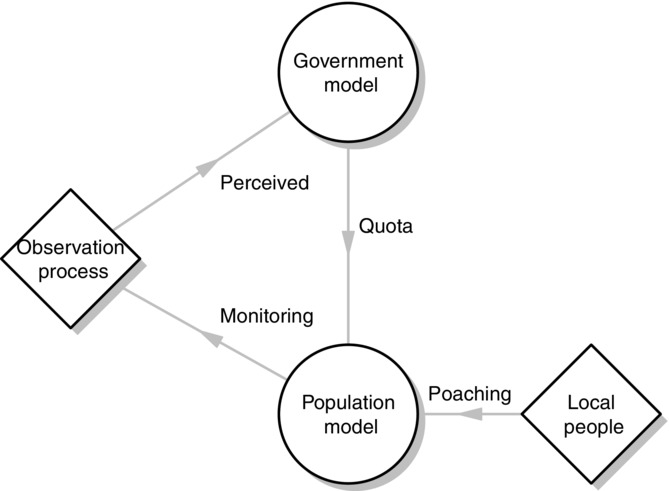
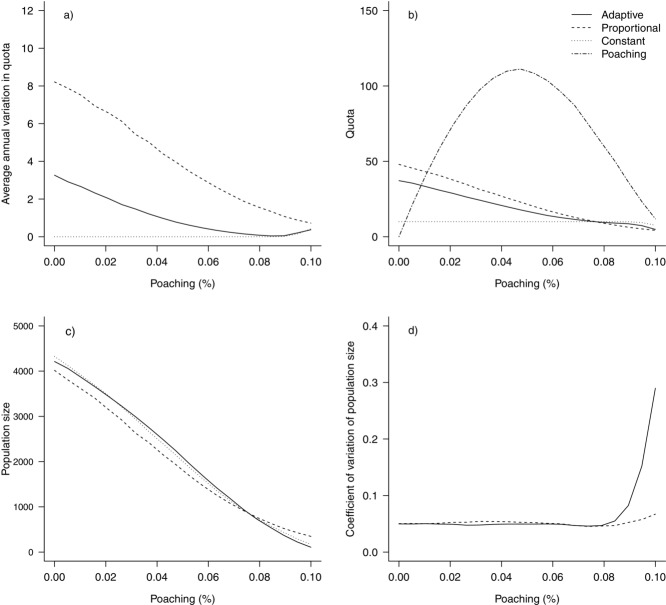
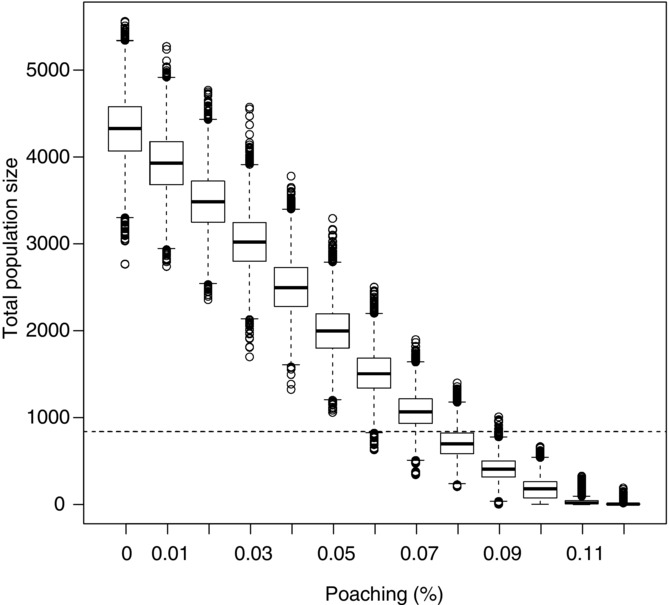
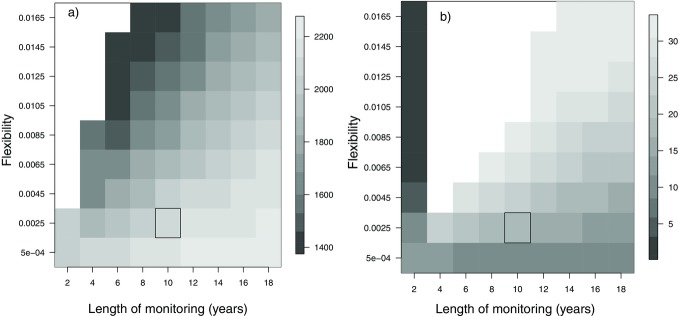
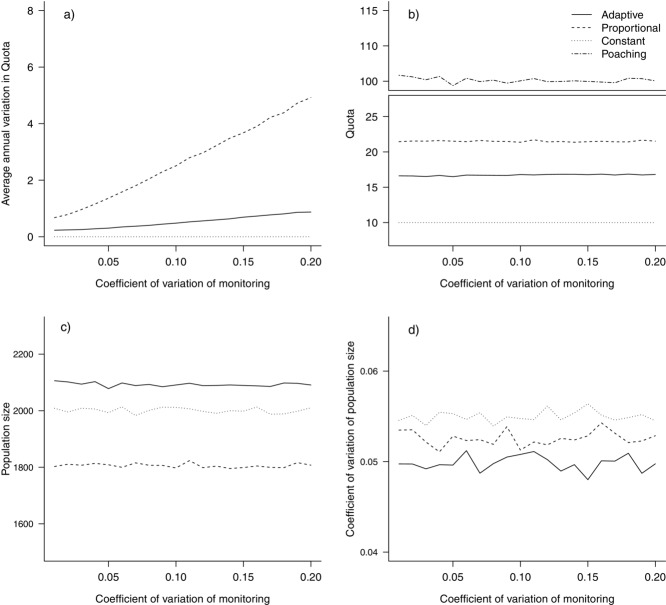
Conservation scientists are increasingly focusing on the drivers of human behavior and on the implications of various sources of uncertainty for management decision making. Trophy hunting has been suggested as a conservation tool because it gives economic value to wildlife, but recent examples show that overharvesting is a substantial problem and that data limitations are rife. We use a case study of trophy hunting of an endangered antelope, the mountain nyala (Tragelaphus buxtoni), to explore how uncertainties generated by population monitoring and poaching interact with decision making by 2 key stakeholders: the safari companies and the government. We built a management strategy evaluation model that encompasses the population dynamics of mountain nyala, a monitoring model, and a company decision making model. We investigated scenarios of investment into antipoaching and monitoring by governments and safari companies. Harvest strategy was robust to the uncertainty in the population estimates obtained from monitoring, but poaching had a much stronger effect on quota and sustainability. Hence, reducing poaching is in the interests of companies wishing to increase the profitability of their enterprises, for example by engaging community members as game scouts. There is a threshold level of uncertainty in the population estimates beyond which the year-to-year variation in the trophy quota prevented planning by the safari companies. This suggests a role for government in ensuring that a baseline level of population monitoring is carried out such that this level is not exceeded. Our results illustrate the importance of considering the incentives of multiple stakeholders when designing frameworks for resource use and when designing management frameworks to address the particular sources of uncertainty that affect system sustainability most heavily. Incentivando el Monitoreo y el Cumplimiento en la Caza de Trofeos.
保护科学家越来越关注人类行为的驱动因素,以及各种不确定性来源对管理决策的影响。狩猎 trophy 被认为是一种保护工具,因为它赋予野生动物经济价值,但最近的例子表明,过度捕捞是一个严重的问题,而且数据限制比比皆是。我们使用一项关于濒危羚羊——山地捻角羚(Tragelaphus buxtoni)狩猎 trophy 的案例研究,来探讨人口监测和偷猎产生的不确定性如何与两个关键利益相关者(狩猎旅行公司和政府)的决策相互作用。我们构建了一个管理策略评估模型,其中包括山地捻角羚的种群动态、监测模型和公司决策模型。我们研究了政府和狩猎旅行公司投资于反偷猎和监测的情景。收获策略对监测获得的种群估计不确定性具有鲁棒性,但偷猎对配额和可持续性的影响要大得多。因此,减少偷猎符合希望提高企业盈利能力的公司的利益,例如通过让社区成员担任猎场看守来增加收入。在监测中获得的种群估计存在一个不确定性阈值,超过这个阈值,狩猎 trophy 的配额就会导致每年的变化,从而使狩猎旅行公司无法进行规划。这表明政府在确保开展基线水平的人口监测方面发挥作用,以避免超过这一水平。我们的研究结果表明,在设计资源利用框架和制定管理框架以解决最严重影响系统可持续性的特定不确定性来源时,考虑多个利益相关者的激励措施非常重要。