Department of Pathology, Louisiana State University Health Sciences Center-Shreveport, Shreveport, LA.
Diabetes. 2014 Jan;63(1):270-81. doi: 10.2337/db13-0890. Epub 2013 Sep 5.
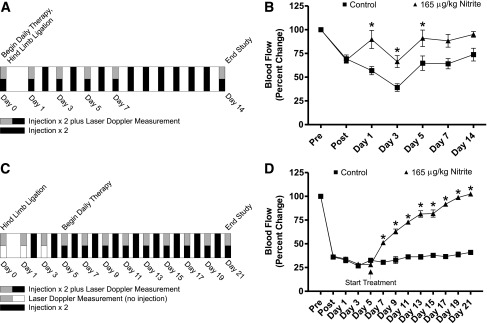
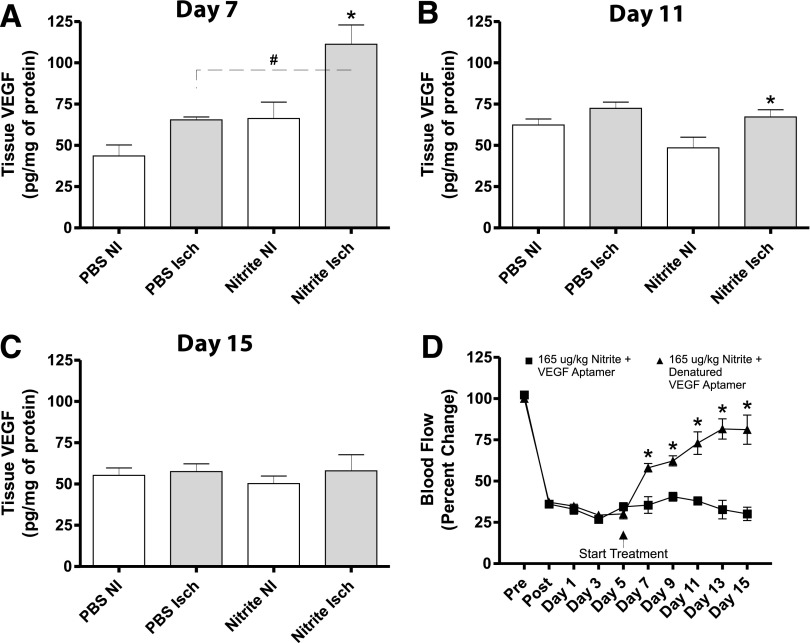
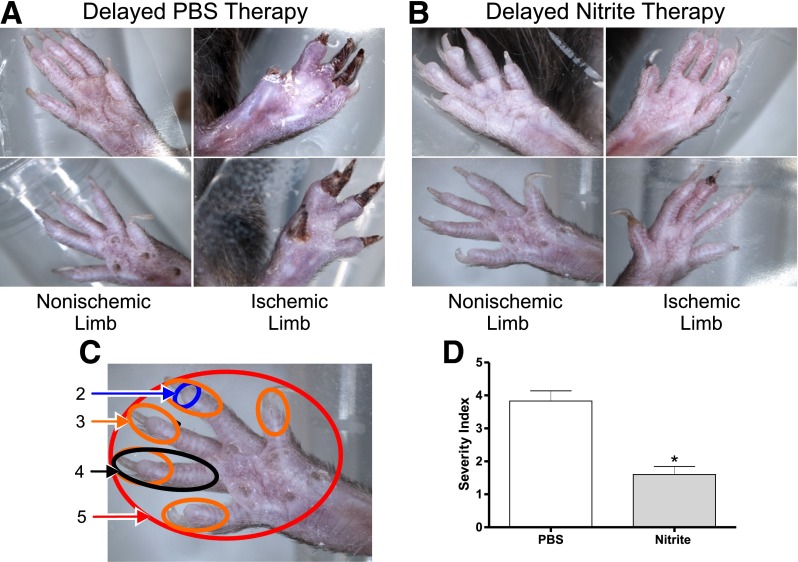
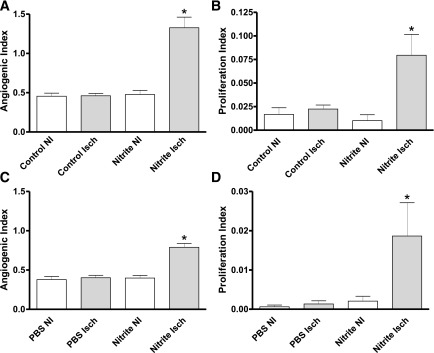
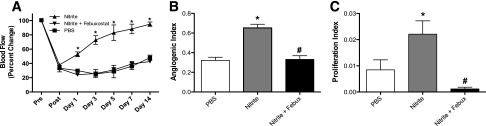
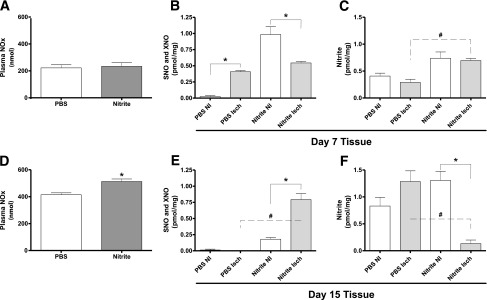
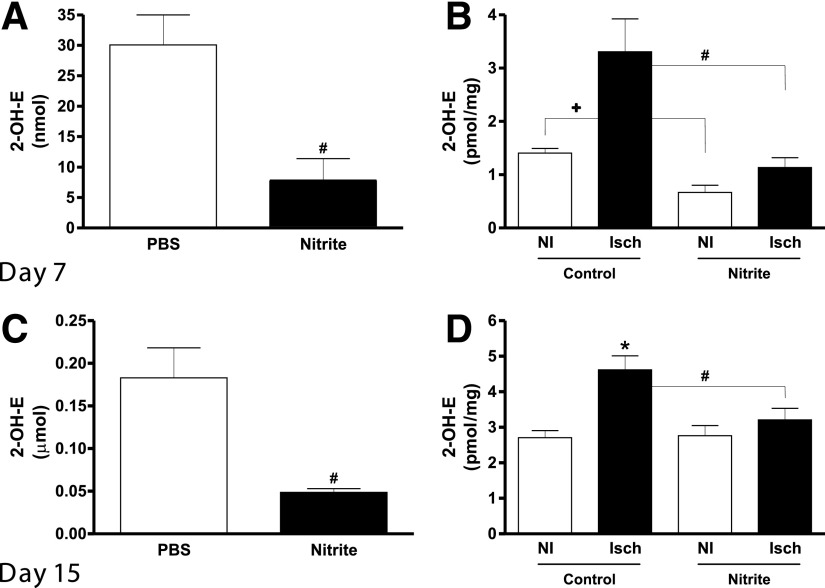
Nitrite anion has been demonstrated to be a prodrug of nitric oxide (NO) with positive effects on tissue ischemia/reperfusion injury, cytoprotection, and vasodilation. However, effects of nitrite anion therapy for ischemic tissue vascular remodeling during diabetes remain unknown. We examined whether sodium nitrite therapy altered ischemic revascularization in BKS-Lepr(db/db) mice subjected to permanent unilateral femoral artery ligation. Sodium nitrite therapy completely restored ischemic hind limb blood flow compared with nitrate or PBS therapy. Importantly, delayed nitrite therapy 5 days after ischemia restored ischemic limb blood flow in aged diabetic mice. Restoration of blood flow was associated with increases in ischemic tissue angiogenesis activity and cell proliferation. Moreover, nitrite but not nitrate therapy significantly prevented ischemia-mediated tissue necrosis in aged mice. Nitrite therapy significantly increased ischemic tissue vascular endothelial growth factor (VEGF) protein expression that was essential for nitrite-mediated reperfusion of ischemic hind limbs. Nitrite significantly increased ischemic tissue NO bioavailability along with concomitant reduction of superoxide formation. Lastly, nitrite treatment also significantly stimulated hypoxic endothelial cell proliferation and migration in the presence of high glucose in an NO/VEGF-dependent manner. These results demonstrate that nitrite therapy effectively stimulates ischemic tissue vascular remodeling in the setting of metabolic dysfunction that may be clinically useful.
亚硝酸盐阴离子已被证明是一氧化氮 (NO) 的前体药物,对组织缺血/再灌注损伤、细胞保护和血管舒张有积极作用。然而,亚硝酸盐阴离子治疗糖尿病缺血组织血管重塑的效果尚不清楚。我们研究了在接受永久性单侧股动脉结扎的 BKS-Lepr(db/db) 小鼠中,亚硝酸盐钠治疗是否改变了缺血组织的血管再形成。与硝酸盐或 PBS 治疗相比,亚硝酸盐钠治疗完全恢复了缺血后肢的血流。重要的是,缺血后 5 天延迟亚硝酸盐治疗恢复了老年糖尿病小鼠的缺血肢体血流。血流恢复与缺血组织血管生成活性和细胞增殖的增加有关。此外,亚硝酸盐而不是硝酸盐治疗显著预防了老年小鼠的缺血介导的组织坏死。亚硝酸盐治疗显著增加了缺血组织血管内皮生长因子 (VEGF) 蛋白的表达,这对亚硝酸盐介导的缺血后肢再灌注至关重要。亚硝酸盐显著增加了缺血组织的 NO 生物利用度,同时减少了超氧化物的形成。最后,亚硝酸盐治疗还以依赖于 NO/VEGF 的方式显著刺激高糖存在下缺氧内皮细胞的增殖和迁移。这些结果表明,亚硝酸盐治疗在代谢功能障碍的情况下有效刺激缺血组织血管重塑,这在临床上可能是有用的。