Scientific Research Center, Xinhua Hospital, Shanghai JiaoTong University School of Medicine, Shanghai, PR China.
PLoS One. 2013 Aug 29;8(8):e72515. doi: 10.1371/journal.pone.0072515. eCollection 2013.
To determine the pathogenesis of a patient born with congenital heart defects, who had appeared normal in prenatal screening.
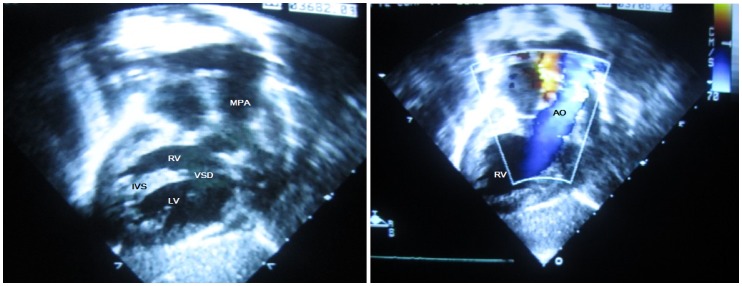
In routine prenatal screening, G-banding was performed to analyse the karyotypes of the family and fluorescence in situ hybridization was used to investigate the 22q11.2 deletion in the fetus. After birth, the child was found to be suffering from heart defects by transthoracic echocardiography. In the following study, sequencing was used to search for potential mutations in pivotal genes. SNP-array was employed for fine mapping of the aberrant region and quantitative real-time PCR was used to confirm the results. Furthermore, other patients with a similar phenotype were screened for the same genetic variations. To compare with a control, these variations were also assessed in the general population.
The child and his mother each had a region that was deleted in the beta-defensin repeats, which are usually duplicated in the general population. Besides, the child carried a SOX7-gene duplication. While this duplication was not detected in his mother, it was found in two other patients with cardiac defects who also had the similar deletion in the beta-defensin repeats.
The congenital heart defects of the child were probably caused by a SOX7-gene duplication, which may be a consequence of the partial haplotype of beta-defensin regions at 8p23.1. To our knowledge, this is the first congenital heart defect case found to have the haplotype of beta-defensin and the duplication of SOX7.
探究一名患有先天性心脏缺陷患儿的发病机制,该患儿在产前筛查中表现正常。
在常规产前筛查中,对家系进行 G 显带分析,并采用荧光原位杂交技术检测胎儿 22q11.2 缺失情况。患儿出生后,经胸超声心动图检查发现存在心脏缺陷。随后,通过测序技术在关键基因中寻找潜在的突变。利用 SNP 芯片对异常区域进行精细定位,并采用实时定量 PCR 对结果进行验证。此外,还对具有类似表型的其他患者进行了相同遗传变异的筛查。为了与对照组进行比较,还在普通人群中评估了这些变异。
患儿及其母亲各有一个区域缺失了通常在人群中重复出现的β防御素重复序列。此外,患儿携带 SOX7 基因重复。虽然其母亲未检测到该重复,但在另外两名患有心脏缺陷的患者中发现了该重复,这两名患者也存在β防御素重复序列的类似缺失。
患儿的先天性心脏缺陷可能是由 SOX7 基因重复引起的,这可能是 8p23.1 处β防御素区域部分单倍型的结果。据我们所知,这是首例发现β防御素单倍型和 SOX7 基因重复的先天性心脏缺陷病例。