Canadian Institute for Advanced Research and Vancouver School of Economics, University of British Columbia, Vancouver, British Columbia, Canada.
PLoS One. 2013 Sep 3;8(9):e72754. doi: 10.1371/journal.pone.0072754. eCollection 2013.
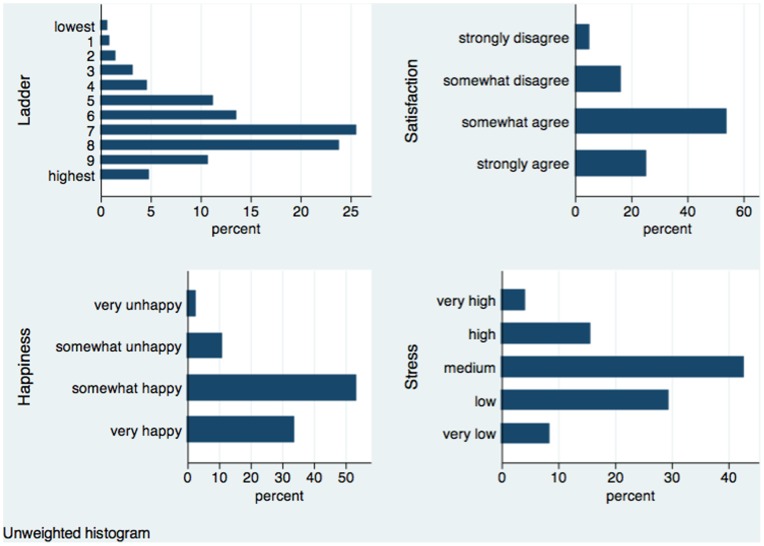
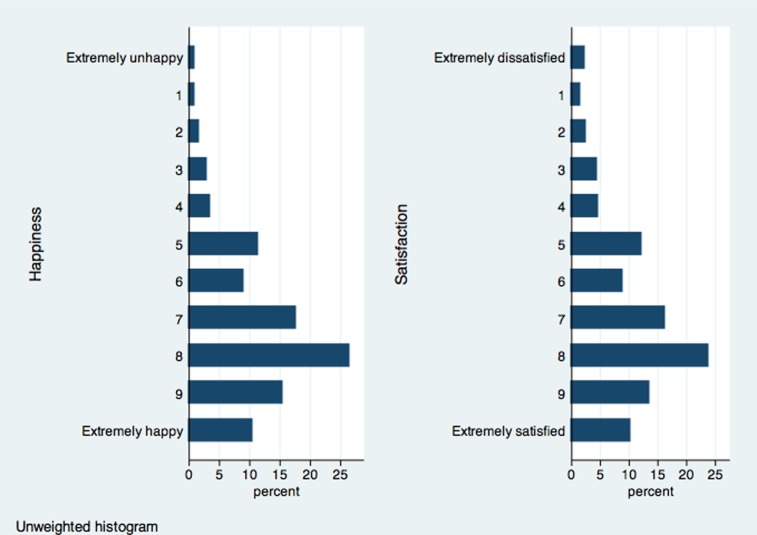
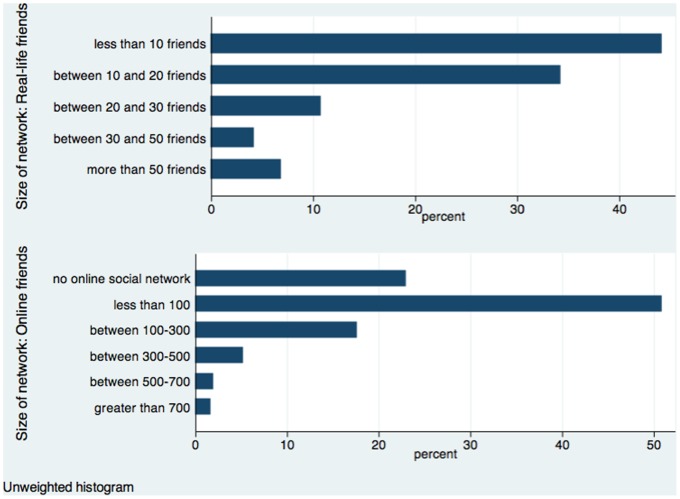
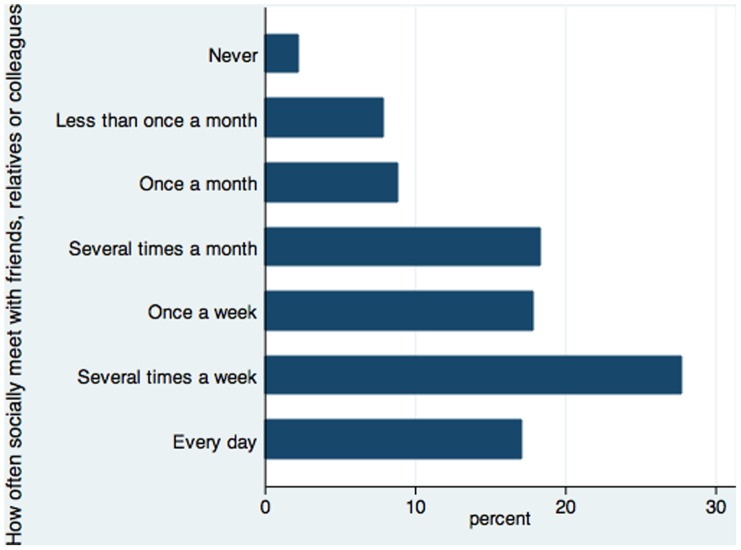
A recent large Canadian survey permits us to compare face-to-face ('real-life') and on-line social networks as sources of subjective well-being. The sample of 5,000 is drawn randomly from an on-line pool of respondents, a group well placed to have and value on-line friendships. We find three key results. First, the number of real-life friends is positively correlated with subjective well-being (SWB) even after controlling for income, demographic variables and personality differences. Doubling the number of friends in real life has an equivalent effect on well-being as a 50% increase in income. Second, the size of online networks is largely uncorrelated with subjective well-being. Third, we find that real-life friends are much more important for people who are single, divorced, separated or widowed than they are for people who are married or living with a partner. Findings from large international surveys (the European Social Surveys 2002-2008) are used to confirm the importance of real-life social networks to SWB; they also indicate a significantly smaller value of social networks to married or partnered couples.
最近一项来自加拿大的大型调查使我们能够将面对面(“现实生活”)和在线社交网络作为主观幸福感的来源进行比较。该样本由 5000 人随机抽取自在线受访者群体,这群人很有可能拥有并重视在线友谊。我们发现了三个关键结果。首先,即使控制收入、人口统计学变量和个性差异,现实生活中的朋友数量也与主观幸福感(SWB)呈正相关。现实生活中朋友数量增加一倍对幸福感的影响相当于收入增加 50%。其次,在线网络的规模与主观幸福感基本无关。第三,我们发现,对于单身、离婚、分居或丧偶的人来说,现实生活中的朋友比已婚或与伴侣生活的人更为重要。来自大型国际调查(2002-2008 年欧洲社会调查)的结果用于证实现实生活社交网络对 SWB 的重要性;它们还表明,社交网络对已婚或已婚伴侣的价值要小得多。