Oh Choongseob, Park Soonyong, Lee Eun Kyung, Yoo Yung Joon
School of Life Sciences, Gwangju Institute of Science & Technology (GIST), Gwangju 500-712, Republic of Korea.
Sci Rep. 2013;3:2623. doi: 10.1038/srep02623.
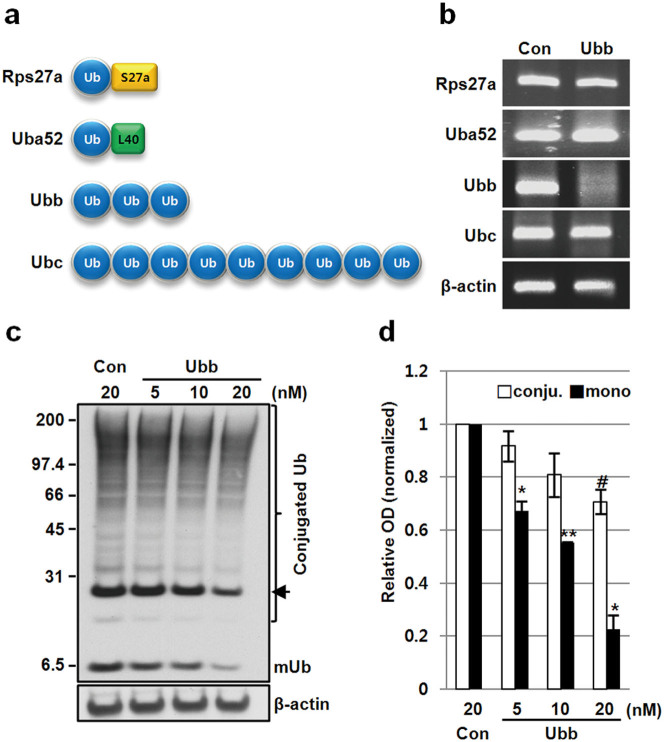
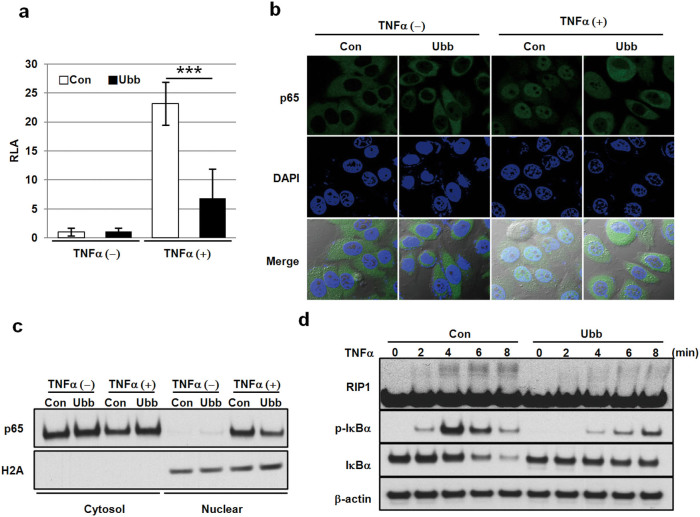
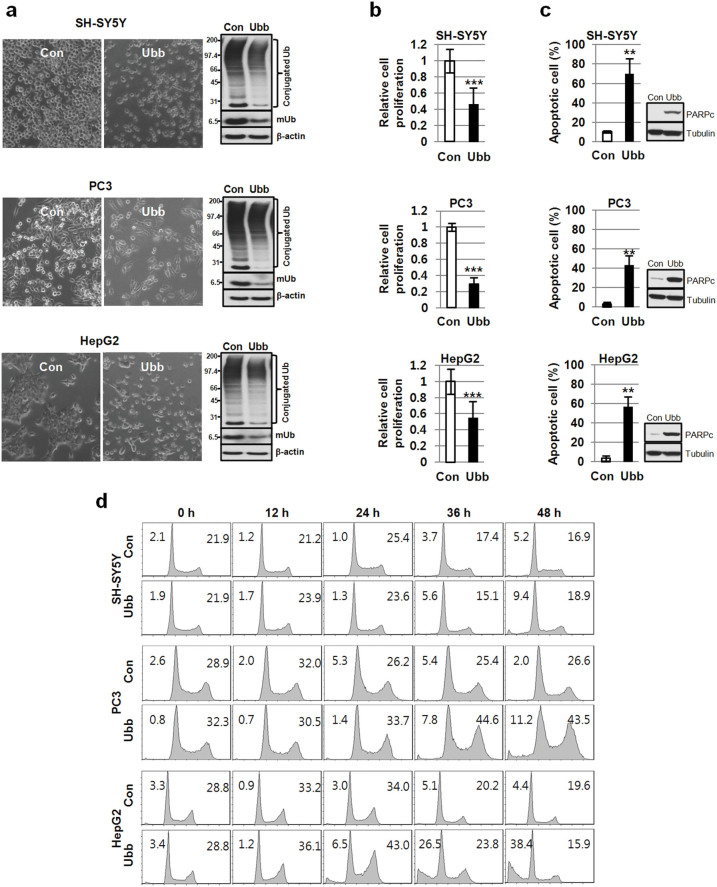
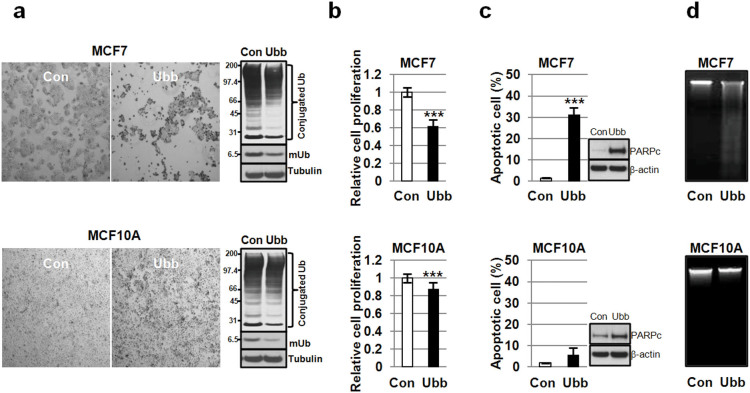
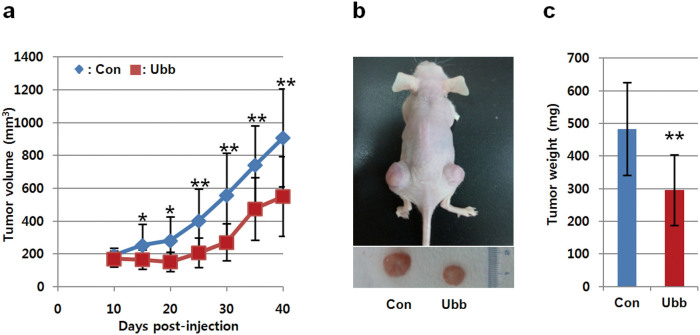
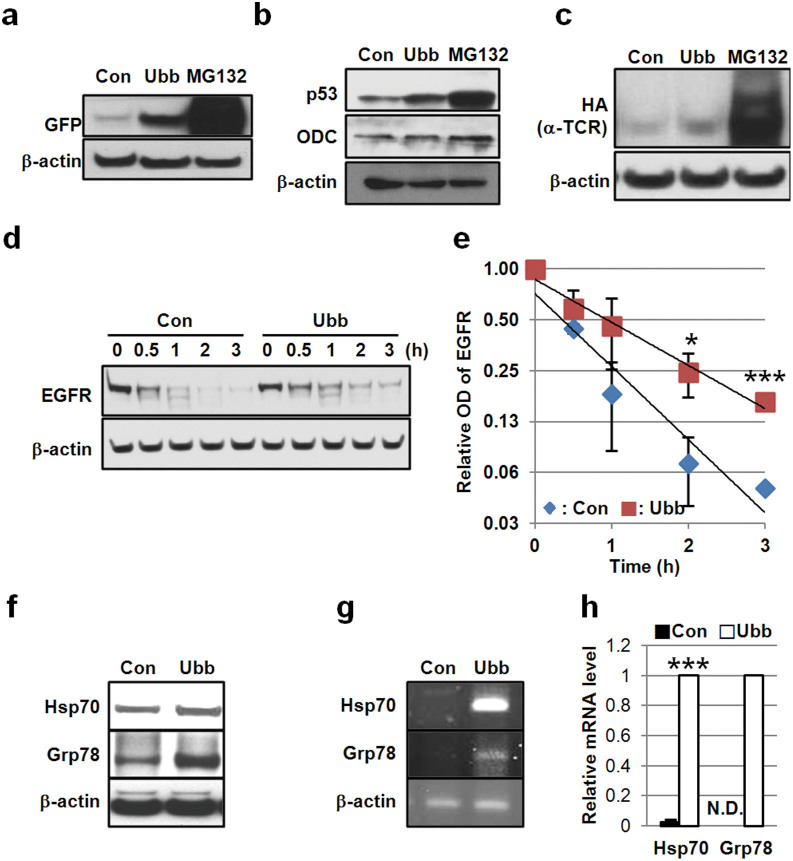
Ubiquitin is involved in almost every cellular process, and it is also known to be a stress-inducible protein. Based on previous reports that many types of cancer display an elevated level of ubiquitin, we hypothesized that this increased amount of ubiquitin is essential for the growth of cancer cells and that, consequently, the downregulation of ubiquitin may be a potential anti-cancer treatment. We first found that the level of ubiquitin can be effectively downregulated via knockdown of a polyubiquitin gene, Ubb, with siRNA (Ubb-KD) and then demonstrated its anti-cancer effects in several cancer cell lines and xenograft mice. Ubb-KD resulted in the attenuation of TNFα-induced NF-κB activation, the stabilization of the tumor suppressor p53, and stress-sensitization. Taken together, downregulation of ubiquitin through Ubb-KD is a potential anti-cancer treatment by inhibiting ubiquitination at multiple sites related to oncogenic pathways and by weakening the ability of cancer cells to overcome increased stress.
泛素几乎参与了每一个细胞过程,并且它也被认为是一种应激诱导蛋白。基于先前的报道,许多类型的癌症都表现出泛素水平升高,我们推测这种泛素量的增加对癌细胞的生长至关重要,因此,泛素的下调可能是一种潜在的抗癌治疗方法。我们首先发现,通过用小干扰RNA(siRNA)敲低多聚泛素基因Ubb(Ubb-KD),可以有效地下调泛素水平,然后在几种癌细胞系和异种移植小鼠中证明了其抗癌作用。Ubb-KD导致肿瘤坏死因子α(TNFα)诱导的核因子κB(NF-κB)激活减弱、肿瘤抑制因子p53稳定以及应激敏感性增强。综上所述,通过Ubb-KD下调泛素是一种潜在的抗癌治疗方法,它通过抑制与致癌途径相关的多个位点的泛素化以及削弱癌细胞克服增加的应激的能力来实现。