Department of Structural Biology, Institut de Biologia Molecular de Barcelona (IBMB)-Consejo Superior de Investigaciones Científicas (CSIC), Barcelona, Spain.
PLoS One. 2013 Aug 30;8(8):e72742. doi: 10.1371/journal.pone.0072742. eCollection 2013.
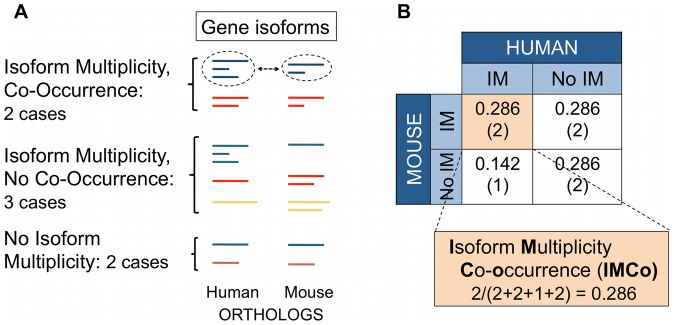
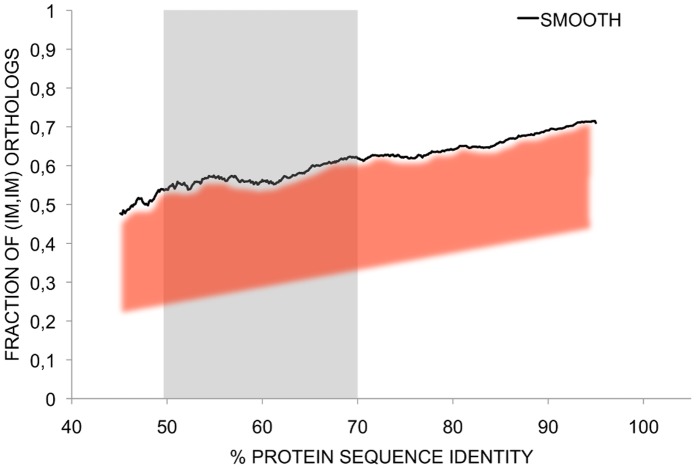
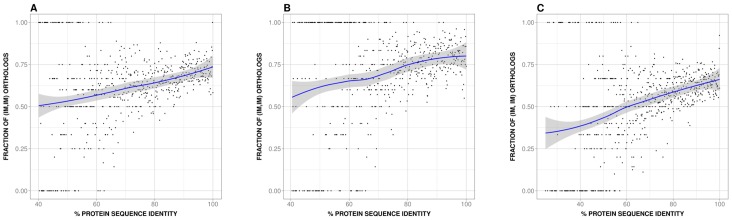
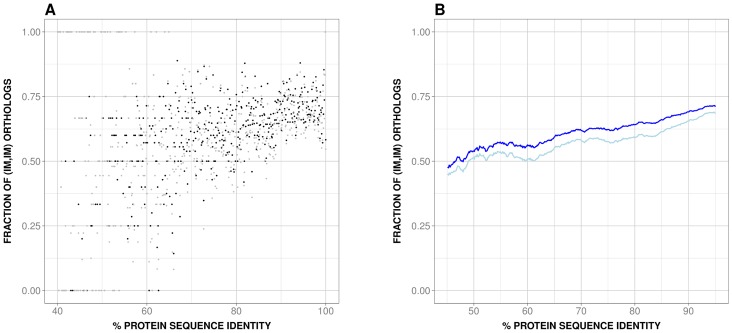
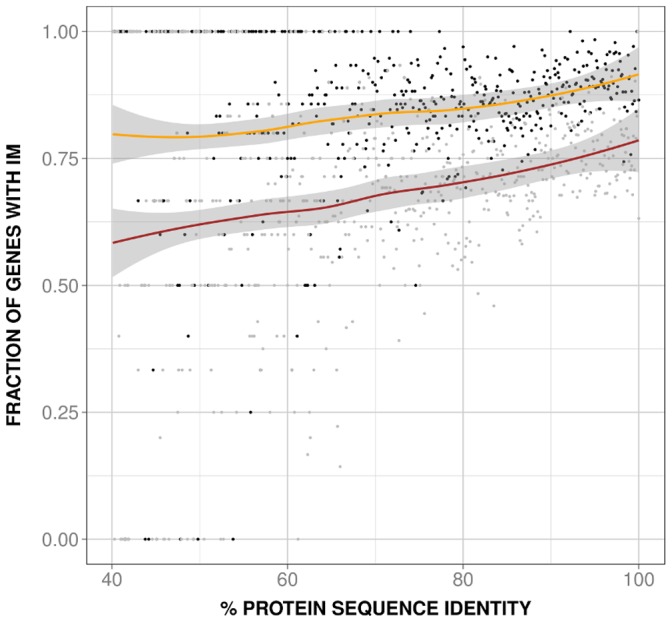
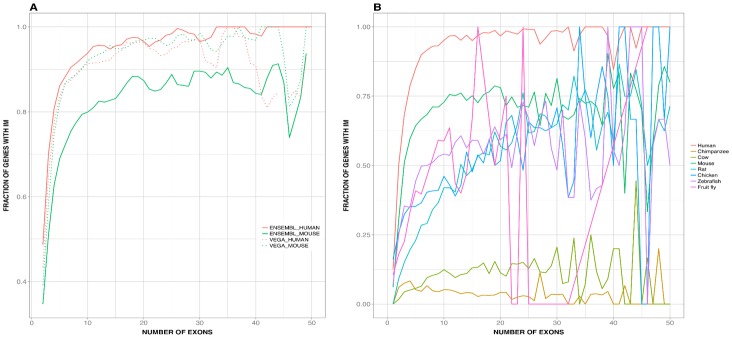
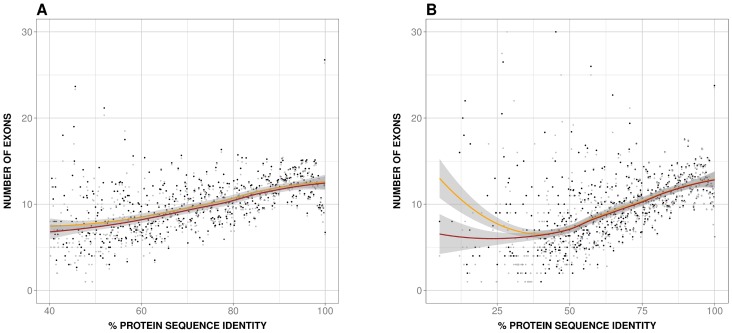
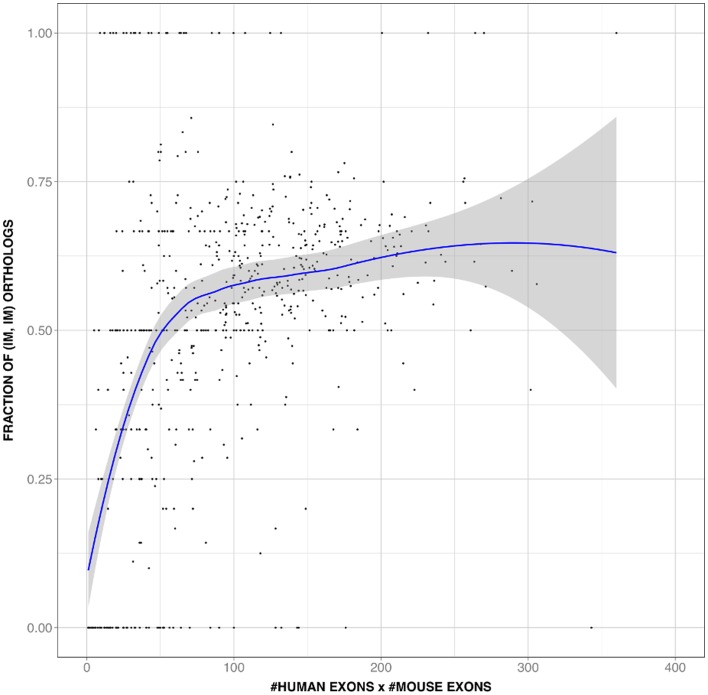
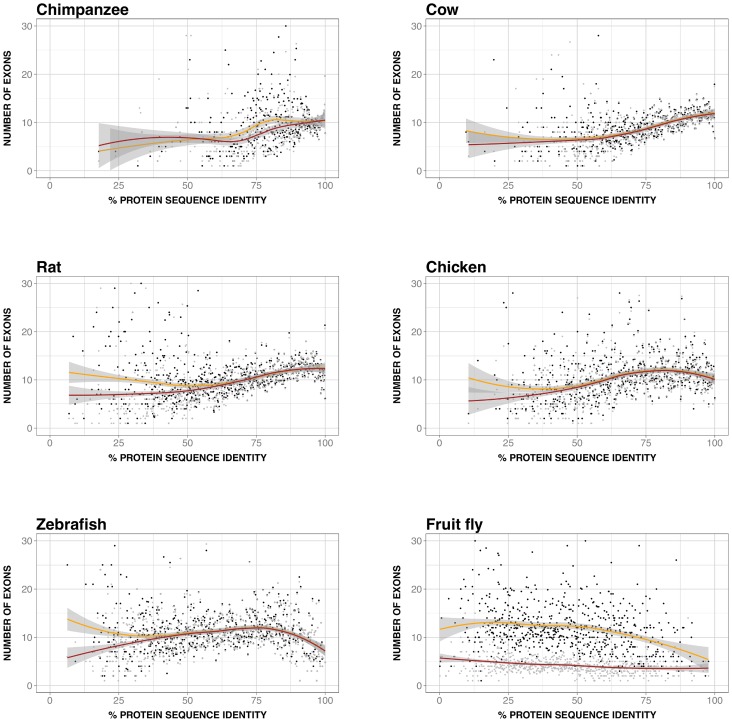
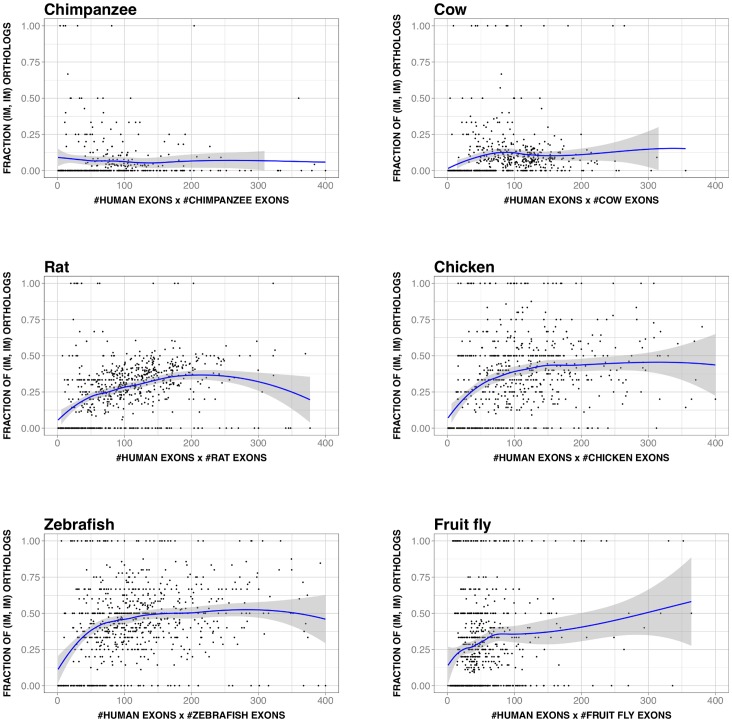
At present we know that phenotypic differences between organisms arise from a variety of sources, like protein sequence divergence, regulatory sequence divergence, alternative splicing, etc. However, we do not have yet a complete view of how these sources are related. Here we address this problem, studying the relationship between protein divergence and the ability of genes to express multiple isoforms. We used three genome-wide datasets of human-mouse orthologs to study the relationship between isoform multiplicity co-occurrence between orthologs (the fact that two orthologs have more than one isoform) and protein divergence. In all cases our results showed that there was a monotonic dependence between these two properties. We could explain this relationship in terms of a more fundamental one, between exon number of the largest isoform and protein divergence. We found that this last relationship was present, although with variations, in other species (chimpanzee, cow, rat, chicken, zebrafish and fruit fly). In summary, we have identified a relationship between protein divergence and isoform multiplicity co-occurrence and explained its origin in terms of a simple gene-level property. Finally, we discuss the biological implications of these findings for our understanding of inter-species phenotypic differences.
目前我们知道,生物体之间的表型差异来自多种来源,如蛋白质序列差异、调控序列差异、选择性剪接等。然而,我们还没有完全了解这些来源之间的关系。在这里,我们研究了蛋白质分歧与基因表达多种异构体的能力之间的关系。我们使用了三个人类-小鼠同源物的全基因组数据集来研究同源物之间的异构体多样性共现(两个同源物具有多个异构体的事实)与蛋白质分歧之间的关系。在所有情况下,我们的结果都表明这两个特性之间存在单调依赖性。我们可以根据一个更基本的特性,即最大异构体的外显子数量与蛋白质分歧之间的关系来解释这种关系。我们发现,尽管存在变化,但这种最后一种关系在其他物种(黑猩猩、牛、大鼠、鸡、斑马鱼和果蝇)中也存在。总之,我们已经确定了蛋白质分歧与异构体多样性共现之间的关系,并根据一个简单的基因水平特性解释了其起源。最后,我们讨论了这些发现对我们理解种间表型差异的生物学意义。