Lee Gordon K, Fox Paige M, Riboh Jonathan, Hsu Charles, Saber Sepideh, Rubin Geoffrey D, Chang James
Division of Plastic and Reconstructive Surgery, Stanford University Medical Center, Stanford, Calif.
Eplasty. 2013 Aug 7;13:e42. eCollection 2013.
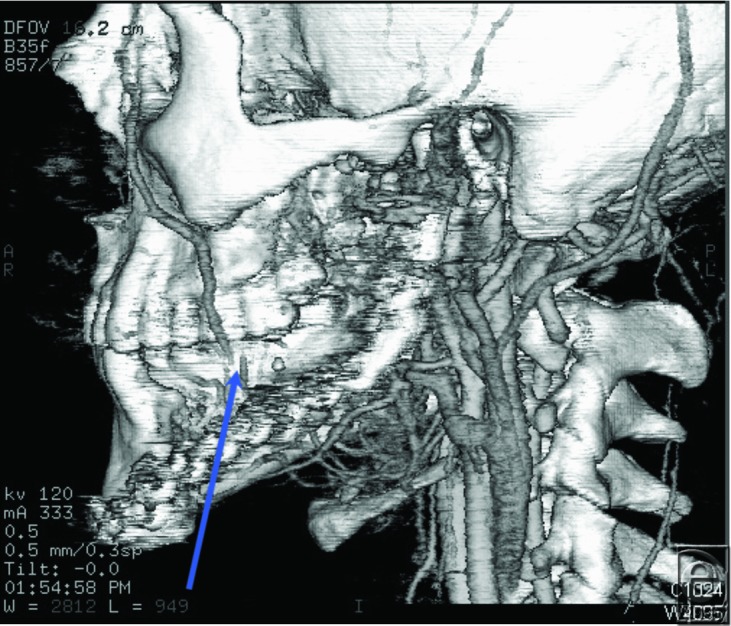
Computed tomographic angiography (CTA) can be used to obtain 3-dimensional vascular images and soft-tissue definition. The goal of this study was to evaluate the reliability, usefulness, and pitfalls of CTA in preoperative planning of microvascular reconstructive surgery.
A retrospective review of patients who obtained preoperative CTA in preparation for planned microvascular reconstruction was performed over a 5-year period (2001-2005). The influence of CTA on the original operative plan was assessed for each patient, and CTA results were correlated to the operative findings.
Computed tomographic angiography was performed on 94 patients in preparation for microvascular reconstruction. In 48 patients (51%), vascular abnormalities were noted on CTA. Intraoperative findings correlated with CTA results in 97% of cases. In 42 patients (45%), abnormal CTA findings influenced the original operative plan, such as the choice of vessels, side of harvest, or nature of the reconstruction (local flap instead of free tissue transfer). Technical difficulties in performing CTA were encountered in 5 patients (5%) in whom interference from external fixation devices was the main cause.
This large study of CTA obtained for preoperative planning of reconstructive microsurgery at both donor and recipient sites study demonstrates that CTA is safe and highly accurate. Computed tomographic angiography can alter the surgeon's reconstructive plan when abnormalities are noted preoperatively and consequently improve results by decreasing vascular complication rates. The use of CTA should be considered for cases of microsurgical reconstruction where the vascular anatomy may be questionable.
计算机断层血管造影(CTA)可用于获取三维血管图像及软组织清晰度。本研究的目的是评估CTA在微血管重建手术术前规划中的可靠性、实用性及缺陷。
对在5年期间(2001 - 2005年)为计划进行微血管重建而接受术前CTA检查的患者进行回顾性研究。评估CTA对每位患者原始手术计划的影响,并将CTA结果与手术发现进行关联。
94例患者为准备微血管重建接受了计算机断层血管造影。48例患者(51%)CTA显示血管异常。97%的病例术中发现与CTA结果相关。42例患者(45%),CTA异常结果影响了原始手术计划,如血管选择、取材部位或重建方式(局部皮瓣而非游离组织移植)。5例患者(5%)在进行CTA时遇到技术困难,主要原因是外固定装置的干扰。
这项针对供体和受体部位重建显微手术术前规划进行的CTA大型研究表明,CTA安全且高度准确。当术前发现异常时,计算机断层血管造影可改变外科医生的重建计划,从而通过降低血管并发症发生率改善手术效果。对于血管解剖可能存在疑问的显微外科重建病例,应考虑使用CTA。