Priority Research Centre for Asthma and Respiratory Diseases, Faculty of Health, University of Newcastle, Callaghan, NSW 2308, Australia.
Nutrients. 2013 Sep 10;5(9):3506-30. doi: 10.3390/nu5093506.
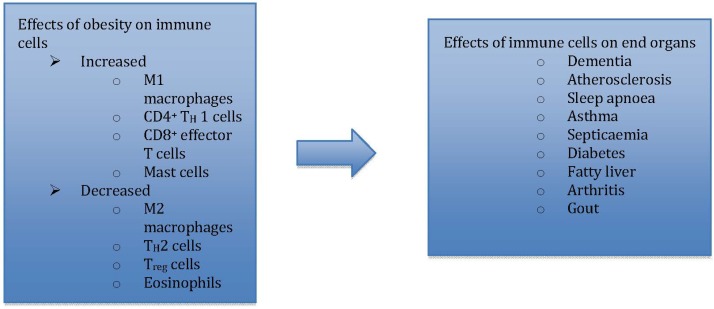
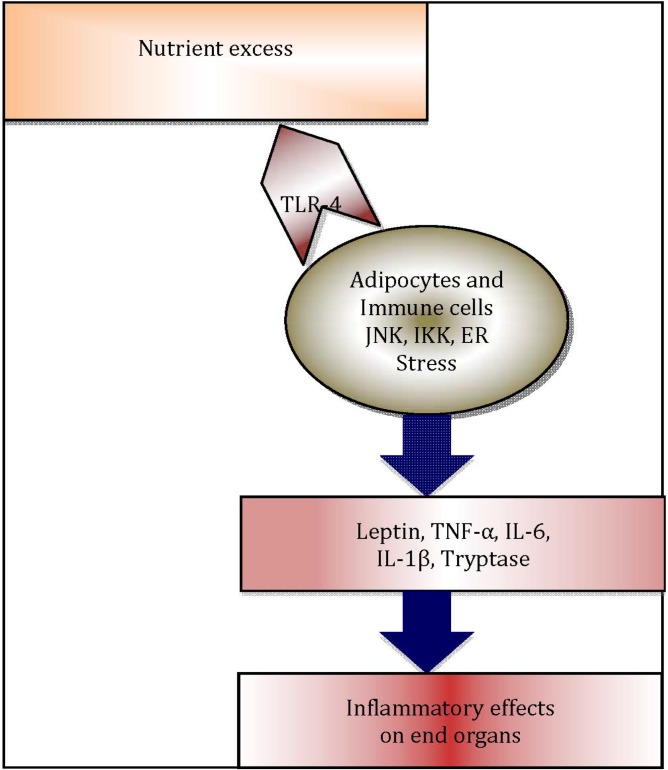
Obesity is now recognised as a worldwide epidemic. The recent International Association for the Study of Obesity/International Obesity Taskforce (IASO/IOTF) analysis estimates that approximately 1.0 billion adults are currently overweight and a further 475 million are obese. Obesity has huge psychosocial impact with obese children and adolescents facing discrimination and stigmatization in many areas of their lives leading to body dissatisfaction, low self-esteem and depression. Indeed, obesity is recognised as an important risk factor for the development of several chronic diseases such as hypertension, cancer, asthma and metabolic syndrome. Chronic low grade systemic inflammation is considered as a hallmark of obesity and may possibly explain the link between obesity and chronic disease, in particular the increased incidence, prevalence and severity of asthma in obese individuals. There is now strong evidence for infiltration of immune and inflammatory cells into adipose tissue that drives systemic inflammation and subsequent end organ damage. In addition to adipocytes, the key adipose tissue resident immune cells are macrophages and mast cells. Immunometabolism, as an emerging field of investigation, explores the pivotal role of these immune cells in translating immunological changes to metabolic effects in obesity. Abundance of free fatty acids, along with other inflammatory cytokines shift the balance of metabolic homeostasis to pro-inflammatory status by influencing the development of inflammatory cell lineage, which, further exhibits distinct functional phenotypes. There is emerging evidence for macrophage activation and functional polarization of an anti-inflammatory M2 phenotype towards a pro-inflammatory M1 phenotype of macrophages in obese adipose tissue. Similarly, studies in both obese humans and murine models reveal the pathognomic presence of an increased number of mast cells in visceral adipose tissue. These suggest a possible contribution of mast cells to the unique metabolome of obese asthma. This review examines proposed multilevel interactions between metabolic and immune systems in obese asthmatics that underlie the negative effects of obesity and may offer significant therapeutic promise.
肥胖现已被公认为全球性的流行病。最近国际肥胖协会/国际肥胖工作组(IASO/IOTF)的分析估计,目前约有 10 亿成年人超重,另有 4.75 亿人肥胖。肥胖对心理健康有巨大影响,肥胖儿童和青少年在生活的许多领域都面临歧视和污名化,导致身体不满、自尊心低下和抑郁。事实上,肥胖被认为是多种慢性疾病的重要危险因素,如高血压、癌症、哮喘和代谢综合征。慢性低度全身炎症被认为是肥胖的一个标志,可能解释了肥胖与慢性疾病之间的联系,特别是肥胖人群中哮喘的发病率、患病率和严重程度增加。现在有强有力的证据表明,免疫和炎症细胞浸润脂肪组织会导致全身炎症和随后的终末器官损伤。除脂肪细胞外,关键的脂肪组织常驻免疫细胞是巨噬细胞和肥大细胞。免疫代谢作为一个新兴的研究领域,探讨了这些免疫细胞在肥胖中从免疫学变化转化为代谢效应的关键作用。游离脂肪酸的大量存在,以及其他炎症细胞因子,通过影响炎症细胞谱系的发展,将代谢稳态的平衡转变为促炎状态,进一步表现出不同的功能表型。有越来越多的证据表明,肥胖脂肪组织中的巨噬细胞发生激活和功能极化,从抗炎 M2 表型向促炎 M1 表型转变。同样,在肥胖人群和小鼠模型中进行的研究揭示了内脏脂肪组织中肥大细胞数量增加的存在。这表明肥大细胞可能对肥胖型哮喘独特的代谢组学有一定贡献。这篇综述检查了肥胖哮喘患者中代谢和免疫系统之间的多层次相互作用,这些相互作用是肥胖的负面影响的基础,并且可能提供重要的治疗前景。