Division of Rheumatology, Immunology and Allergy, Brigham and Women's Hospital, Smith 652, One Jimmy Fund Way, Boston, MA 02115, USA.
Trends Biochem Sci. 2013 Oct;38(10):494-506. doi: 10.1016/j.tibs.2013.07.004. Epub 2013 Sep 10.
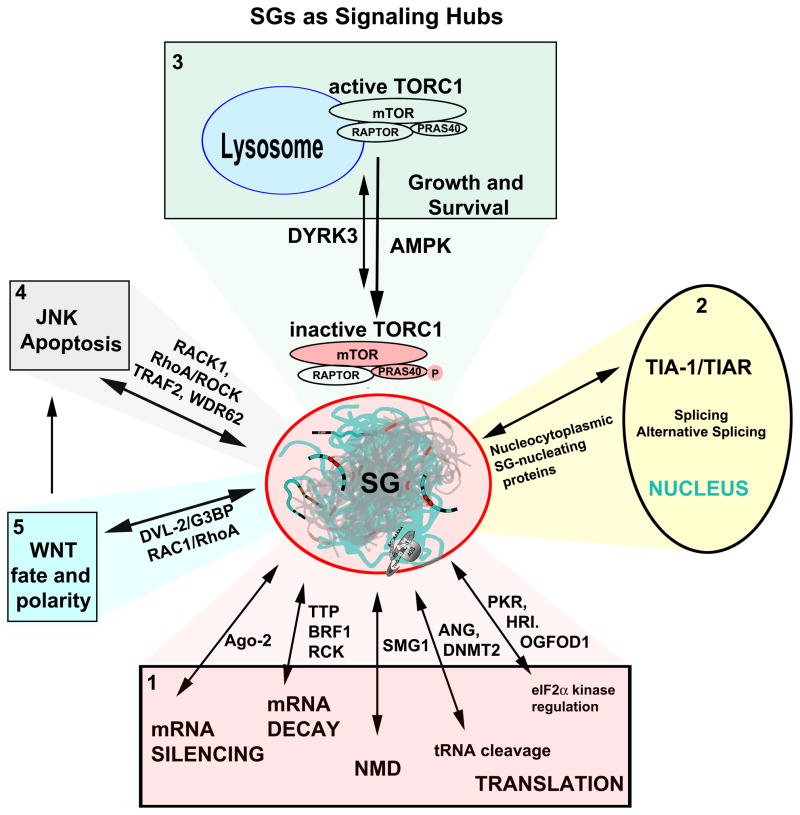
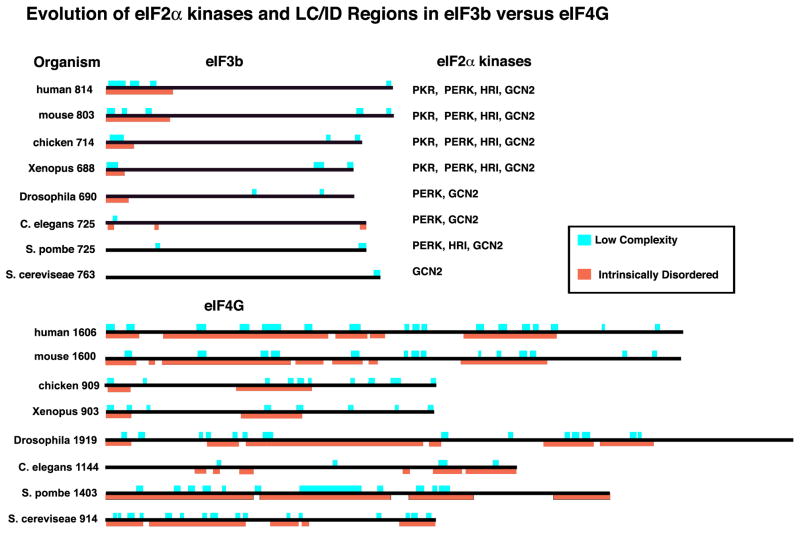
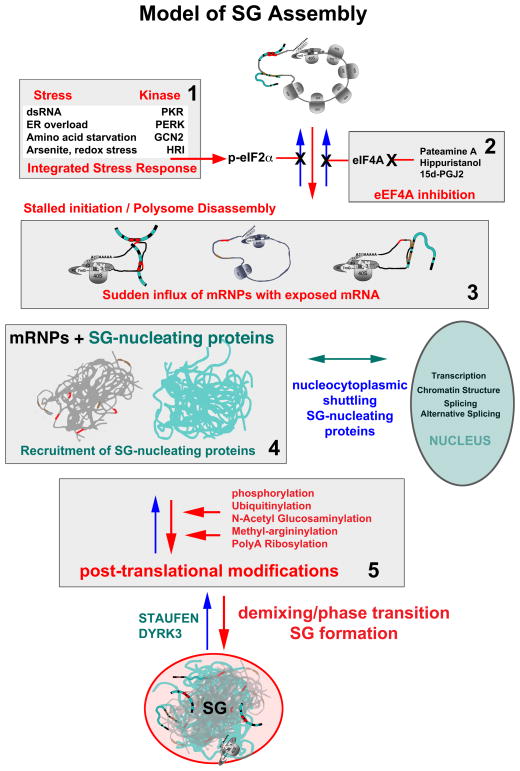
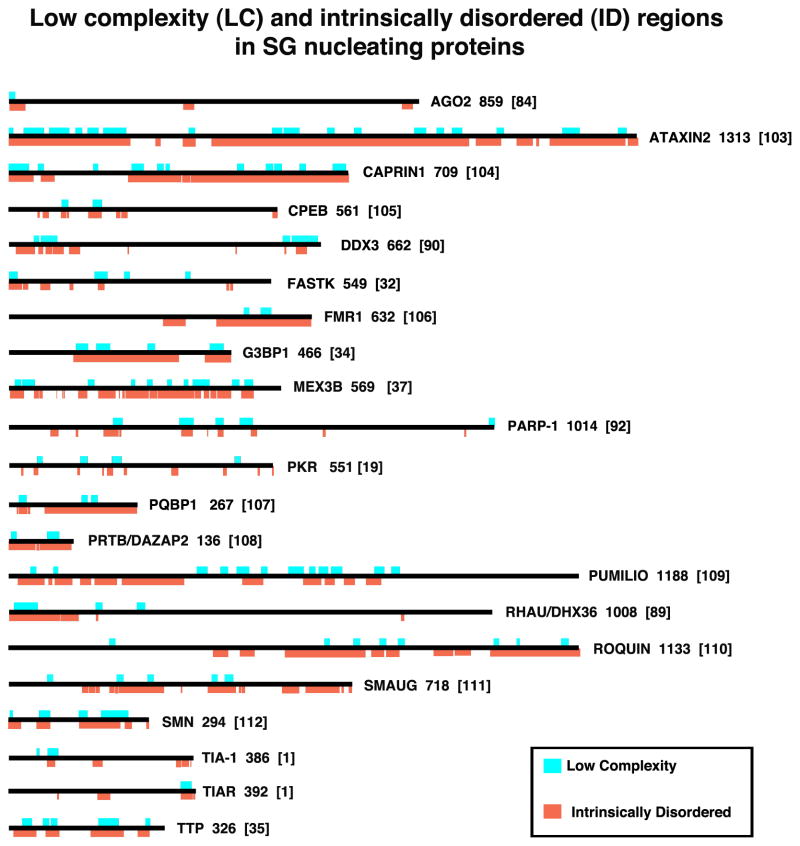
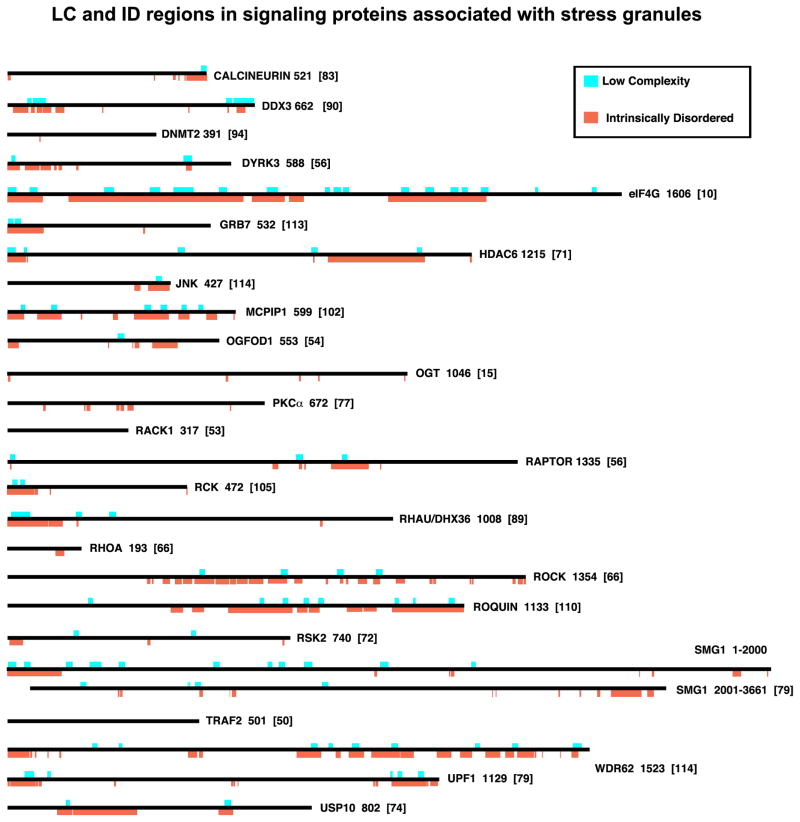
Stress granules (SGs) contain translationally-stalled mRNAs, associated preinitiation factors, and specific RNA-binding proteins. In addition, many signaling proteins are recruited to SGs and/or influence their assembly, which is transient, lasting only until the cells adapt to stress or die. Beyond their role as mRNA triage centers, we posit that SGs constitute RNA-centric signaling hubs analogous to classical multiprotein signaling domains such as transmembrane receptor complexes. As signaling centers, SG formation communicates a 'state of emergency', and their transient existence alters multiple signaling pathways by intercepting and sequestering signaling components. SG assembly and downstream signaling functions may require a cytosolic phase transition facilitated by intrinsically disordered, aggregation-prone protein regions shared by RNA-binding and signaling proteins.
应激颗粒(SGs)包含翻译暂停的 mRNA、相关的起始前因子和特定的 RNA 结合蛋白。此外,许多信号蛋白被招募到 SGs 中,或影响其组装,而 SGs 的组装是短暂的,仅持续到细胞适应应激或死亡。除了作为 mRNA 分类中心的作用外,我们假设 SGs 构成了类似于经典多蛋白信号域(如跨膜受体复合物)的以 RNA 为中心的信号枢纽。作为信号中心,SG 的形成传达了一种“紧急状态”,它们的短暂存在通过拦截和隔离信号成分来改变多种信号通路。SG 的组装和下游信号功能可能需要由内在无序、易于聚集的蛋白质区域介导的细胞质相转变,这些区域由 RNA 结合蛋白和信号蛋白共享。