Center for the Research and Technology of Agro-Environmental and Biological Sciences (CITAB), Quinta de Prados, 5001-801 Vila Real, Portugal.
Int J Mol Sci. 2013 Sep 11;14(9):18711-39. doi: 10.3390/ijms140918711.
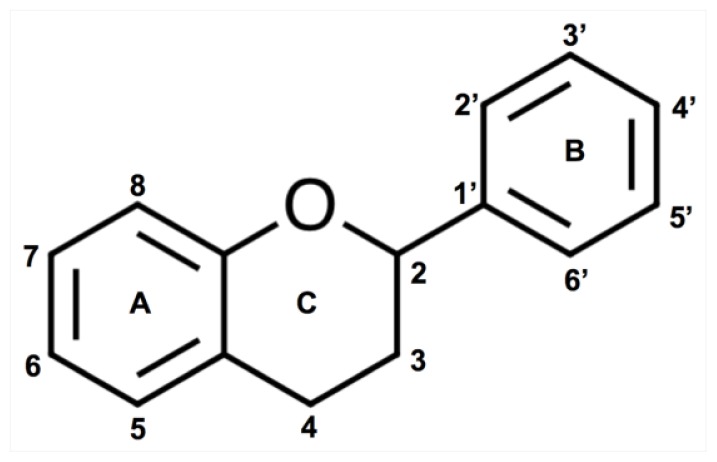
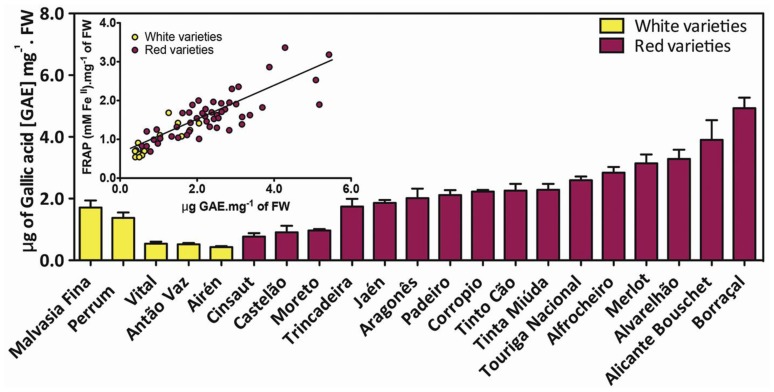
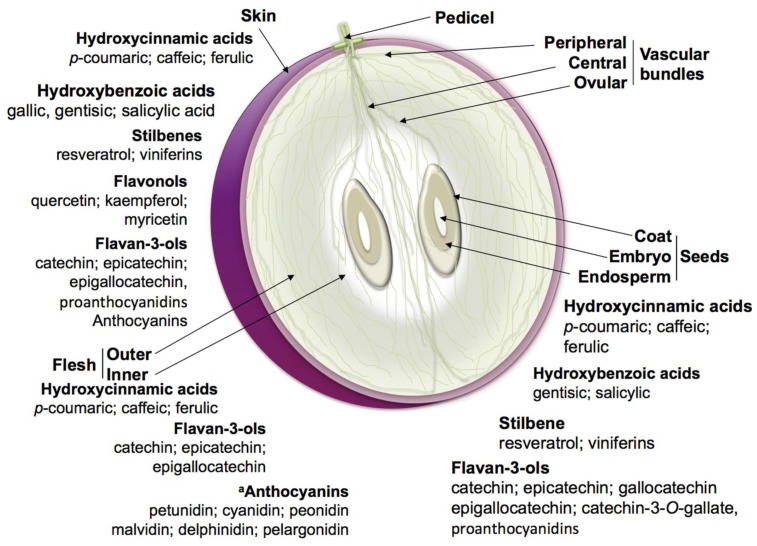
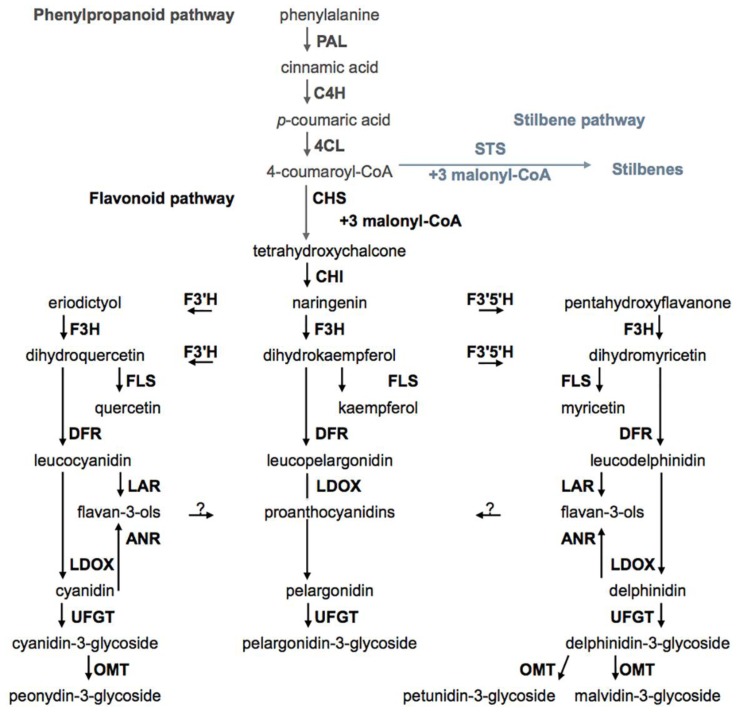
Plant phenolics have been for many years a theme of major scientific and applied interest. Grape berry phenolics contribute to organoleptic properties, color and protection against environmental challenges. Climate change has already caused significant warming in most grape-growing areas of the world, and the climatic conditions determine, to a large degree, the grape varieties that can be cultivated as well as wine quality. In particular, heat, drought and light/UV intensity severely affect phenolic metabolism and, thus, grape composition and development. In the variety Chardonnay, water stress increases the content of flavonols and decreases the expression of genes involved in biosynthesis of stilbene precursors. Also, polyphenolic profile is greatly dependent on genotype and environmental interactions. This review deals with the diversity and biosynthesis of phenolic compounds in the grape berry, from a general overview to a more detailed level, where the influence of environmental challenges on key phenolic metabolism pathways is approached. The full understanding of how and when specific phenolic compounds accumulate in the berry, and how the varietal grape berry metabolism responds to the environment is of utmost importance to adjust agricultural practices and thus, modify wine profile.
多年来,植物酚类物质一直是主要的科学和应用研究主题。葡萄浆果中的酚类物质有助于赋予其感官特性、颜色和抵御环境挑战的能力。气候变化已经导致世界上大多数葡萄种植区显著变暖,气候条件在很大程度上决定了可以种植的葡萄品种以及葡萄酒的质量。特别是,高温、干旱和光照/紫外线强度会严重影响酚类代谢,从而影响葡萄的成分和发育。在霞多丽品种中,水分胁迫会增加类黄酮的含量,并降低参与芪类前体生物合成的基因的表达。此外,多酚的组成在很大程度上取决于基因型和环境的相互作用。本文综述了葡萄浆果中酚类化合物的多样性和生物合成,从一般概述到更详细的水平,探讨了环境挑战对关键酚类代谢途径的影响。充分了解特定酚类化合物在浆果中是如何积累的,以及品种葡萄浆果代谢如何响应环境,对于调整农业实践从而改变葡萄酒的特性至关重要。