Department of Bioprocess Technology, Faculty of Biotechnology and Biomolecular Sciences, Universiti Putra Malaysia , 43400 UPM Serdang, Selangor , Malaysia.
Braz J Microbiol. 2012 Apr;43(2):506-16. doi: 10.1590/S1517-83822012000200011. Epub 2012 Jun 1.
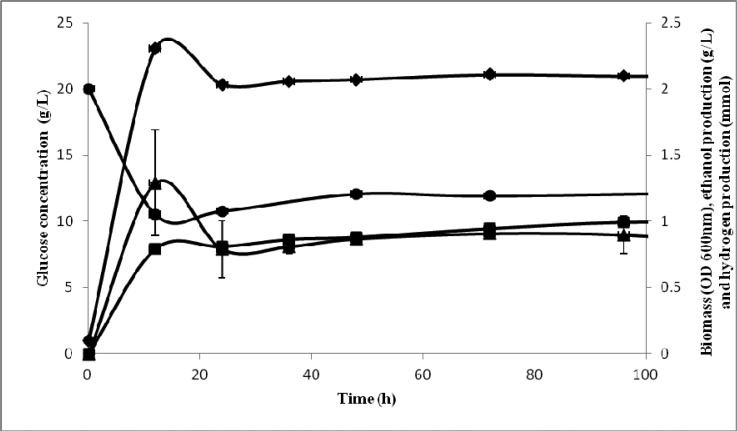
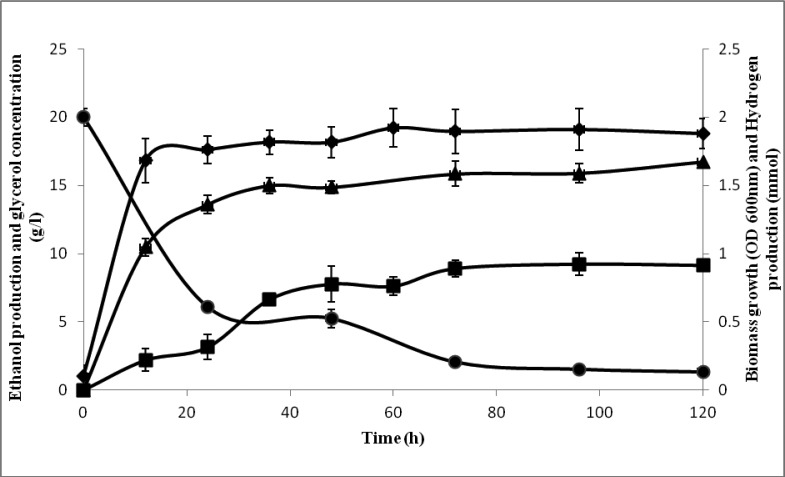
Bioconverting glycerol into various valuable products is one of glycerol's promising applications due to its high availability at low cost and the existence of many glycerol-utilizing microorganisms. Bioethanol and biohydrogen, which are types of renewable fuels, are two examples of bioconverted products. The objectives of this study were to evaluate ethanol production from different media by local microorganism isolates and compare the ethanol fermentation profile of the selected strains to use of glucose or glycerol as sole carbon sources. The ethanol fermentations by six isolates were evaluated after a preliminary screening process. Strain named SS1 produced the highest ethanol yield of 1.0 mol: 1.0 mol glycerol and was identified as Escherichia coli SS1 Also, this isolated strain showed a higher affinity to glycerol than glucose for bioethanol production.
将甘油转化为各种有价值的产品是甘油的一个很有前途的应用,因为它的高可用性和低成本,以及许多利用甘油的微生物的存在。生物乙醇和生物氢气是两种生物转化产品,它们是可再生燃料的类型。本研究的目的是评估不同介质中由本地微生物分离物生产乙醇,并比较所选菌株利用葡萄糖或甘油作为唯一碳源的乙醇发酵特征。在初步筛选过程后,评估了六个分离株的乙醇发酵。命名为 SS1 的菌株产生了最高的乙醇产量为 1.0 mol:1.0 mol 甘油,并被鉴定为大肠杆菌 SS1。此外,该分离株对甘油的亲和力比对葡萄糖更高,有利于生物乙醇的生产。