Department of Biology, Biotechnical Faculty, University of Ljubljana, Večna pot 111, SI-1000 Ljubljana, Slovenia.
BMC Genomics. 2013 Sep 13;14:617. doi: 10.1186/1471-2164-14-617.
The basidomycete Wallemia ichthyophaga from the phylogenetically distinct class Wallemiomycetes is the most halophilic fungus known to date. It requires at least 10% NaCl and thrives in saturated salt solution. To investigate the genomic basis of this exceptional phenotype, we obtained a de-novo genome sequence of the species type-strain and analysed its transcriptomic response to conditions close to the limits of its lower and upper salinity range.
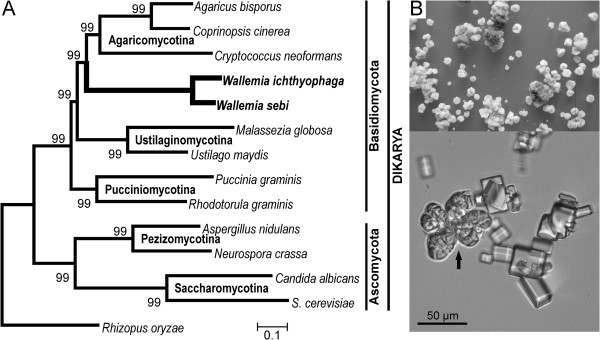
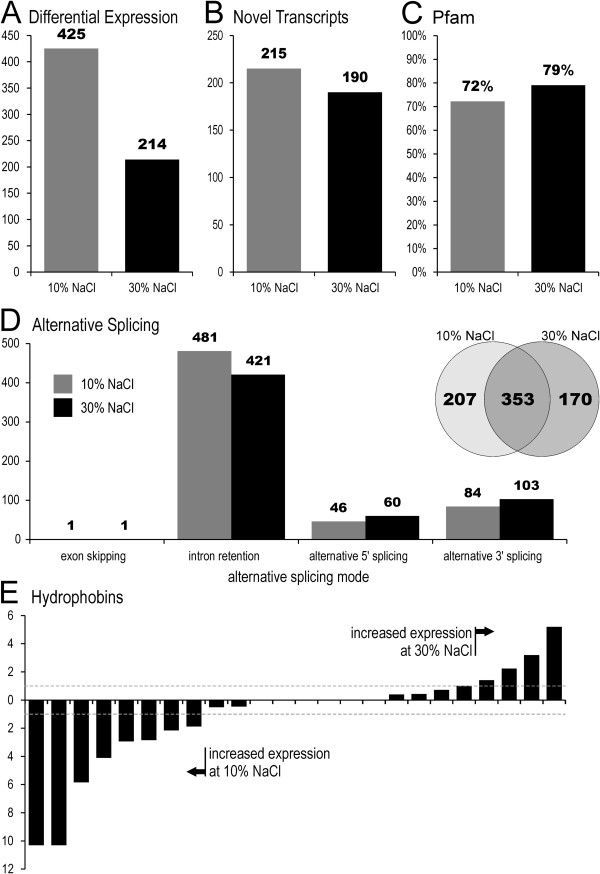
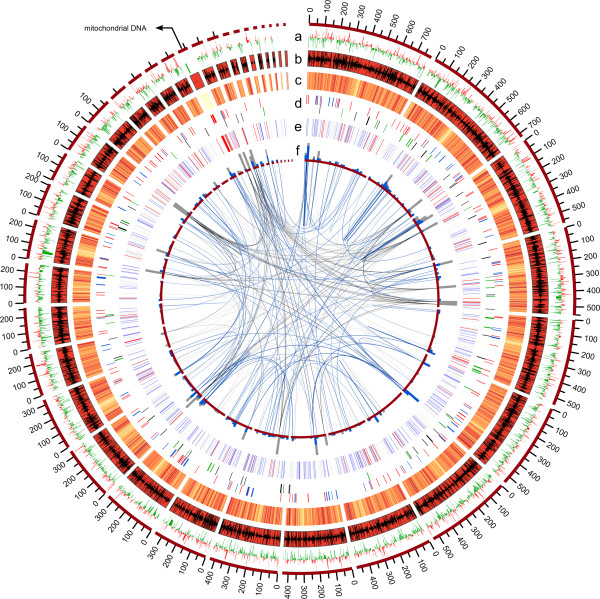
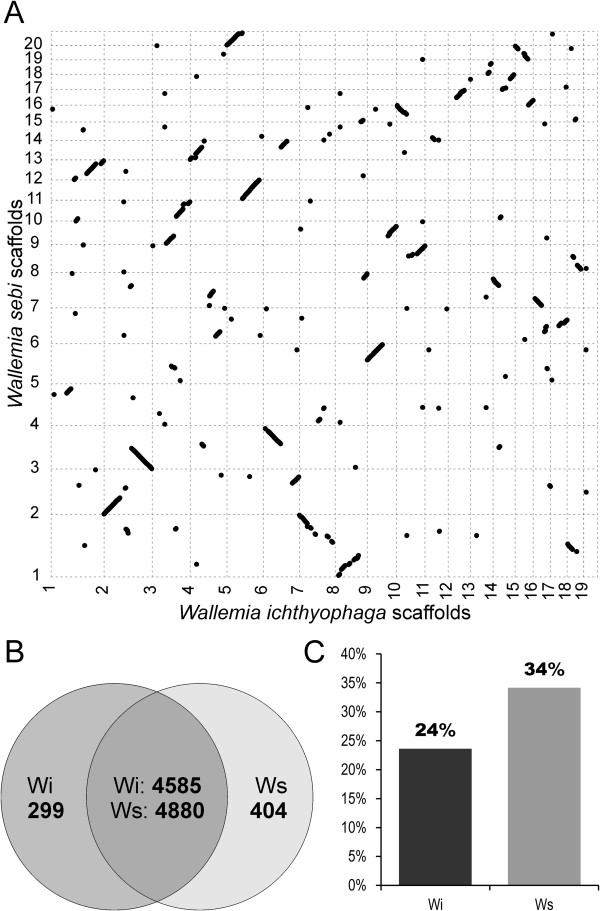
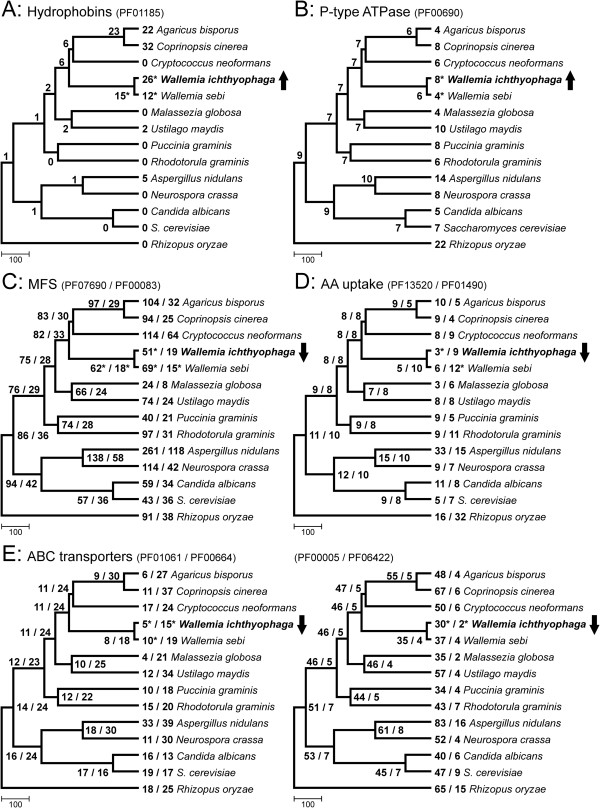
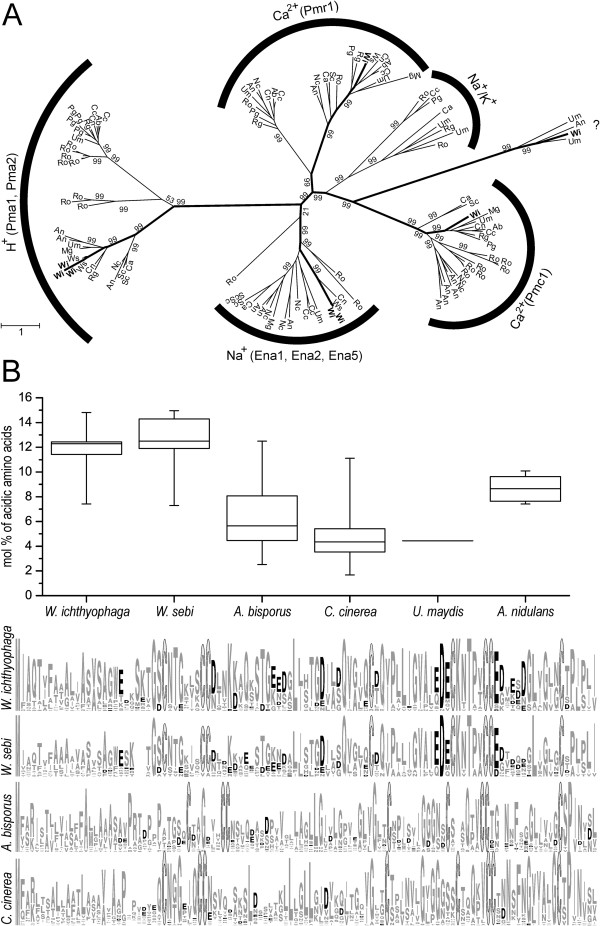
The unusually compact genome is 9.6 Mb large and contains 1.67% repetitive sequences. Only 4884 predicted protein coding genes cover almost three quarters of the sequence. Of 639 differentially expressed genes, two thirds are more expressed at lower salinity. Phylogenomic analysis based on the largest dataset used to date (whole proteomes) positions Wallemiomycetes as a 250-million-year-old sister group of Agaricomycotina. Contrary to the closely related species Wallemia sebi, W. ichthyophaga appears to have lost the ability for sexual reproduction. Several protein families are significantly expanded or contracted in the genome. Among these, there are the P-type ATPase cation transporters, but not the sodium/ hydrogen exchanger family. Transcription of all but three cation transporters is not salt dependent. The analysis also reveals a significant enrichment in hydrophobins, which are cell-wall proteins with multiple cellular functions. Half of these are differentially expressed, and most contain an unusually large number of acidic amino acids. This discovery is of particular interest due to the numerous applications of hydrophobines from other fungi in industry, pharmaceutics and medicine.
W. ichthyophaga is an extremophilic specialist that shows only low levels of adaptability and genetic recombination. This is reflected in the characteristics of its genome and its transcriptomic response to salt. No unusual traits were observed in common salt-tolerance mechanisms, such as transport of inorganic ions or synthesis of compatible solutes. Instead, various data indicate a role of the cell wall of W. ichthyophaga in its response to salt. Availability of the genomic sequence is expected to facilitate further research into this unique species, and shed more light on adaptations that allow it to thrive in conditions lethal to most other eukaryotes.
来自系统发育上截然不同的 Wallemiales 类的 basidiomycete 嗜盐真菌 Wallemia ichthyophaga 是迄今为止已知的最嗜盐真菌。它至少需要 10%的 NaCl 并在饱和盐溶液中茁壮成长。为了研究这种特殊表型的基因组基础,我们获得了该物种的参考菌株的从头基因组序列,并分析了其在接近低盐和高盐范围极限条件下的转录组反应。
异常紧凑的基因组大小为 9.6 Mb,包含 1.67%的重复序列。仅 4884 个预测的蛋白质编码基因覆盖了近四分之三的序列。在 639 个差异表达的基因中,有三分之二在低盐条件下表达更高。基于迄今为止使用的最大数据集(全蛋白质组)的系统基因组分析将 Wallemiales 定位为与 Agaricomycotina 具有 2.5 亿年历史的姊妹群。与密切相关的物种 Wallemia sebi 不同,W. ichthyophaga 似乎失去了有性繁殖的能力。在基因组中,有几个蛋白质家族明显扩张或收缩。其中包括 P 型 ATP 酶阳离子转运体,但不包括钠/氢交换家族。除了三种阳离子转运体外,所有阳离子转运体的转录都不受盐的影响。该分析还揭示了大量水蛋白的显著富集,水蛋白是具有多种细胞功能的细胞壁蛋白。其中一半差异表达,并且大多数含有异常数量的酸性氨基酸。由于其他真菌的水蛋白在工业、制药和医学中的众多应用,这一发现尤其有趣。
W. ichthyophaga 是一种极端专化的生物,其适应性和遗传重组能力很低。这反映在其基因组的特征及其对盐的转录组反应中。在常见的耐盐机制中,如无机离子的运输或相容溶质的合成,没有观察到不寻常的特征。相反,各种数据表明 W. ichthyophaga 细胞壁在其对盐的反应中起作用。基因组序列的可用性预计将促进对该独特物种的进一步研究,并进一步阐明使其在对大多数其他真核生物致命的条件下茁壮成长的适应机制。