GEOMAR Helmholtz Centre for Ocean Research Kiel, Kiel, Germany.
PLoS One. 2013 Sep 5;8(9):e71528. doi: 10.1371/journal.pone.0071528. eCollection 2013.
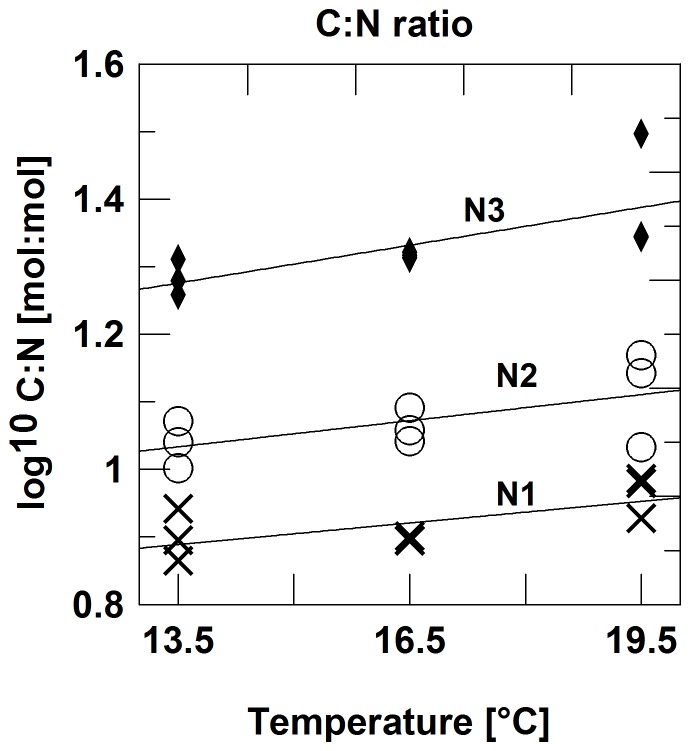
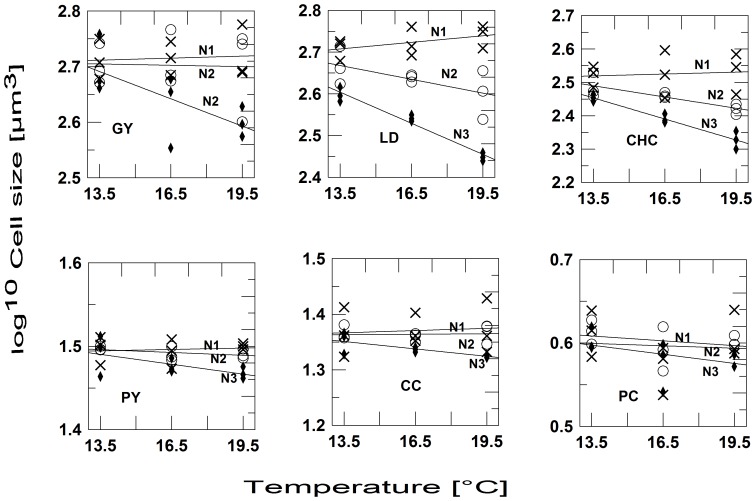
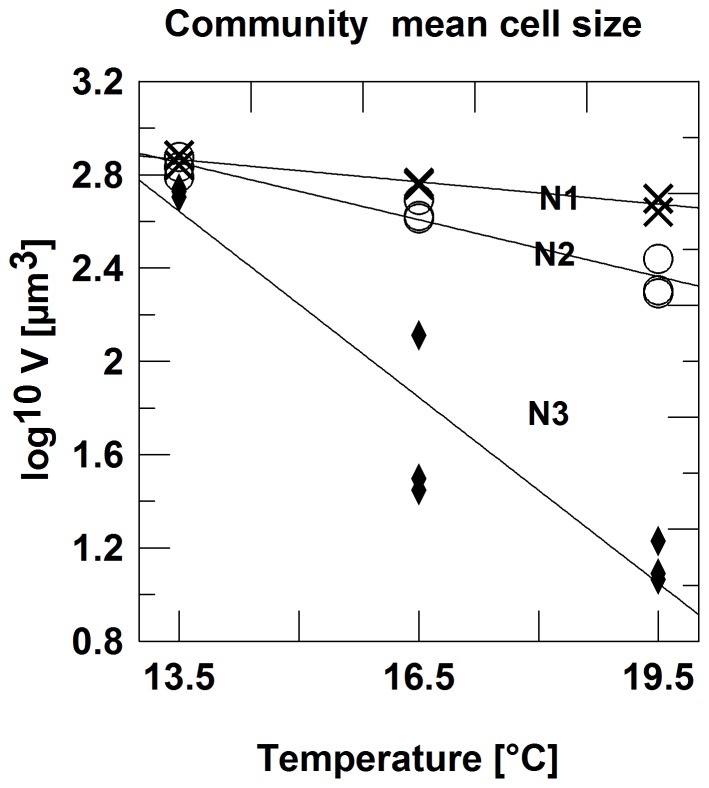
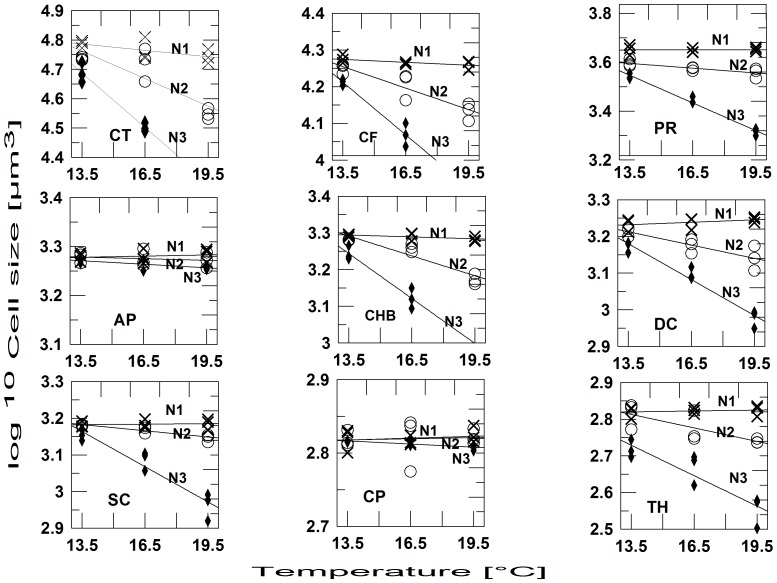
Shrinking of body size has been proposed as one of the universal responses of organisms to global climate warming. Using phytoplankton as an experimental model system has supported the negative effect of warming on body-size, but it remains controversial whether the size reduction under increasing temperatures is a direct temperature effect or an indirect effect mediated over changes in size selective grazing or enhanced nutrient limitation which should favor smaller cell-sizes. Here we present an experiment with a factorial combination of temperature and nutrient stress which shows that most of the temperature effects on phytoplankton cell size are mediated via nutrient stress. This was found both for community mean cell size and for the cell sizes of most species analyzed. At the highest level of nutrient stress, community mean cell size decreased by 46% per °C, while it decreased only by 4.7% at the lowest level of nutrient stress. Individual species showed qualitatively the same trend, but shrinkage per °C was smaller. Overall, our results support the hypothesis that temperature effects on cell size are to a great extent mediated by nutrient limitation. This effect is expected to be exacerbated under field conditions, where higher temperatures of the surface waters reduce the vertical nutrient transport.
体型缩小被认为是生物体对全球气候变暖的普遍反应之一。以浮游植物作为实验模型系统支持了升温对体型的负面影响,但升温导致的体型减小是直接的温度效应还是通过对大小选择性摄食或增强的营养限制的间接效应介导,仍存在争议,而后者有利于较小的细胞尺寸。在这里,我们进行了一项实验,采用温度和营养胁迫的因子组合,结果表明,浮游植物细胞大小的大多数温度效应是通过营养胁迫介导的。这在群落平均细胞大小和分析的大多数物种的细胞大小上都得到了证实。在最高水平的营养胁迫下,群落平均细胞大小每升高 1°C 就会减少 46%,而在最低水平的营养胁迫下,细胞大小仅减少 4.7%。个别物种表现出相同的趋势,但每升高 1°C 的收缩幅度较小。总的来说,我们的结果支持了这样一种假设,即温度对细胞大小的影响在很大程度上是通过营养限制来介导的。在表层水温升高会减少垂直营养输送的野外条件下,这种影响预计会加剧。