GEOMAR Helmholtz Centre for Ocean Research Kiel Düsternbrooker Weg 20, 24105, Kiel, Germany ; Department of Geography and Environmental Studies, University of Dodoma P.O.BOX. 395, Dodoma, Tanzania.
GEOMAR Helmholtz Centre for Ocean Research Kiel Düsternbrooker Weg 20, 24105, Kiel, Germany.
Ecol Evol. 2015 Mar;5(5):1011-24. doi: 10.1002/ece3.1241. Epub 2015 Feb 3.
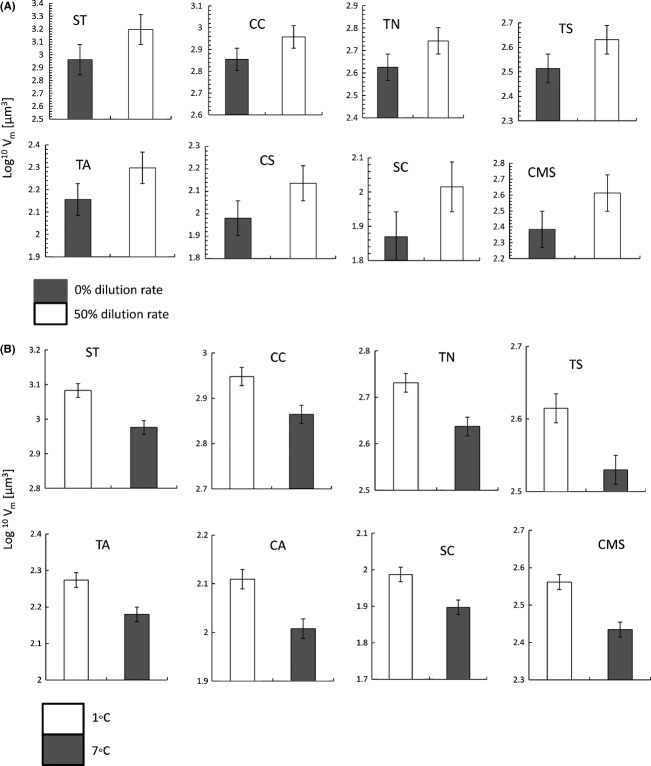
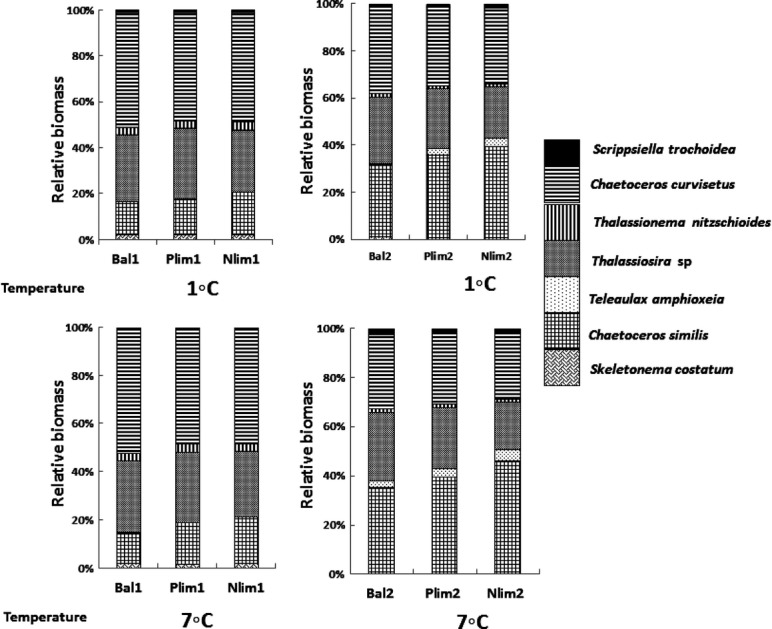
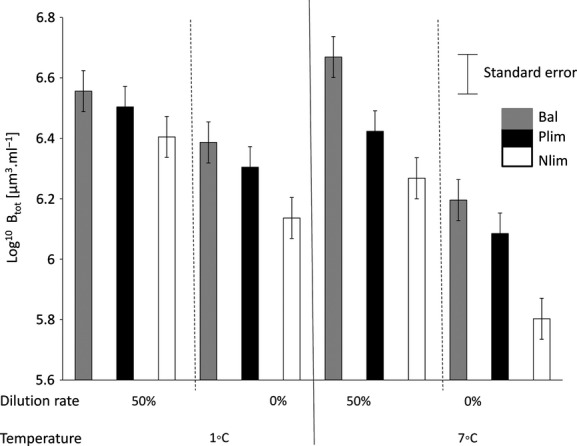
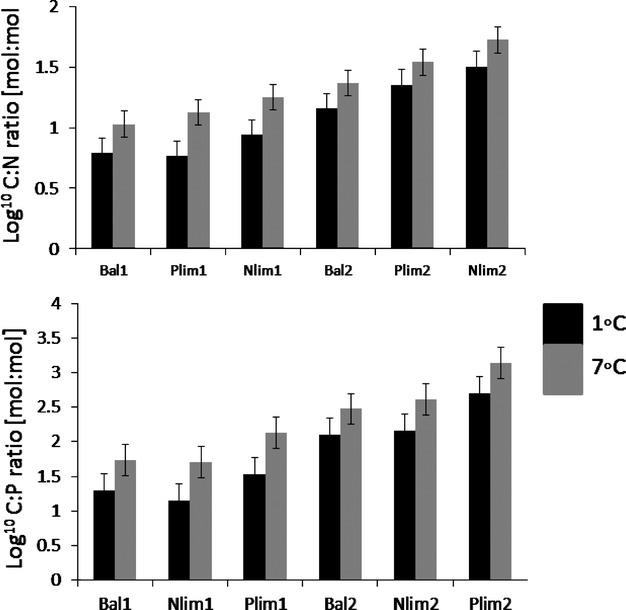
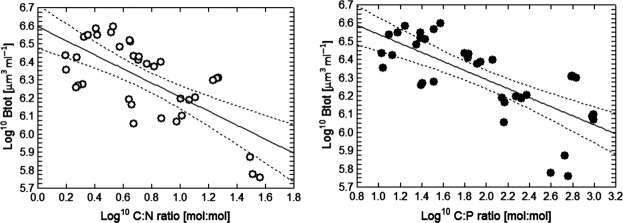
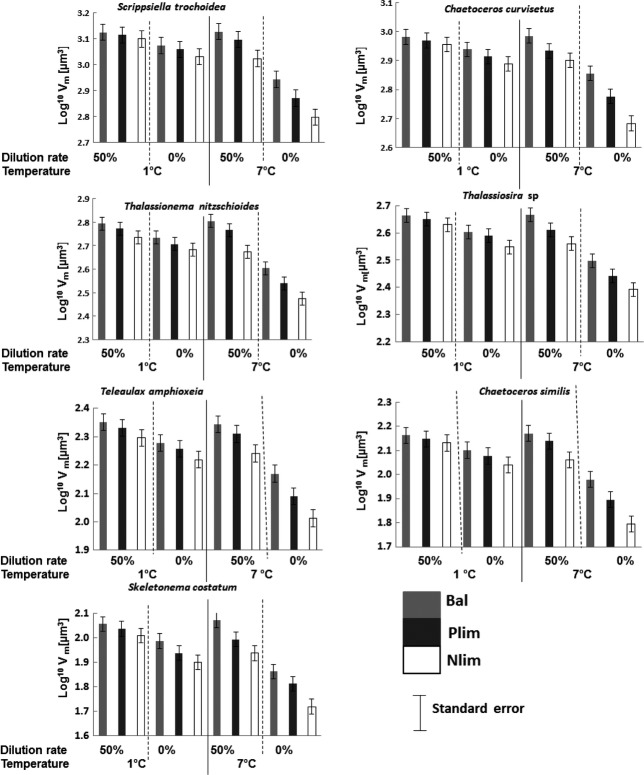
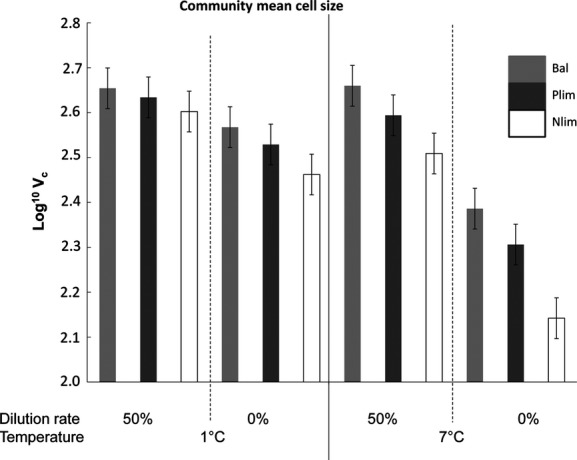
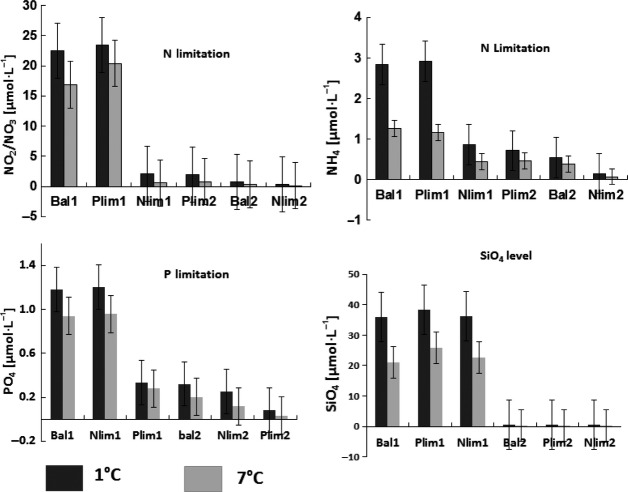
Cell size is one of the ecologically most important traits of phytoplankton. The cell size variation is frequently related to temperature and nutrient limitation. In order to disentangle the role of both factors, an experiment was conducted to determine the possible interactions of these factors. Baltic Sea water containing the natural plankton community was used. We performed a factorial combined experiment of temperature, type of nutrient limitation (N vs. P), and strength of nutrient limitation. The type of nutrient limitation was manipulated by altering the N:P ratio of the medium (balanced, N and P limitation) and strength by the dilution rate (0% and 50%) of the semicontinuous cultures. The negative effect of temperature on cell size was strongest under N limitation, intermediate under P limitation, and weakest when N and P were supplied at balanced ratios. However, temperature also influenced the intensity of nutrient imitation, because at higher temperature there was a tendency for dissolved nutrient concentrations to be lower, while the C:N or C:P ratio being higher…higher at identical dilution rates and medium composition. Analyzing the response of cell size to C:N ratios (as index of N limitation) and C:P ratios (as index of P limitation) indicated a clear dominance of the nutrient effect over the direct temperature effect, although the temperature effect was also significant.
细胞大小是浮游植物生态中最重要的特征之一。细胞大小的变化通常与温度和营养限制有关。为了厘清这两个因素的作用,进行了一项实验以确定这些因素的可能相互作用。实验使用了含有天然浮游生物群落的波罗的海水。我们进行了温度、营养限制类型(N 与 P 限制)和营养限制强度的析因组合实验。通过改变培养基的 N:P 比(平衡、N 和 P 限制)来操纵营养限制的类型,通过半连续培养的稀释率(0%和 50%)来操纵营养限制的强度。在 N 限制下,温度对细胞大小的负面影响最强,在 P 限制下中等,在 N 和 P 以平衡比例供应时最弱。然而,温度也影响营养模仿的强度,因为在较高的温度下,溶解养分的浓度有降低的趋势,而 C:N 或 C:P 比在相同的稀释率和培养基组成下较高。分析细胞大小对 C:N 比(作为 N 限制的指标)和 C:P 比(作为 P 限制的指标)的响应表明,尽管温度效应也很显著,但养分效应明显占主导地位。