Scottish Oceans Institute, School of Biology, University of St Andrews, Fife, Scotland, United Kingdom.
PLoS One. 2013 Sep 6;8(9):e74295. doi: 10.1371/journal.pone.0074295. eCollection 2013.
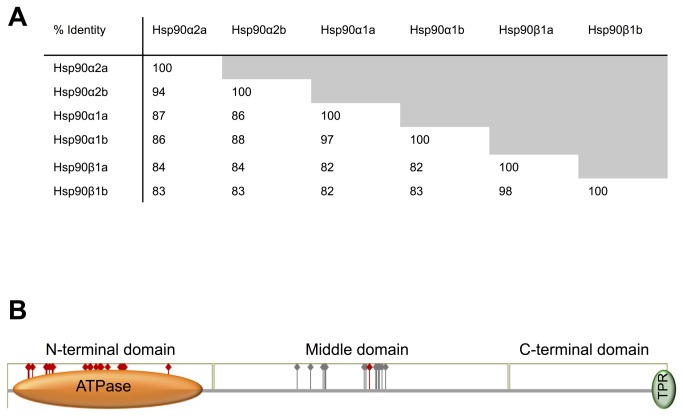
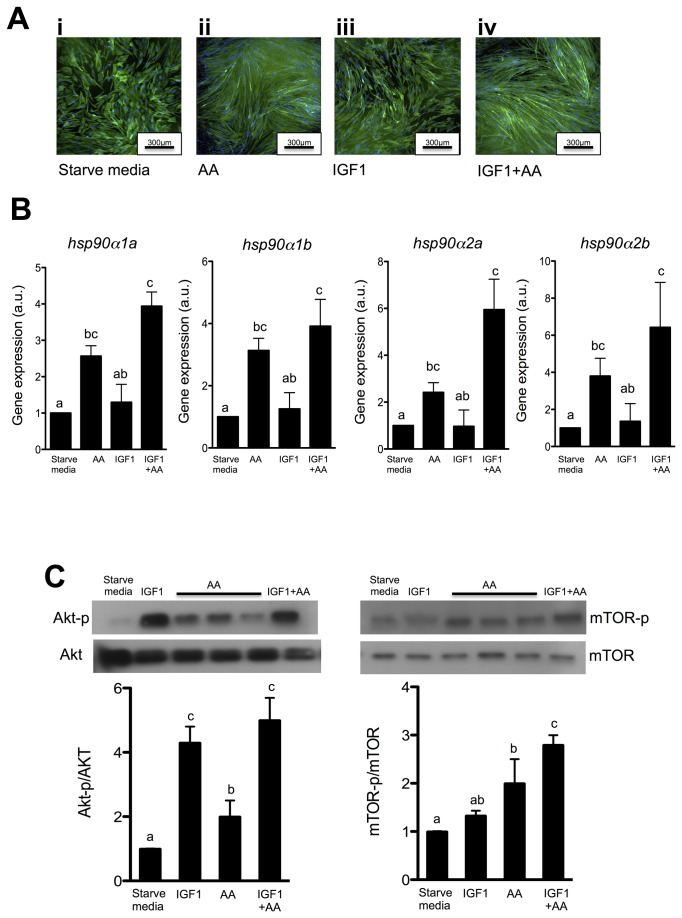
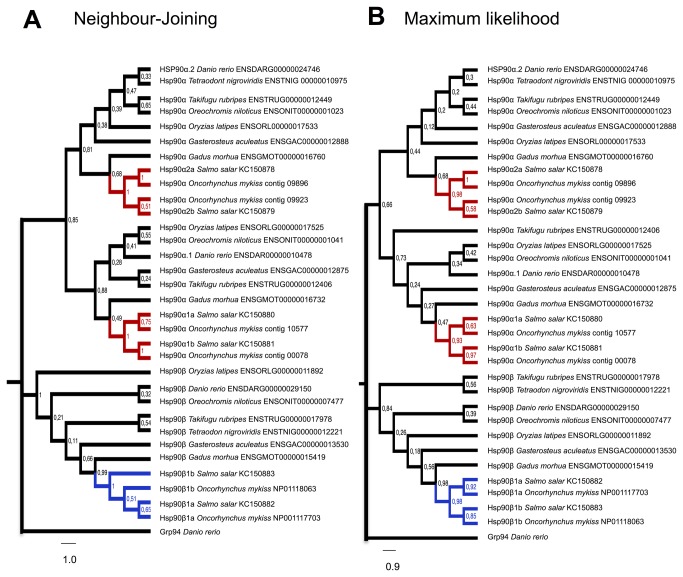
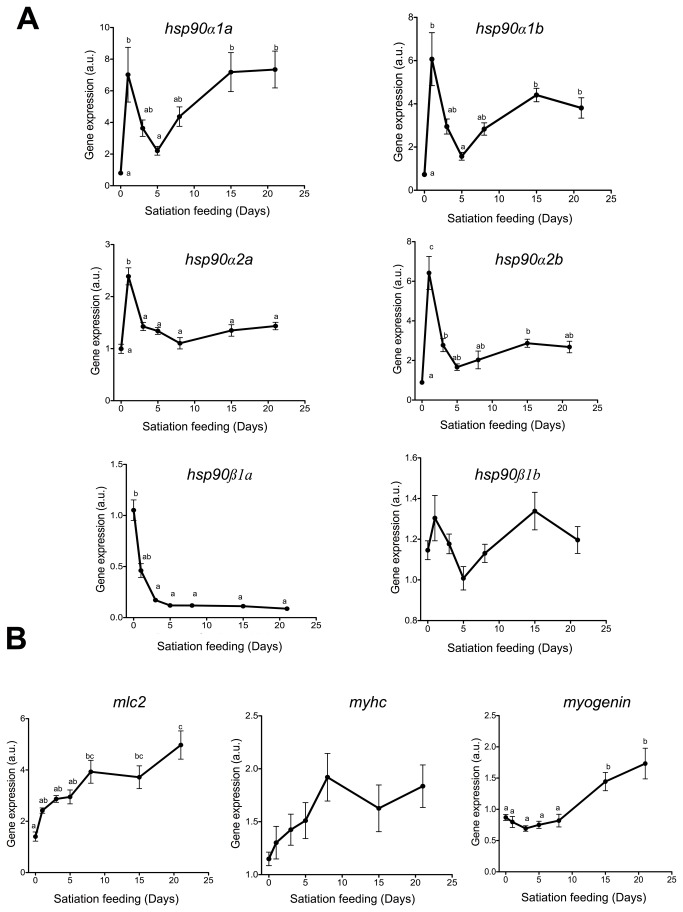
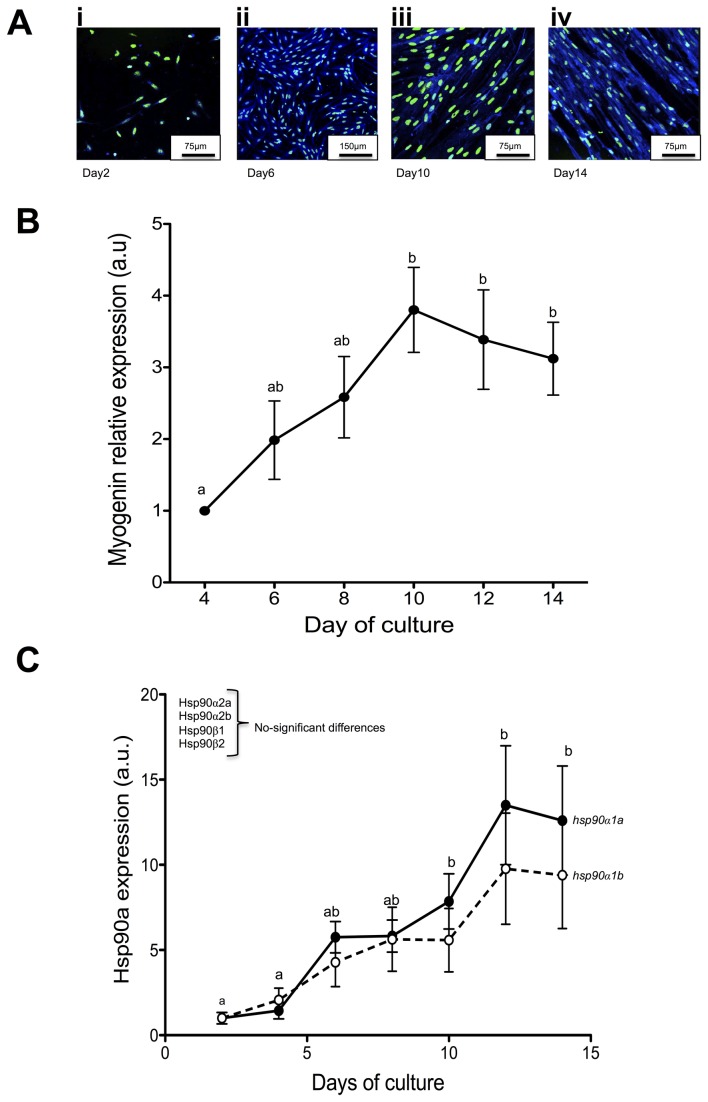
Heat shock proteins 90 (Hsp90) have an essential role in sarcomere formation and differentiation in skeletal muscle and also act as molecular chaperones during protein folding impacting a wide range of physiological processes. We characterised and provided a phylogenetically consistent nomenclature for the complete repertoire of six Hsp90 paralogues present in duplicated salmonid fish genomes (Hsp90α1a, Hsp90α1b, Hsp90α2a, Hsp90α2b, Hsp90ß1a and Hsp90ß1b). The expression of paralogues in fast skeletal muscle was investigated using in vivo fasting-feeding experiments and primary myogenic cultures. Fasted juvenile Atlantic salmon (Salmo salar) showed a transient 2 to 8-fold increase in the expression of all 4 Hsp90α paralogues within 24h of satiation feeding. Hsp90α1a and hsp90α1b also showed a pronounced secondary increase in expression after 10 days, concomitant with muscle differentiation and the expression of myogenin and sarcomeric proteins (mlc2, myhc). Hsp90ß1b was constitutively expressed whereas Hsp90ß1a expression was downregulated 10-fold between fasted and fed individuals. Hsp90α1a and Hsp90α1b were upregulated 10 to 15-fold concomitant with myotube formation and muscle differentiation in vitro whereas other Hsp90 paralogues showed no change in expression. In cells starved of amino acid (AA) and serum for 72h the addition of AA, but not insulin-like growth factor 1, increased phosphorylation of mTor and expression of all 4 hsp90α paralogues and associated co-chaperones including hsp30, tbcb, pdia4, pdia6, stga and fk504bp1, indicating a general activation of the protein folding response. In contrast, Hsp90ß1a expression in vitro was unresponsive to AA treatment indicating that some other as yet uncharacterised signal(s) regulate its expression in response to altered nutritional state.
热休克蛋白 90(Hsp90)在骨骼肌肌节形成和分化中具有重要作用,并且在蛋白质折叠过程中作为分子伴侣发挥作用,影响广泛的生理过程。我们对存在于重复鲑鱼基因组中的六种 Hsp90 旁系同源物(Hsp90α1a、Hsp90α1b、Hsp90α2a、Hsp90α2b、Hsp90ß1a 和 Hsp90ß1b)进行了鉴定,并提供了一个系统发生一致的命名法。使用体内禁食-喂养实验和原代肌原细胞培养研究了旁系同源物在快速骨骼肌中的表达。禁食的幼年大西洋鲑(Salmo salar)在饱食喂养 24 小时内,所有 4 种 Hsp90α 旁系同源物的表达均短暂增加 2 到 8 倍。Hsp90α1a 和 hsp90α1b 在 10 天后表达也明显增加,与肌肉分化和肌生成素和肌节蛋白(mlc2、myhc)的表达同时发生。Hsp90ß1b 持续表达,而 Hsp90ß1a 在禁食和喂养个体之间表达下调 10 倍。Hsp90α1a 和 Hsp90α1b 在体外肌管形成和肌肉分化时上调 10 到 15 倍,而其他 Hsp90 旁系同源物的表达没有变化。在细胞饥饿 72 小时的氨基酸(AA)和血清后,添加 AA,但不是胰岛素样生长因子 1,增加了 mTor 的磷酸化和所有 4 种 hsp90α 旁系同源物以及相关伴侣蛋白的表达,包括 hsp30、tbcb、pdia4、pdia6、stga 和 fk504bp1,表明蛋白质折叠反应的普遍激活。相比之下,Hsp90ß1a 的体外表达对 AA 处理无反应,表明其他一些尚未确定的信号调节其表达以响应改变的营养状态。