MGH Center for Translational Pain Research, Department of Anesthesia, Critical Care and Pain Medicine, Massachusetts General Hospital, Harvard Medical School, Boston, Massachusetts, United States of America ; Department of Anatomy, School of Basic Medicine, Guangdong Pharmaceutical University, Guangzhou, Guangdong, China ; Department of Anatomy, Zhongshan School of Medicine, Sun Yat-sen University, Guangzhou, China.
PLoS One. 2013 Sep 11;8(9):e74533. doi: 10.1371/journal.pone.0074533. eCollection 2013.
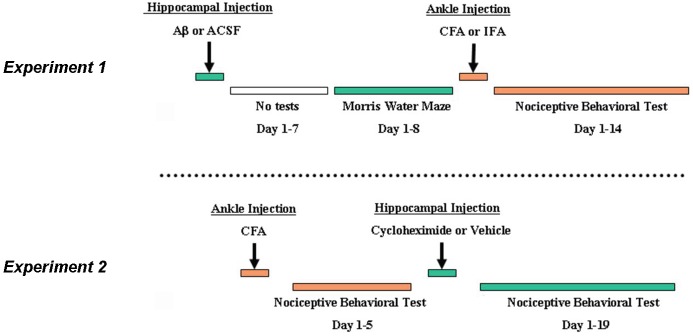
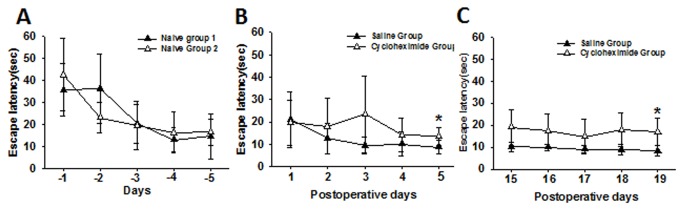
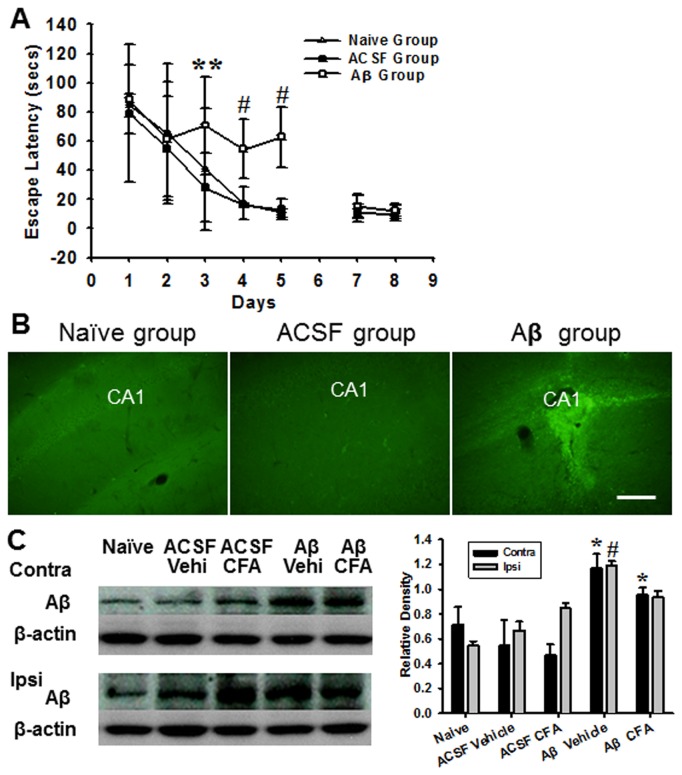
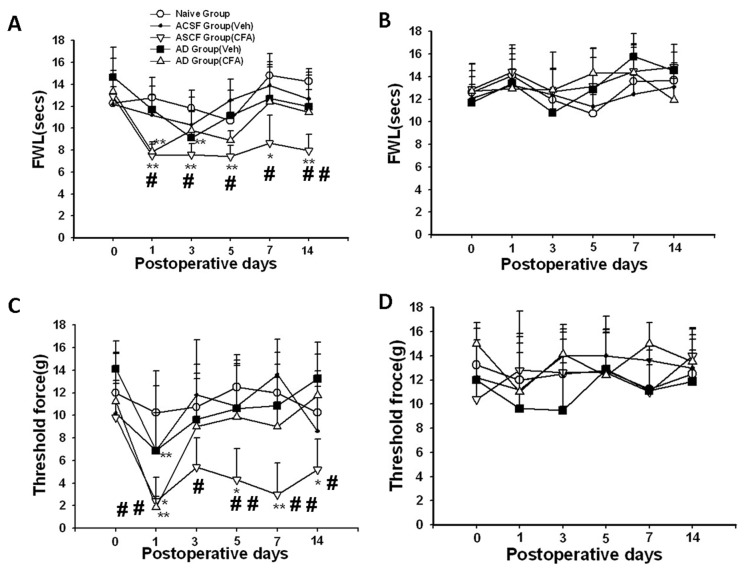
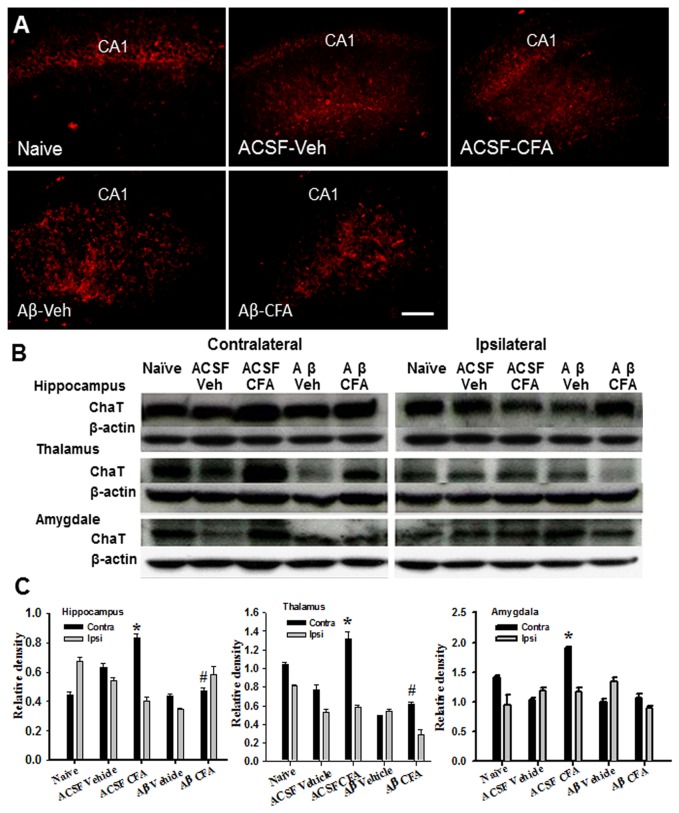
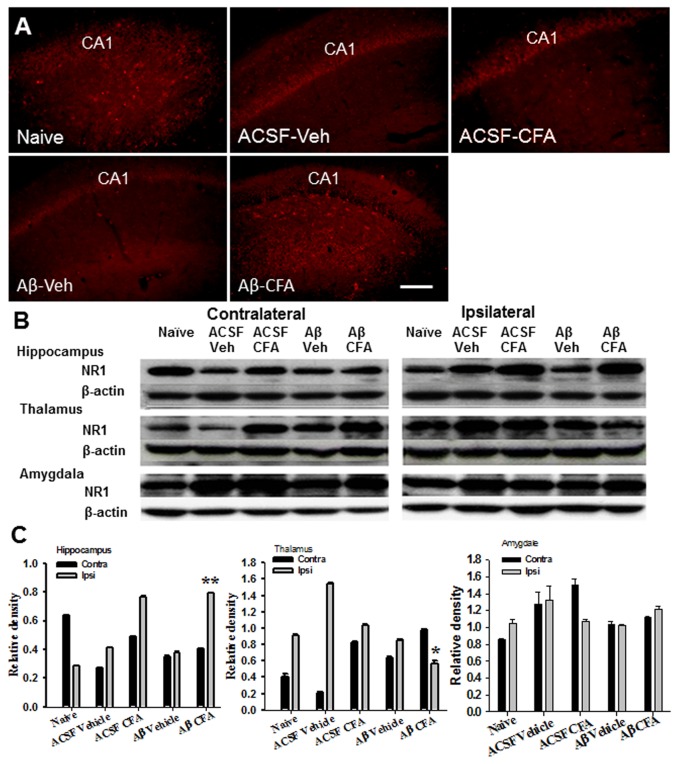
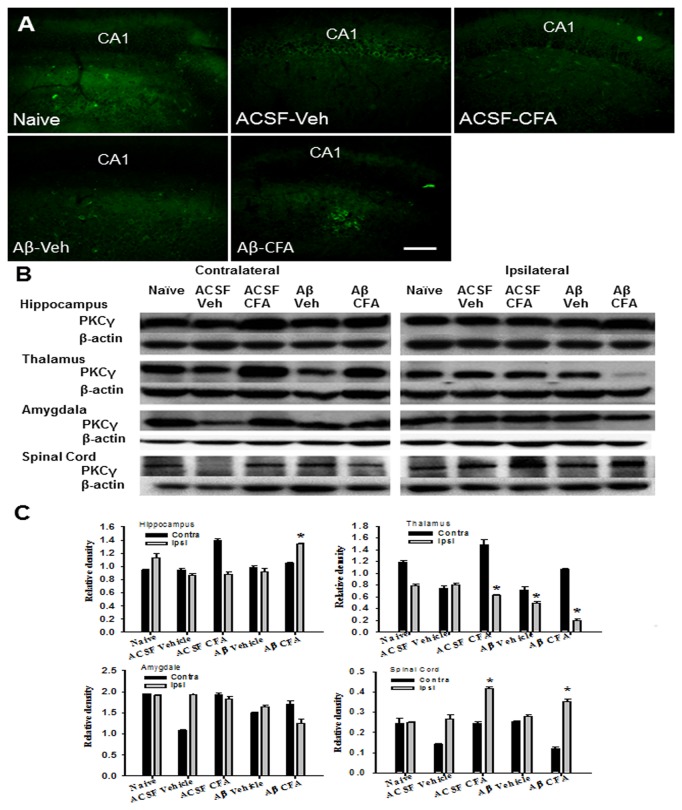
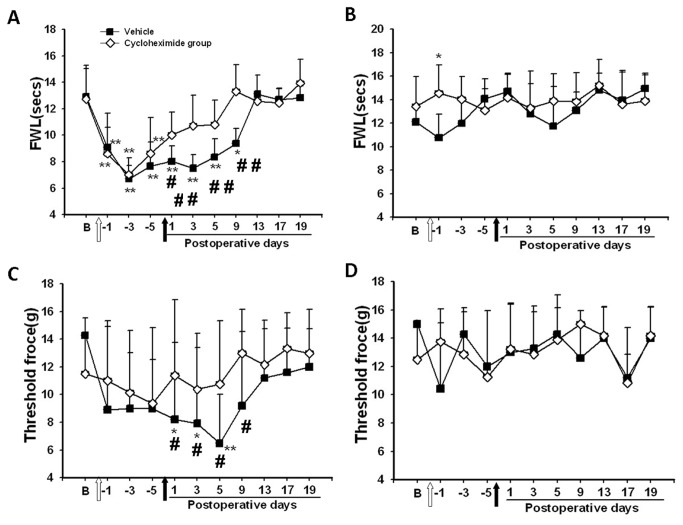
Despite the subjective nature of pain experience with cognitive and affective dimensions, preclinical pain research has largely focused on its sensory dimension. Here, we examined the relationship between learning/memory and nociceptive behavior in rats with combined learning impairment and persistent nociception. Learning impairment was induced by bilateral hippocampal injection of a mixed Aβ solution, whereas persistent nociception produced in these rats by complete Freund's adjuvant-induced ankle inflammation. Those rats with learning impairment showed a diminished development of thermal hyperalgesia and mechanical allodynia and a shorter time course of nociceptive behavior without alteration of their baseline nociceptive threshold. In rats with pre-established hyperalgesia and allodynia due to ankle inflammation, bilateral intra-hippocampal injection of cycloheximide (a protein synthesis inhibitor) promoted the earlier recovery of nociceptive behavior. Moreover, expression of Aβ, NR1 subunit of the N-methyl-D-aspartate receptor, and protein kinase Cγ was upregulated, whereas the choline acetyl transferase expression was downregulated, in the hippocampus, thalamus, amygdala, and/or spinal cord of rats with combined learning impairment and persistent nociception. The data indicate that learning impairment could disrupt the response to a state of persistent nociception, suggesting an important role for cognitive maladaptation in the mechanisms of chronic pain. These results also suggest that a preclinical model of combined learning impairment and persistent nociception may be useful to explore the brain mechanisms underlying the transition from acute to chronic pain.
尽管疼痛体验具有认知和情感维度的主观性,但临床前疼痛研究主要集中在其感觉维度上。在这里,我们研究了学习/记忆与具有学习障碍和持续性疼痛的大鼠的伤害感受行为之间的关系。学习障碍是通过双侧海马注射混合 Aβ 溶液引起的,而这些大鼠的持续性疼痛是通过完全弗氏佐剂引起的踝关节炎症产生的。那些有学习障碍的大鼠表现出热痛觉过敏和机械性痛觉过敏的发展减弱,以及疼痛行为的时间过程缩短,而其基础疼痛阈值没有改变。在由于踝关节炎症而导致的痛觉过敏和痛觉过敏预先建立的大鼠中,双侧海马内注射环己酰亚胺(一种蛋白质合成抑制剂)促进了疼痛行为的更早恢复。此外,在学习障碍和持续性疼痛的大鼠的海马体、丘脑、杏仁核和/或脊髓中,Aβ、N-甲基-D-天冬氨酸受体 NR1 亚基和蛋白激酶 Cγ 的表达上调,而胆碱乙酰转移酶的表达下调。这些数据表明,学习障碍可能会破坏对持续性疼痛状态的反应,表明认知适应不良在慢性疼痛机制中起着重要作用。这些结果还表明,学习障碍和持续性疼痛的临床前模型可能有助于探索从急性到慢性疼痛的大脑机制。