Center for Vascular and Inflammatory Diseases and the Department of Pathology, University of Maryland School of Medicine, Baltimore, Maryland, United States of America.
PLoS One. 2013 Sep 5;8(9):e74684. doi: 10.1371/journal.pone.0074684. eCollection 2013.
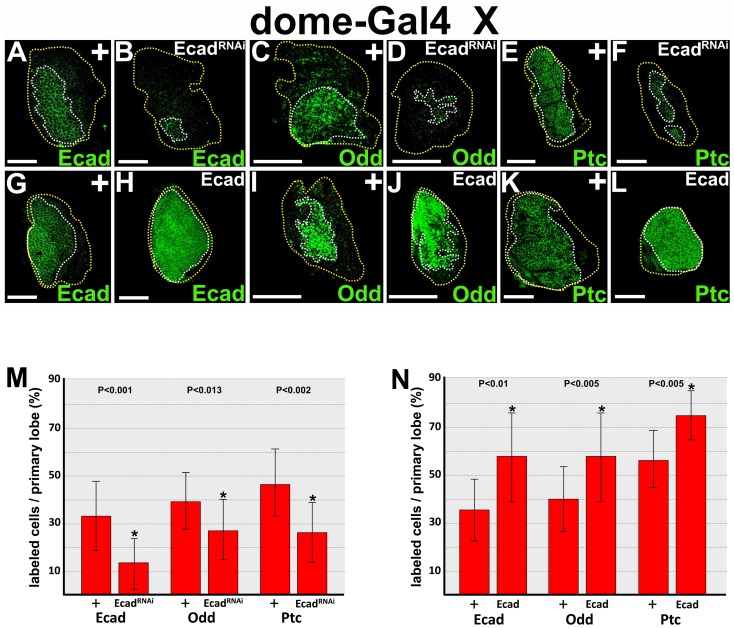
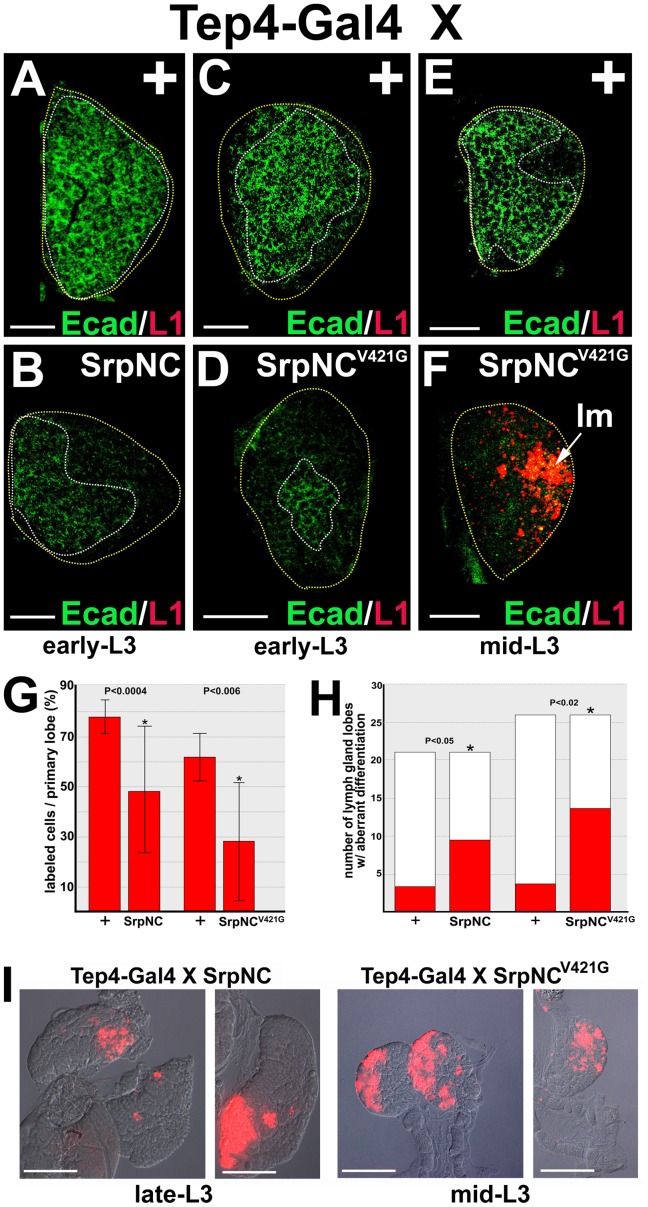
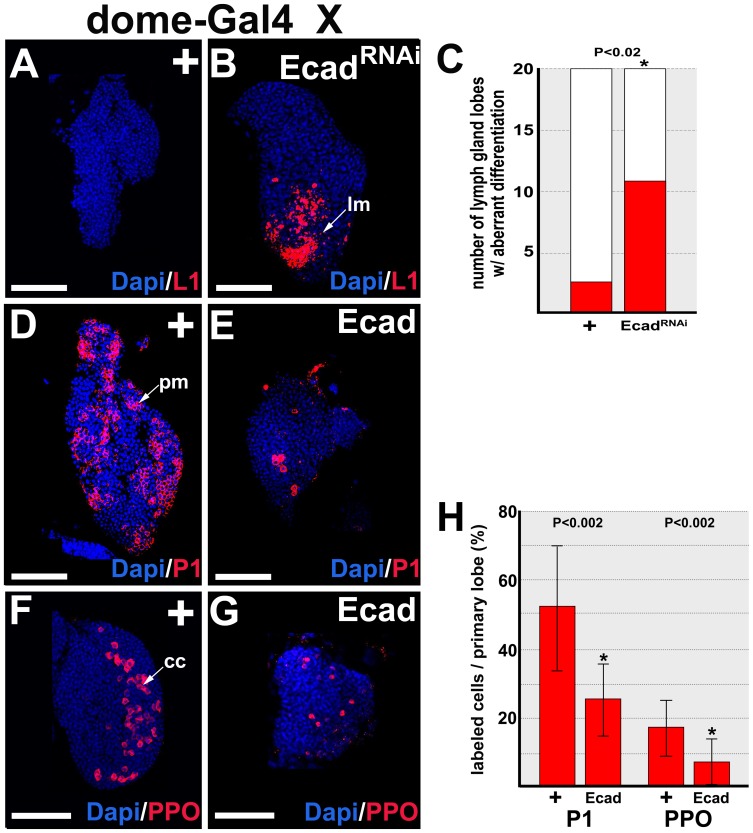
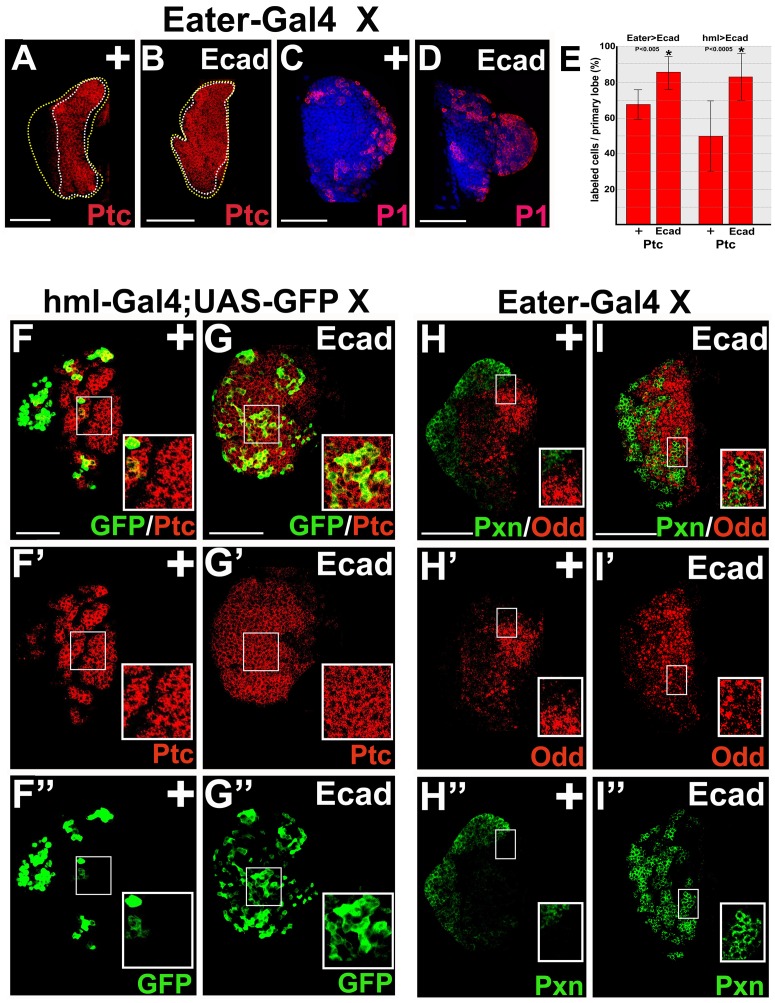
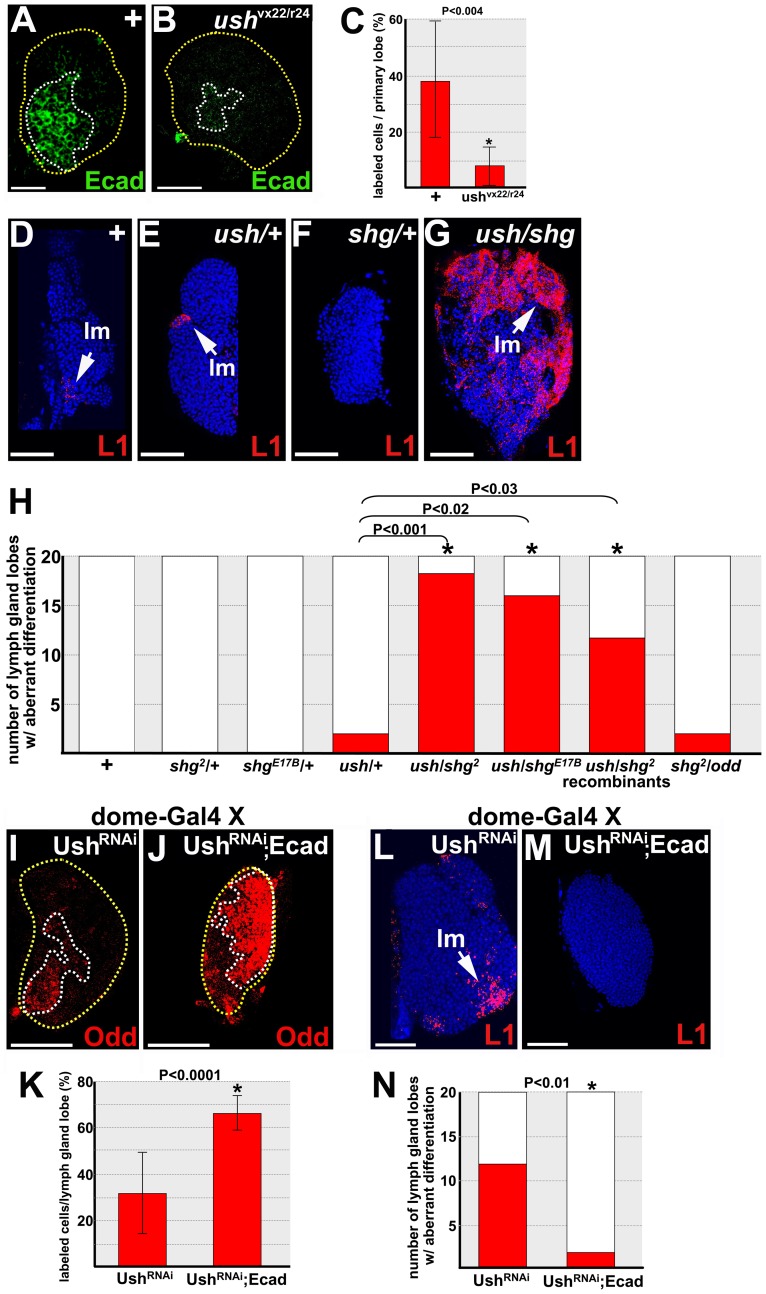
A fundamental question in stem cell biology concerns the regulatory strategies that control the choice between multipotency and differentiation. Drosophila blood progenitors or prohemocytes exhibit key stem cell characteristics, including multipotency, quiescence, and niche dependence. As a result, studies of Drosophila hematopoiesis have provided important insights into the molecular mechanisms that control these processes. Here, we show that E-cadherin is an important regulator of prohemocyte fate choice, maintaining prohemocyte multipotency and blocking differentiation. These functions are reminiscent of the role of E-cadherin in mammalian embryonic stem cells. We also show that mis-expression of E-cadherin in differentiating hemocytes disrupts the boundary between these cells and undifferentiated prohemocytes. Additionally, upregulation of E-cadherin in differentiating hemocytes increases the number of intermediate cell types expressing the prohemocyte marker, Patched. Furthermore, our studies indicate that the Drosophila GATA transcriptional co-factor, U-shaped, is required for E-cadherin expression. Consequently, E-cadherin is a downstream target of U-shaped in the maintenance of prohemocyte multipotency. In contrast, we showed that forced expression of the U-shaped GATA-binding partner, Serpent, repressed E-cadherin expression and promoted lamellocyte differentiation. Thus, U-shaped may maintain E-cadherin expression by blocking the inhibitory activity of Serpent. Collectively, these observations suggest that GATA:FOG complex formation regulates E-cadherin levels and, thereby, the choice between multipotency and differentiation. The work presented in this report further defines the molecular basis of prohemocyte cell fate choice, which will provide important insights into the mechanisms that govern stem cell biology.
干细胞生物学中的一个基本问题是关于调控策略,这些策略控制着多能性和分化之间的选择。果蝇血液祖细胞或原血细胞表现出关键的干细胞特征,包括多能性、静止和龛依赖性。因此,对果蝇造血的研究为控制这些过程的分子机制提供了重要的见解。在这里,我们表明 E-钙粘蛋白是原血细胞命运选择的重要调节因子,维持原血细胞的多能性并阻止其分化。这些功能类似于 E-钙粘蛋白在哺乳动物胚胎干细胞中的作用。我们还表明,在分化的血细胞中过表达 E-钙粘蛋白会破坏这些细胞与未分化的原血细胞之间的边界。此外,在分化的血细胞中上调 E-钙粘蛋白会增加表达原血细胞标记物 patched 的中间细胞类型的数量。此外,我们的研究表明,果蝇 GATA 转录共因子 U 形结构是 E-钙粘蛋白表达所必需的。因此,E-钙粘蛋白是 U 形结构维持原血细胞多能性的下游靶标。相比之下,我们表明,强制表达 U 形 GATA 结合伙伴 Serpent 会抑制 E-钙粘蛋白的表达并促进 lamellocyte 分化。因此,U 形结构可能通过阻断 Serpent 的抑制活性来维持 E-钙粘蛋白的表达。总的来说,这些观察结果表明,GATA:FOG 复合物的形成调节 E-钙粘蛋白的水平,从而调节多能性和分化之间的选择。本报告中介绍的工作进一步定义了原血细胞细胞命运选择的分子基础,这将为理解控制干细胞生物学的机制提供重要的见解。