Spatial Epidemiology and Ecology Research Lab, Department of Geography, University of Florida, Gainesville, Florida, United States of America ; Emerging Pathogens Institute, University of Florida, Gainesville, Florida, United States of America.
PLoS Negl Trop Dis. 2013 Sep 5;7(9):e2388. doi: 10.1371/journal.pntd.0002388. eCollection 2013.
Anthrax is a soil-borne disease caused by the bacterium Bacillus anthracis and is considered a neglected zoonosis. In the country of Georgia, recent reports have indicated an increase in the incidence of human anthrax. Identifying sub-national areas of increased risk may help direct appropriate public health control measures. The purpose of this study was to evaluate the spatial distribution of human anthrax and identify environmental/anthropogenic factors associated with persistent clusters.
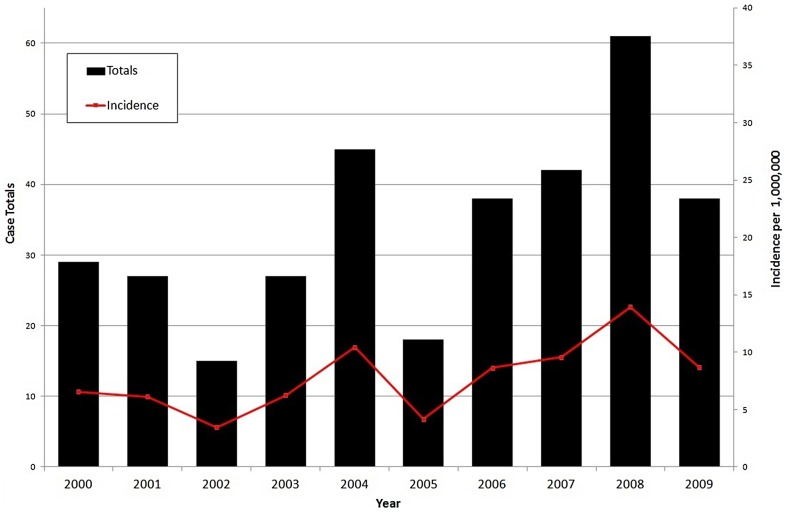
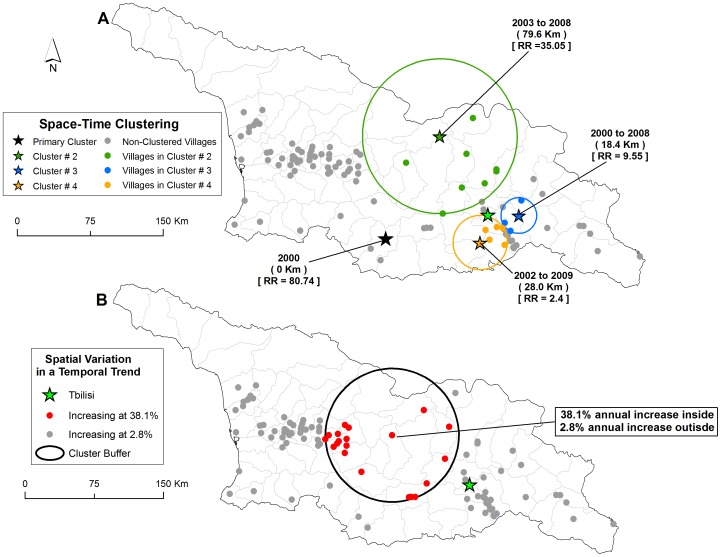
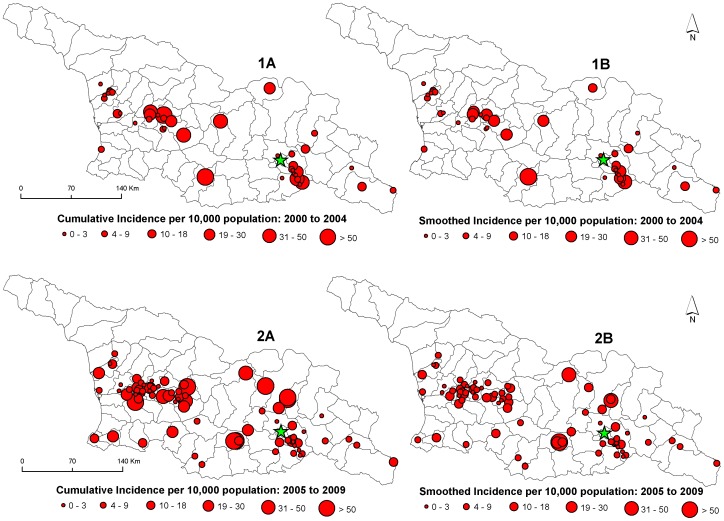
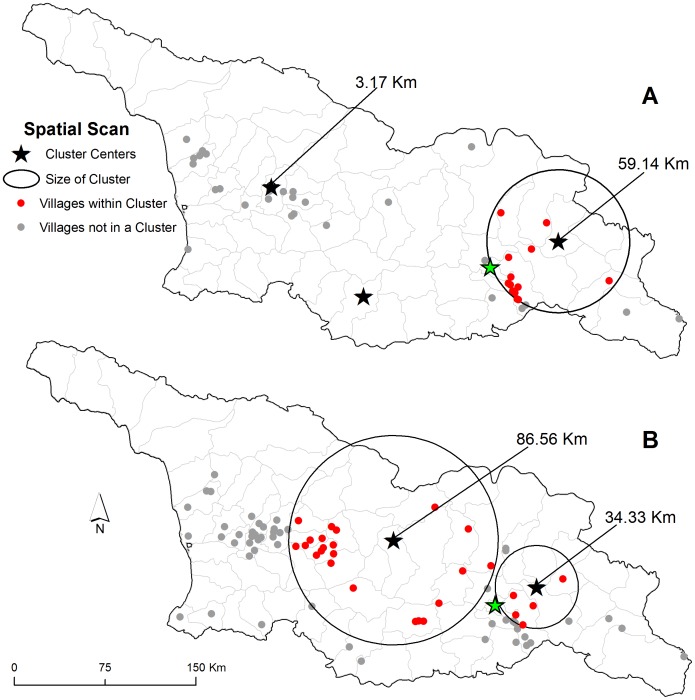
METHODS/FINDINGS: A database of human cutaneous anthrax in Georgia during the period 2000-2009 was constructed using a geographic information system (GIS) with case data recorded to the community location. The spatial scan statistic was used to identify persistence of human cutaneous anthrax. Risk factors related to clusters of persistence were modeled using a multivariate logistic regression. Areas of persistence were identified in the southeastern part of the country. Results indicated that the persistence of human cutaneous anthrax showed a strong positive association with soil pH and urban areas.
CONCLUSIONS/SIGNIFICANCE: Anthrax represents a persistent threat to public and veterinary health in Georgia. The findings here showed that the local level heterogeneity in the persistence of human cutaneous anthrax necessitates directed interventions to mitigate the disease. High risk areas identified in this study can be targeted for public health control measures such as farmer education and livestock vaccination campaigns.
炭疽是一种由炭疽杆菌引起的土壤传播疾病,被认为是一种被忽视的动物传染病。在格鲁吉亚,最近的报告表明人类炭疽病的发病率有所上升。确定风险增加的次国家地区可能有助于指导采取适当的公共卫生控制措施。本研究的目的是评估人类炭疽病的空间分布,并确定与持续聚集相关的环境/人为因素。
方法/发现:本研究使用地理信息系统(GIS)构建了 2000 年至 2009 年期间格鲁吉亚人类皮肤炭疽数据库,病例数据记录到社区位置。使用空间扫描统计来识别人类皮肤炭疽的持续存在。使用多变量逻辑回归模型来分析与持续性集群相关的风险因素。在该国东南部地区确定了持续性区域。结果表明,人类皮肤炭疽的持续性与土壤 pH 值和城市地区呈强正相关。
结论/意义:炭疽病仍然对格鲁吉亚的公共和兽医健康构成威胁。本研究结果表明,人类皮肤炭疽病持续性的局部水平异质性需要采取定向干预措施来减轻疾病。本研究确定的高风险地区可以作为公共卫生控制措施的目标,如农民教育和牲畜疫苗接种运动。