Department of Pharmacology, Penn State College of Medicine, Hershey, Pennsylvania 17033.
G3 (Bethesda). 2013 Nov 6;3(11):2059-67. doi: 10.1534/g3.113.007484.
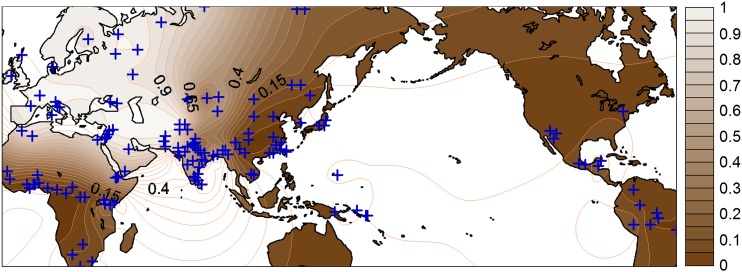
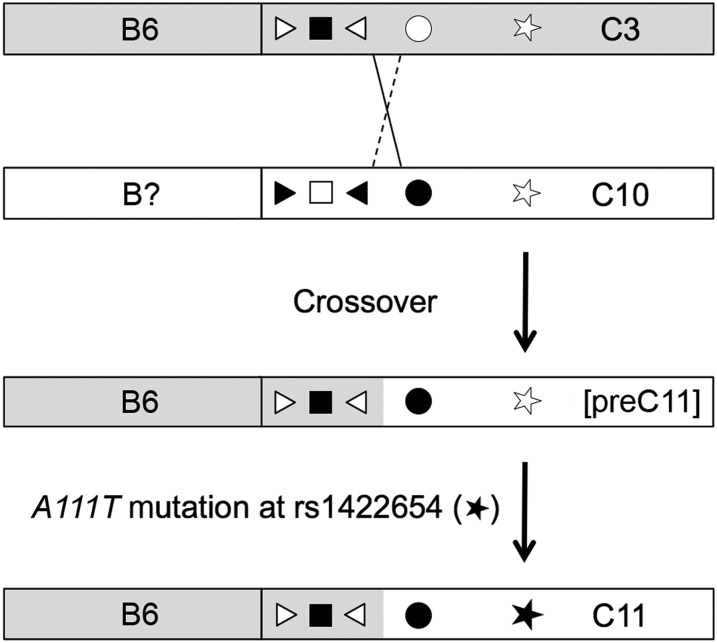
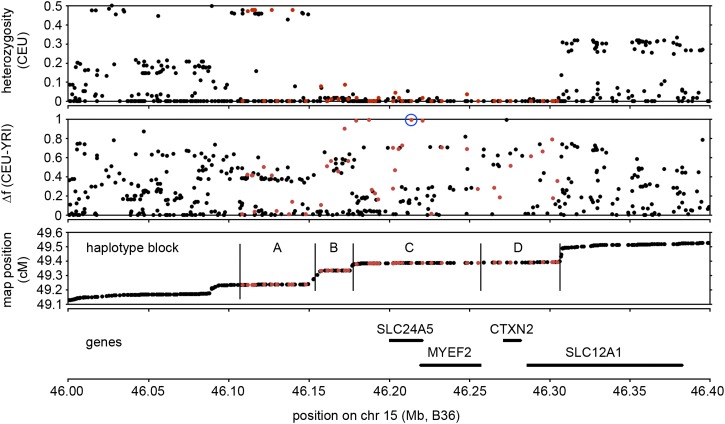
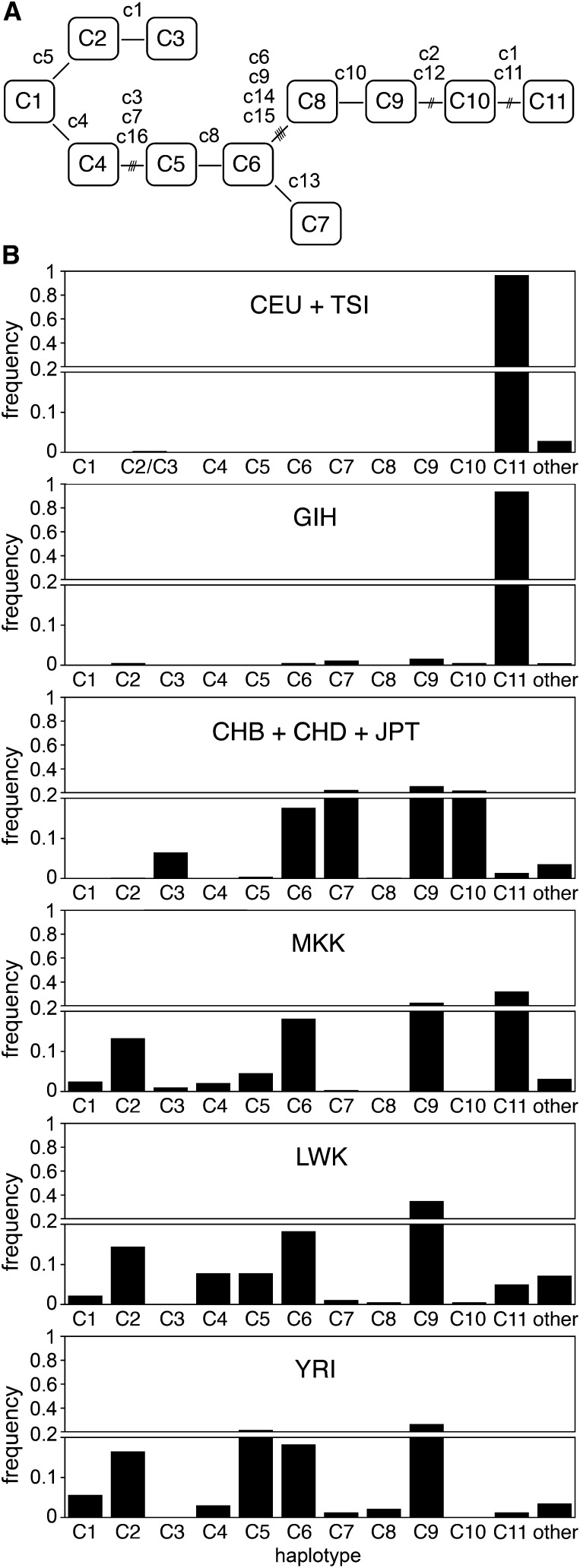
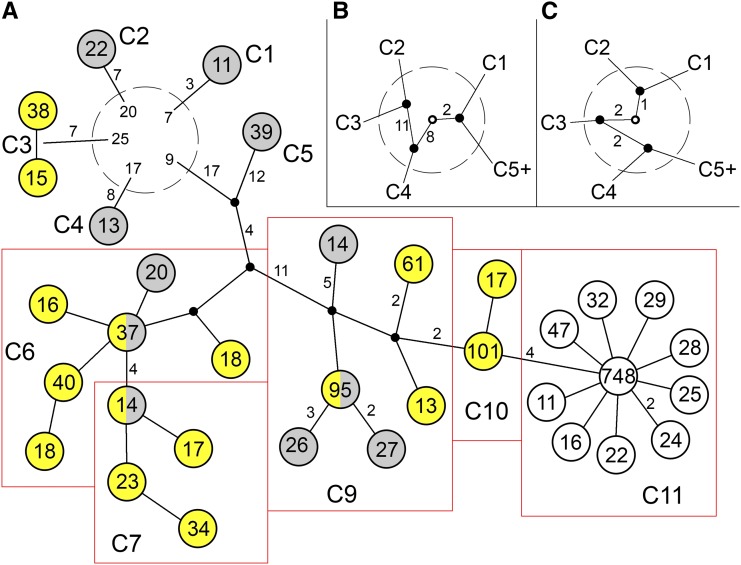
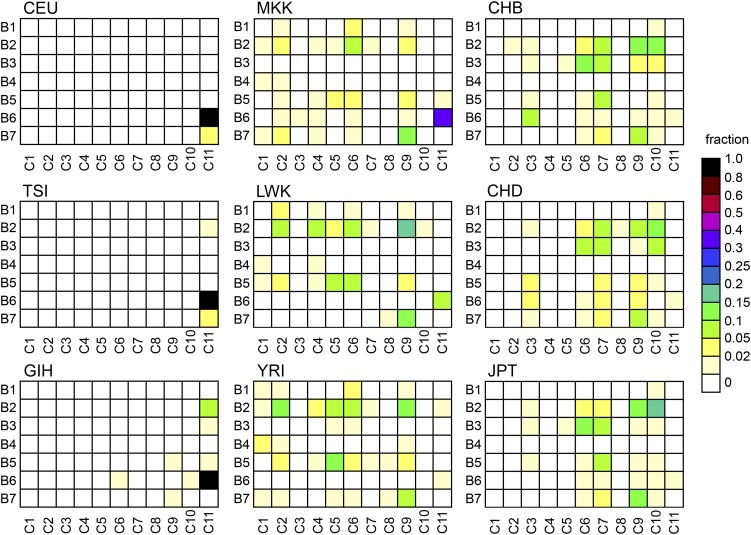
Divergent natural selection caused by differences in solar exposure has resulted in distinctive variations in skin color between human populations. The derived light skin color allele of the SLC24A5 gene, A111T, predominates in populations of Western Eurasian ancestry. To gain insight into when and where this mutation arose, we defined common haplotypes in the genomic region around SLC24A5 across diverse human populations and deduced phylogenetic relationships between them. Virtually all chromosomes carrying the A111T allele share a single 78-kb haplotype that we call C11, indicating that all instances of this mutation in human populations share a common origin. The C11 haplotype was most likely created by a crossover between two haplotypes, followed by the A111T mutation. The two parental precursor haplotypes are found from East Asia to the Americas but are nearly absent in Africa. The distributions of C11 and its parental haplotypes make it most likely that these two last steps occurred between the Middle East and the Indian subcontinent, with the A111T mutation occurring after the split between the ancestors of Europeans and East Asians.
由于阳光照射的差异导致的不同自然选择,导致了人类群体之间肤色的明显差异。SLC24A5 基因的衍生浅色皮肤等位基因 A111T 在欧洲西部人群中占主导地位。为了深入了解这种突变是何时何地发生的,我们在不同的人类群体中定义了 SLC24A5 周围基因组区域的常见单倍型,并推断了它们之间的系统发育关系。几乎所有携带 A111T 等位基因的染色体都共享一个 78kb 的单倍型,我们称之为 C11,这表明人类群体中所有的这种突变都有一个共同的起源。C11 单倍型很可能是由两个单倍型之间的交叉产生的,随后发生了 A111T 突变。这两个亲本前体单倍型从东亚到美洲都有发现,但在非洲几乎不存在。C11 及其亲本单倍型的分布表明,这最后两个步骤最有可能发生在中东和印度次大陆之间,A111T 突变发生在欧洲人和东亚人祖先分裂之后。