Center for Human Molecular Biology & Genetics, The Institute of Laboratory Medicine, Sichuan Academy of Medical Sciences & Sichuan Provincial People's Hospital, Chengdu, Sichuan, China ; Sichuan Translational Research Hospital, Chinese Academy of Sciences, Chengdu, Sichuan, China.
PLoS One. 2013 Aug 23;8(8):e71411. doi: 10.1371/journal.pone.0071411. eCollection 2013.
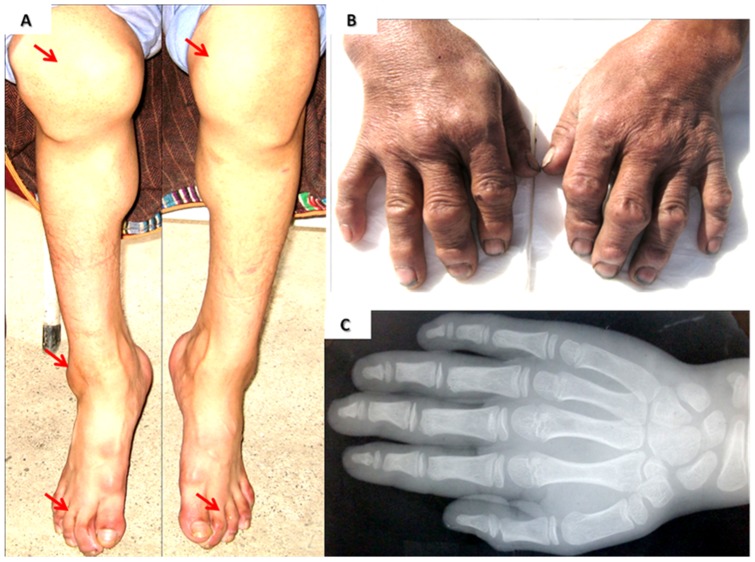
Kashin-Beck disease is a kind of degenerative osteoarthropathy. Genetic factors may play an important role in the pathogenesis of KBD.
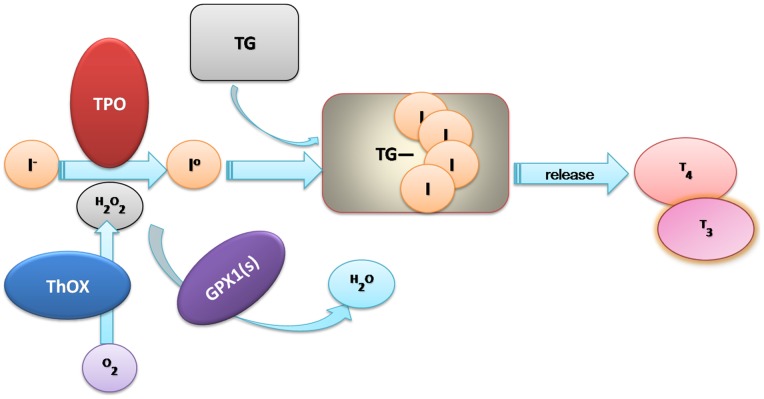
To investigate the association of the selenoprotein genes GPX1 (rs1050450, rs1800668, and rs3811699), TrxR2 (rs5748469), and DIO2 (rs225014) with Kashin-Beck disease (KBD) in a Tibetan population and to investigate the association of these SNPs with the serum iodine/selenium concentration in the Tibetan population.
Five SNPs including rs1050450, rs1800668, and rs3811699 in the GPX1 gene, rs5748469 in the TrxR2 gene, and rs225014 in the DIO2 gene were analyzed in Tibetan KBD patients and controls using the SNaPshot method. P trend values of the SNPs were calculated using an additive model.
None of the five SNPs in the three genes showed a significant association with KBD. Haplotypes TCC, TTC and TTT of rs1050450, rs1800668 and rs3811699 in GPX1 showed a significant association with KBD and controls with P value of 0.0421, 5.0E-4 and 0.0066, respectively. The GPX1 gene (rs1050450) showed a potential significant association with the iodine concentration in the Tibetan study population (P = 0.02726). However, no such association was detected with the selenium concentration (P = 0.2849).
In this study, we showed that single SNPs in the genes GPX1 (rs1050450, rs1800668 and rs3811699), TrxR2 (rs5748469), and DIO2 (rs225014) may not be significantly associated with KBD in a Tibetan population. However, haplotype analysis of SNPs rs1050450, rs1800668 and rs3811699 in GPX1 gene showed a significant association with KBD. The results suggested that GPX1 gene play a protective role in the susceptivity of KBD in Tibetans. Furthermore, the GPX1 gene (rs1050450) may be significantly associated with the serum iodine concentration in Tibetans.
大骨节病是一种退行性骨关节病。遗传因素可能在大骨节病的发病机制中起重要作用。
探讨硒蛋白基因 GPX1(rs1050450、rs1800668 和 rs3811699)、TrxR2(rs5748469)和 DIO2(rs225014)的单核苷酸多态性与藏族人群大骨节病(KBD)的关系,并探讨这些 SNP 与藏族人群血清碘/硒浓度的关系。
采用 SNaPshot 法分析藏族 KBD 患者和对照者 GPX1 基因中的 rs1050450、rs1800668 和 rs3811699 以及 TrxR2 基因中的 rs5748469 和 DIO2 基因中的 rs225014 共 5 个 SNP。采用加性模型计算 SNP 的 P 趋势值。
三个基因中的 5 个 SNP 均与 KBD 无显著关联。GPX1 基因中 rs1050450、rs1800668 和 rs3811699 的 TCC、TTC 和 TTT 单体型与 KBD 和对照组有显著关联,P 值分别为 0.0421、5.0E-4 和 0.0066。GPX1 基因(rs1050450)与藏族研究人群碘浓度有潜在显著关联(P=0.02726)。然而,硒浓度与这些 SNP 没有关联(P=0.2849)。
在本研究中,我们发现 GPX1 基因(rs1050450、rs1800668 和 rs3811699)、TrxR2 基因(rs5748469)和 DIO2 基因(rs225014)中的单个 SNP 可能与藏族人群的 KBD 无显著关联。然而,GPX1 基因中 rs1050450、rs1800668 和 rs3811699 的 SNP 单体型分析与 KBD 有显著关联。结果表明,GPX1 基因在藏族人群中对 KBD 的易感性起保护作用。此外,GPX1 基因(rs1050450)可能与藏族人群的血清碘浓度有显著关联。