Department of Physiology and Pathophysiology, Shanghai Medical College, Fudan University, Shanghai, China.
PLoS One. 2013 Sep 13;8(9):e74366. doi: 10.1371/journal.pone.0074366. eCollection 2013.
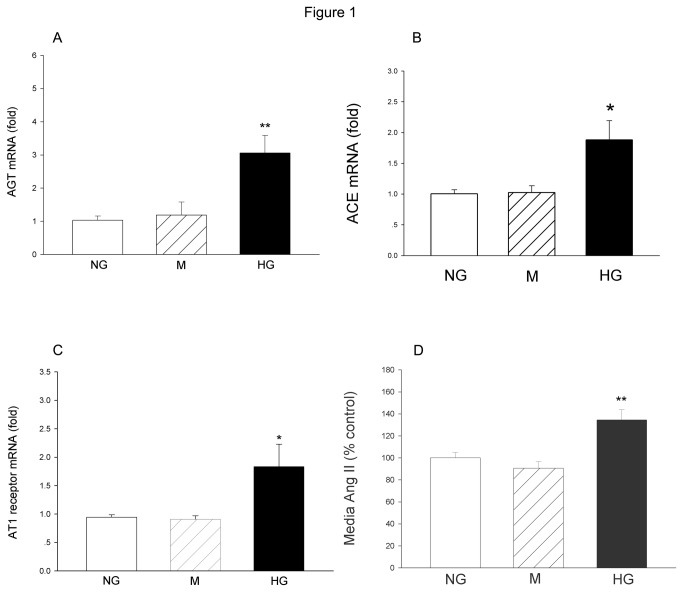
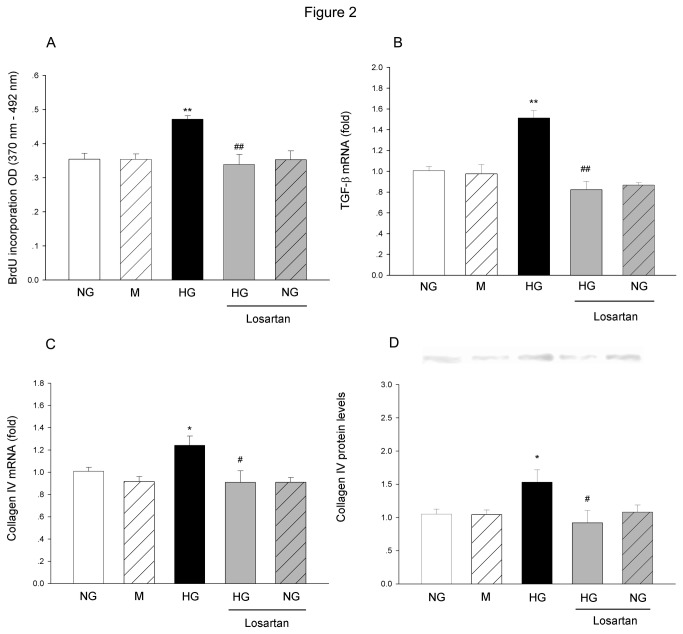
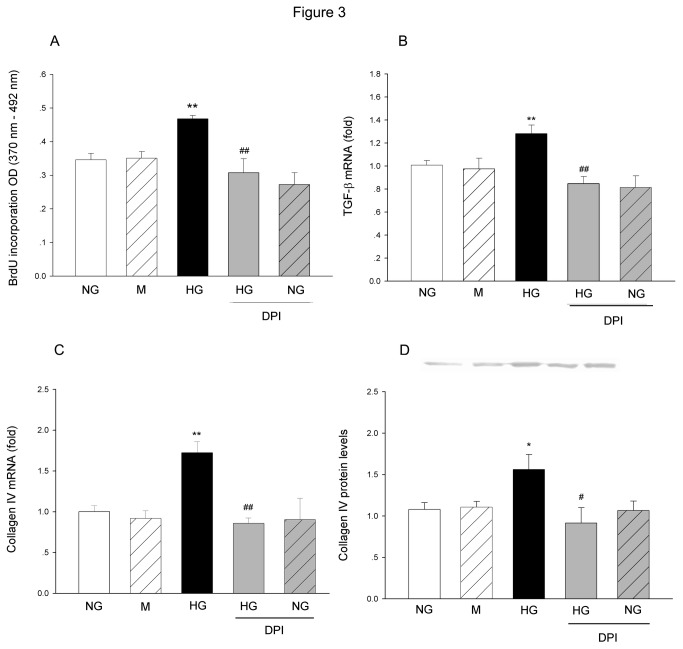
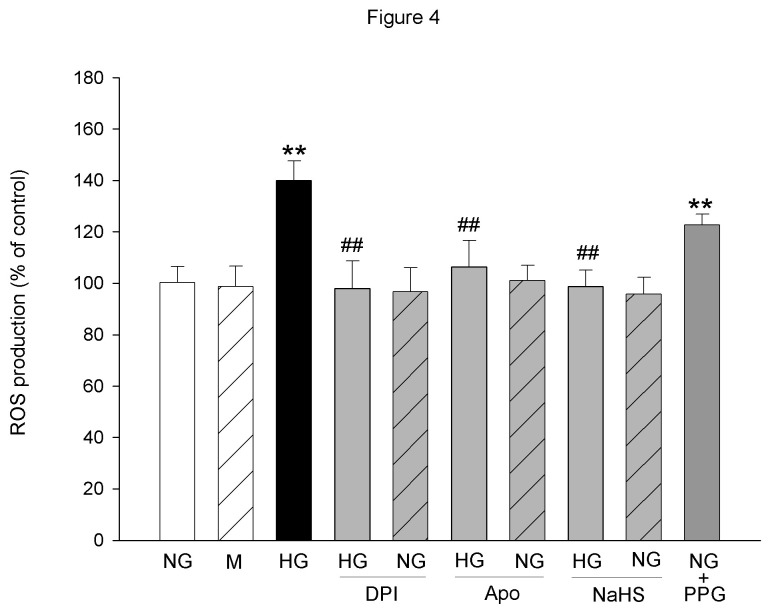
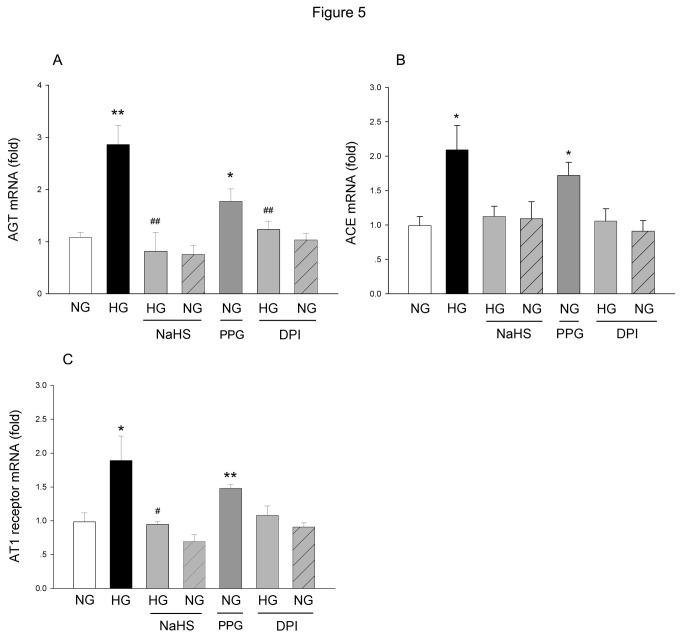
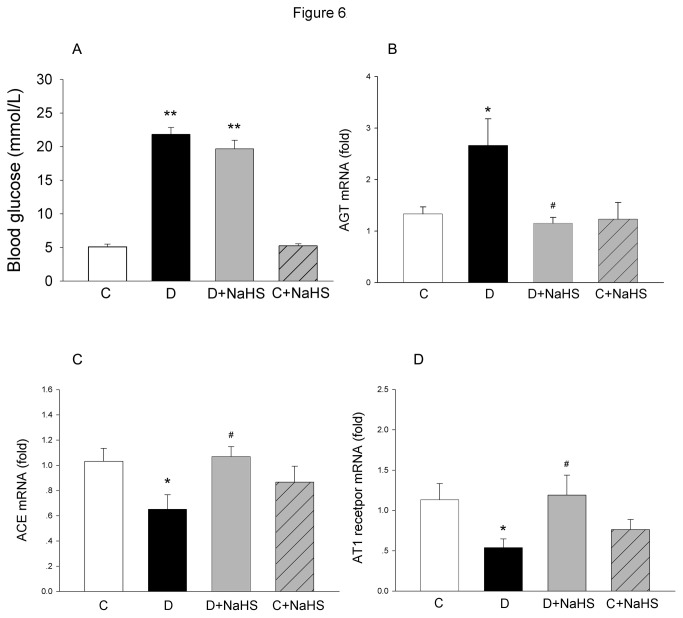
Decrease in endogenous hydrogen sulfide (H2S) was reported to participate in the pathogenesis of diabetic nephropathy (DN). This study is aimed at exploring the relationship between the abnormalities in H2S metabolism, hyperglycemia-induced oxidative stress and the activation of intrarenal renin-angiotensin system (RAS). Cultured renal mesangial cells (MCs) and streptozotocin (STZ) induced diabetic rats were used for the studies. The expressions of angiotensinogen (AGT), angiotensin converting enzyme (ACE), angiotensin II (Ang II) type I receptor (AT1), transforming growth factor-β1 (TGF-β1) and collagen IV were measured by real time PCR and Western blot. Reactive oxygen species (ROS) production was assessed by fluorescent probe assays. Cell proliferation was analyzed by 5'-bromo-2'-deoxyuridine incorporation assay. Ang II concentration was measured by an enzyme immunoassay. AGT, ACE and AT1 receptor mRNA levels and Ang II concentration were increased in high glucose (HG) -treated MCs, the cell proliferation rate and the production of TGF-β1 and of collagen IV productions were also increased. The NADPH oxidase inhibitor diphenylenechloride iodonium (DPI) was able to reverse the HG-induced RAS activation and the changes in cell proliferation and collagen synthesis. Supplementation of H2S attenuated HG-induced elevations in ROS and RAS activation. Blockade on H2S biosynthesis from cystathione-γ-lyase (CSE) by DL-propargylglycine (PPG) resulted in effects similar to that of HG treatment. In STZ-induced diabetic rats, the changes in RAS were also reversed by H2S supplementation without affecting blood glucose concentration. These data suggested that the decrease in H2S under hyperglycemic condition leads to an imbalance between oxidative and reductive species. The increased oxidative species results in intrarenal RAS activation, which, in turn, contributes to the pathogenesis of renal dysfunction.
内源性硫化氢 (H2S) 的减少被报道参与了糖尿病肾病 (DN) 的发病机制。本研究旨在探讨 H2S 代谢异常、高血糖诱导的氧化应激与肾内肾素-血管紧张素系统 (RAS) 激活之间的关系。本研究使用培养的肾小球系膜细胞 (MCs) 和链脲佐菌素 (STZ) 诱导的糖尿病大鼠进行了研究。通过实时 PCR 和 Western blot 测定血管紧张素原 (AGT)、血管紧张素转换酶 (ACE)、血管紧张素 II 型 1 型受体 (AT1)、转化生长因子-β1 (TGF-β1) 和胶原 IV 的表达。通过荧光探针测定法评估活性氧 (ROS) 的产生。通过 5'-溴-2'-脱氧尿苷掺入测定法分析细胞增殖。通过酶免疫测定法测定 Ang II 浓度。在高葡萄糖 (HG) 处理的 MCs 中,AGT、ACE 和 AT1 受体 mRNA 水平和 Ang II 浓度增加,细胞增殖率和 TGF-β1 及胶原 IV 的产生也增加。NADPH 氧化酶抑制剂二苯并氯碘 (DPI) 能够逆转 HG 诱导的 RAS 激活以及细胞增殖和胶原合成的变化。H2S 的补充减轻了 HG 诱导的 ROS 和 RAS 激活的升高。用 DL-丙炔基甘氨酸 (PPG) 阻断胱硫醚-γ-裂解酶 (CSE) 合成 H2S 导致的变化类似于 HG 处理的结果。在 STZ 诱导的糖尿病大鼠中,H2S 的补充也逆转了 RAS 的变化,而不影响血糖浓度。这些数据表明,高血糖状态下 H2S 的减少导致氧化和还原物质之间的失衡。增加的氧化物质导致肾内 RAS 激活,进而导致肾功能障碍的发病机制。