de Rinaldis Emanuele, Gazinska Patrycja, Mera Anca, Modrusan Zora, Fedorowicz Grazyna M, Burford Brian, Gillett Cheryl, Marra Pierfrancesco, Grigoriadis Anita, Dornan David, Holmberg Lars, Pinder Sarah, Tutt Andrew
Breakthrough Breast Cancer Research Unit, Division of Cancer Studies, School of Medicine, King's College London, Guy's Hospital, London, UK.
BMC Genomics. 2013 Sep 23;14:643. doi: 10.1186/1471-2164-14-643.
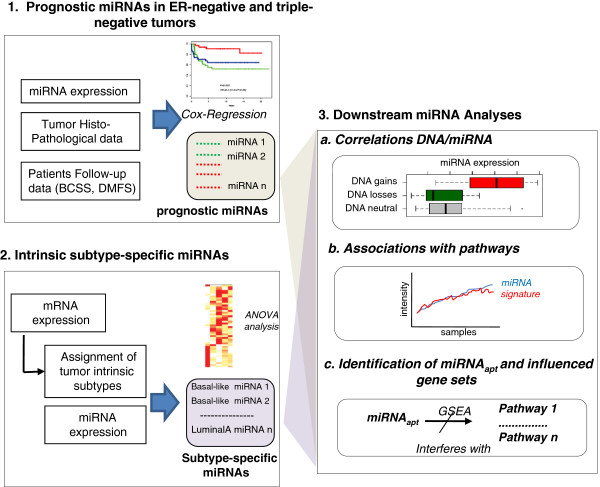
This study focuses on the analysis of miRNAs expression data in a cohort of 181 well characterised breast cancer samples composed primarily of triple-negative (ER/PR/HER2-negative) tumours with associated genome-wide DNA and mRNA data, extensive patient follow-up and pathological information.
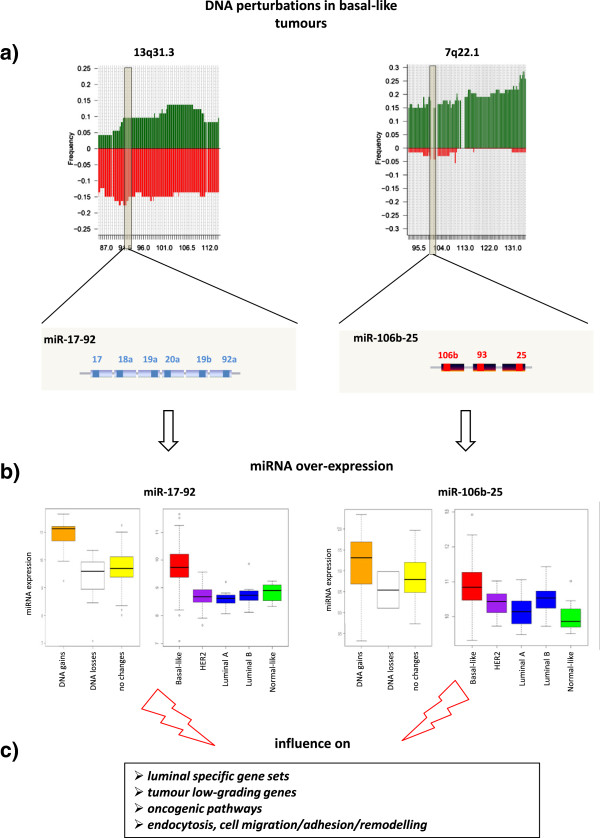
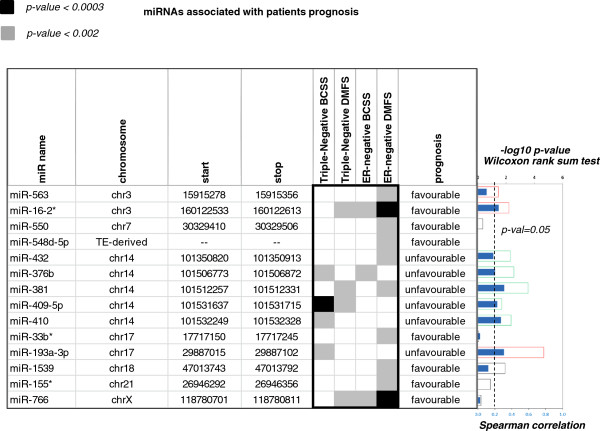
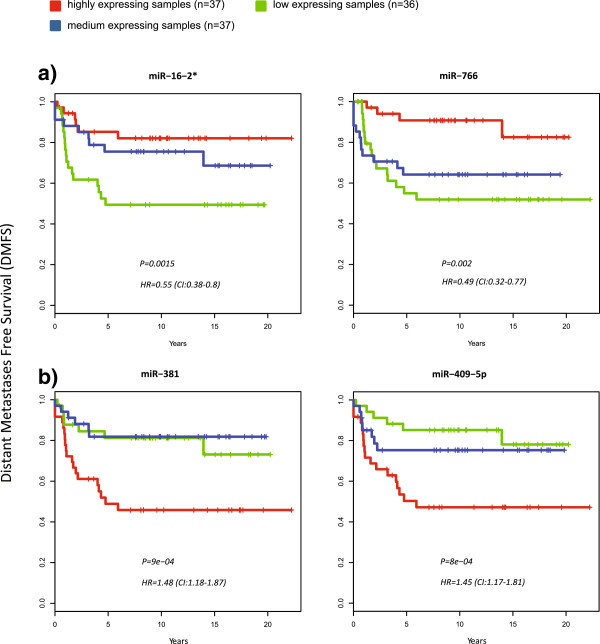
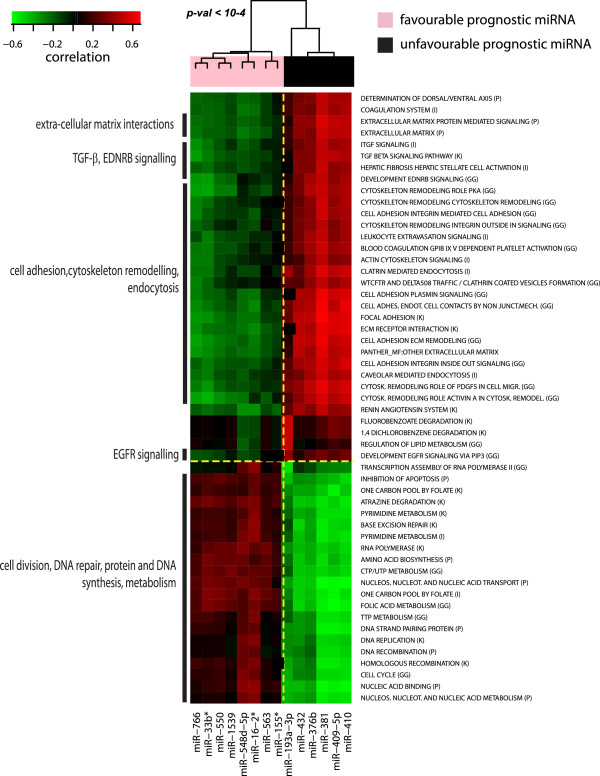
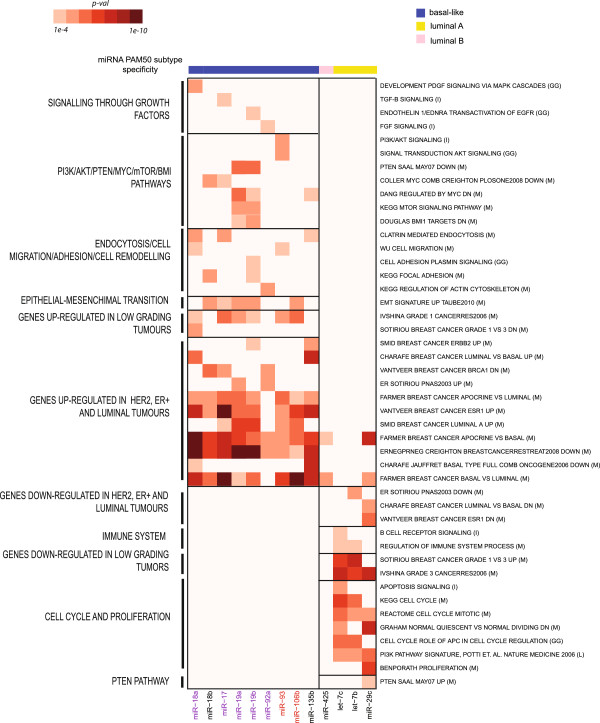
We identified 7 miRNAs associated with prognosis in the triple-negative tumours and an additional 7 when the analysis was extended to the set of all ER-negative cases. miRNAs linked to an unfavourable prognosis were associated with a broad spectrum of motility mechanisms involved in the invasion of stromal tissues, such as cell-adhesion, growth factor-mediated signalling pathways, interaction with the extracellular matrix and cytoskeleton remodelling. When we compared different intrinsic molecular subtypes we found 46 miRNAs that were specifically expressed in one or more intrinsic subtypes. Integrated genomic analyses indicated these miRNAs to be influenced by DNA genomic aberrations and to have an overall influence on the expression levels of their predicted targets. Among others, our analyses highlighted the role of miR-17-92 and miR-106b-25, two polycistronic miRNA clusters with known oncogenic functions. We showed that their basal-like subtype specific up-regulation is influenced by increased DNA copy number and contributes to the transcriptional phenotype as well as the activation of oncogenic pathways in basal-like tumours.
This study analyses previously unreported miRNA, mRNA and DNA data and integrates these with pathological and clinical information, from a well-annotated cohort of breast cancers enriched for triple-negative subtypes. It provides a conceptual framework, as well as integrative methods and system-level results and contributes to elucidate the role of miRNAs as biomarkers and modulators of oncogenic processes in these types of tumours.
本研究主要分析了181例特征明确的乳腺癌样本中的miRNA表达数据,这些样本主要由三阴性(雌激素受体/孕激素受体/人表皮生长因子受体2阴性)肿瘤组成,并伴有全基因组DNA和mRNA数据、广泛的患者随访信息及病理信息。
我们在三阴性肿瘤中鉴定出7种与预后相关的miRNA,当分析扩展至所有雌激素受体阴性病例时,又发现了另外7种。与不良预后相关的miRNA与多种参与基质组织侵袭的运动机制有关,如细胞黏附、生长因子介导的信号通路、与细胞外基质的相互作用以及细胞骨架重塑。当我们比较不同的内在分子亚型时,发现46种miRNA在一种或多种内在亚型中特异性表达。综合基因组分析表明,这些miRNA受DNA基因组畸变影响,并对其预测靶点的表达水平产生总体影响。其中,我们的分析突出了miR-17-92和miR-106b-25这两个具有已知致癌功能的多顺反子miRNA簇的作用。我们表明,它们在基底样亚型中的特异性上调受DNA拷贝数增加的影响,并有助于基底样肿瘤的转录表型以及致癌途径的激活。
本研究分析了之前未报道的miRNA、mRNA和DNA数据,并将这些数据与病理和临床信息相结合,这些数据来自一个注释充分、富含三阴性亚型的乳腺癌队列。它提供了一个概念框架、综合方法和系统水平的结果,并有助于阐明miRNA作为这些类型肿瘤中生物标志物和致癌过程调节剂的作用。