Department of Physiology of Cognitive Processes, Max-Planck-Institute for Biological Cybernetics Tübingen, Germany.
Front Psychol. 2013 Sep 11;4:603. doi: 10.3389/fpsyg.2013.00603. eCollection 2013.
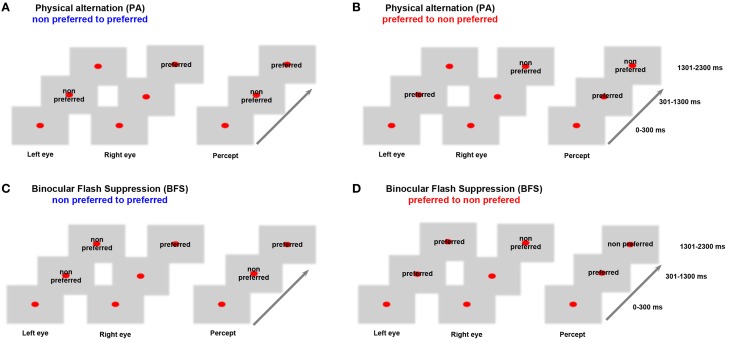
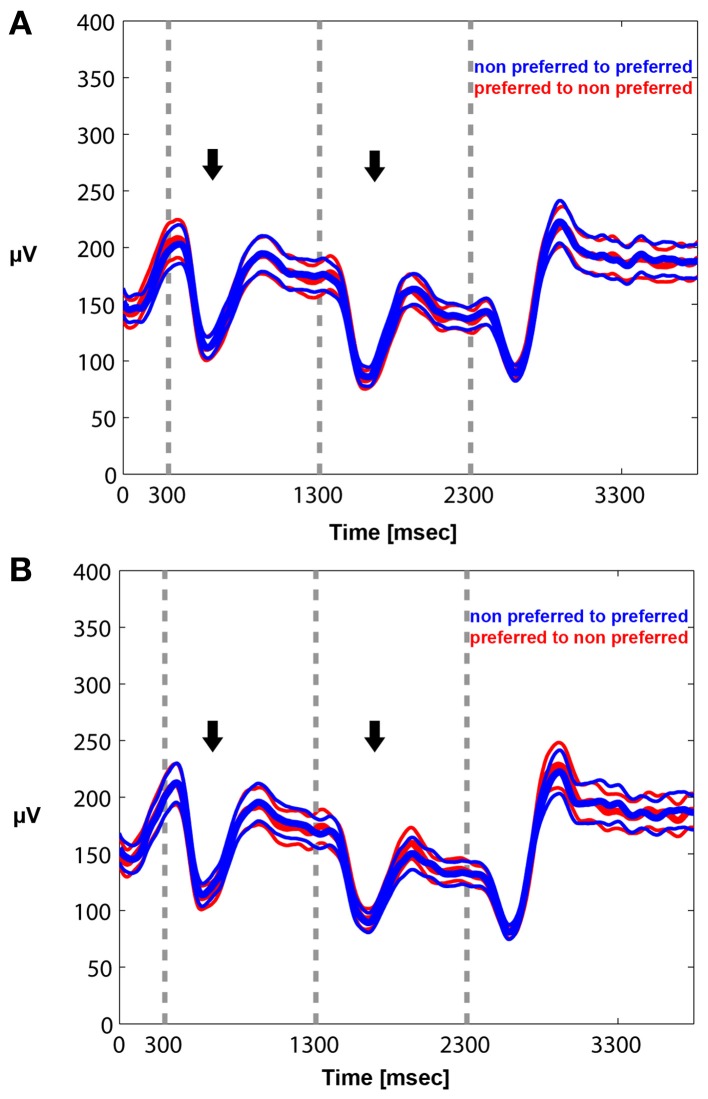
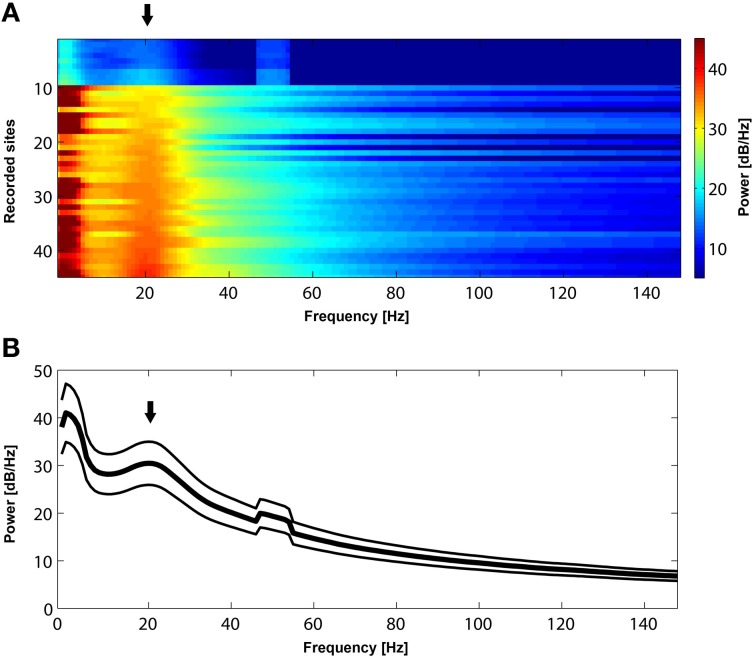
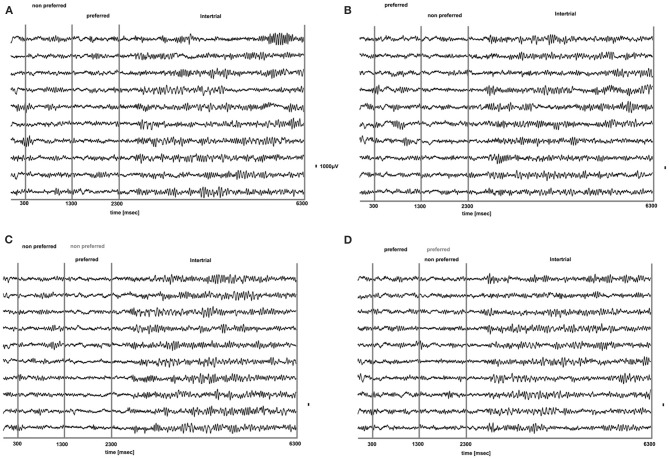
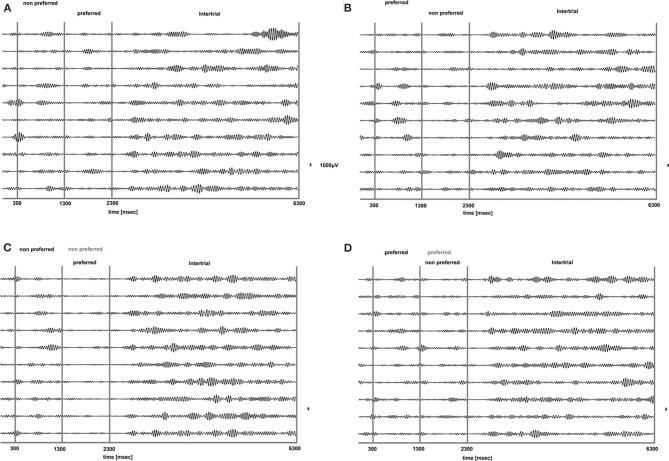
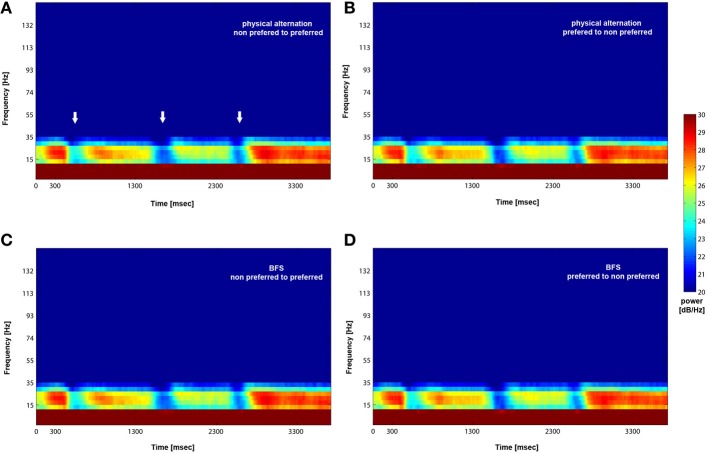
Accumulating evidence indicates that control mechanisms are not tightly bound to conscious perception since both conscious and unconscious information can trigger control processes, probably through the activation of higher-order association areas like the prefrontal cortex. Studying the modulation of control-related prefrontal signals in a microscopic, neuronal level during conscious and unconscious neuronal processing, and under control-free conditions could provide an elementary understanding of these interactions. Here we performed extracellular electrophysiological recordings in the macaque lateral prefrontal cortex (LPFC) during monocular physical alternation (PA) and binocular flash suppression (BFS) and studied the local scale relationship between beta (15-30 Hz) oscillations, a rhythmic signal believed to reflect the current sensory, motor, or cognitive state (status-quo), and conscious or unconscious neuronal processing. First, we show that beta oscillations are observed in the LPFC during resting state. Both PA and BFS had a strong impact on the power of this spontaneous rhythm with the modulation pattern of beta power being identical across these two conditions. Specifically, both perceptual dominance and suppression of local neuronal populations in BFS were accompanied by a transient beta desynchronization followed by beta activity rebound, a pattern also observed when perception occurred without any underlying visual competition in PA. These results indicate that under control-free conditions, at least one rhythmic signal known to reflect control processes in the LPFC (i.e., beta oscillations) is not obstructed by local neuronal, and accordingly perceptual, suppression, thus being independent from temporally co-existing conscious and unconscious local neuronal representations. Future studies could reveal the additive effects of motor or cognitive control demands on prefrontal beta oscillations during conscious and unconscious processing.
越来越多的证据表明,控制机制与意识知觉并没有紧密联系,因为有意识和无意识的信息都可以触发控制过程,可能是通过激活前额叶等高级联想区域。在有意识和无意识的神经元处理过程中,以及在不受控制的条件下,研究与控制相关的前额叶信号在微观的神经元水平上的调制,可以为这些相互作用提供基本的理解。在这里,我们在猕猴外侧前额叶皮层(LPFC)中进行了细胞外电生理记录,研究了单眼物理交替(PA)和双眼闪光抑制(BFS)期间的局部尺度关系,β(15-30Hz)振荡是一种被认为反映当前感觉、运动或认知状态(现状)的节律信号,以及有意识或无意识的神经元处理。首先,我们发现在 LPFC 中观察到β振荡在静息状态下。PA 和 BFS 都对这种自发节律的功率有强烈的影响,β功率的调制模式在这两种条件下是相同的。具体来说,在 BFS 中,局部神经元群体的感知优势和抑制都伴随着短暂的β去同步化,随后是β活动的反弹,这种模式在 PA 中没有任何潜在的视觉竞争时出现感知时也观察到。这些结果表明,在不受控制的条件下,至少一种被认为反映 LPFC 控制过程的节律信号(即β振荡)不会被局部神经元和相应的知觉抑制所阻碍,因此独立于时间上共存的有意识和无意识的局部神经元表示。未来的研究可能会揭示在有意识和无意识处理过程中,运动或认知控制需求对前额叶β振荡的附加影响。