Liu Jinping, Kim Jeongkyu, Oberdoerffer Philipp
Laboratory of Receptor Biology and Gene Expression, National Cancer Institute, National Institutes of Health Bethesda, MD, USA.
Front Genet. 2013 Sep 17;4:182. doi: 10.3389/fgene.2013.00182.
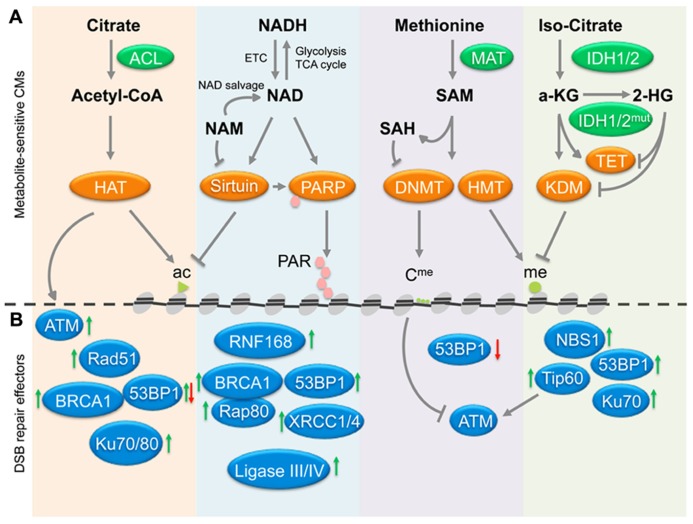
The maintenance of genomic integrity in response to DNA damage is tightly linked to controlled changes in the damage-proximal chromatin environment. Many of the chromatin modifying enzymes involved in DNA repair depend on metabolic intermediates as cofactors, suggesting that changes in cellular metabolism can have direct consequences for repair efficiency and ultimately, genome stability. Here, we discuss how metabolites may contribute to DNA double-strand break repair, and how alterations in cellular metabolism associated with both aging and tumorigenesis may affect the integrity of our genomes.
对DNA损伤作出反应时基因组完整性的维持与损伤近端染色质环境的可控变化紧密相关。许多参与DNA修复的染色质修饰酶依赖代谢中间体作为辅因子,这表明细胞代谢的变化可能对修复效率产生直接影响,并最终影响基因组稳定性。在此,我们讨论代谢物如何促进DNA双链断裂修复,以及与衰老和肿瘤发生相关的细胞代谢改变如何影响我们基因组的完整性。