Department of Physics, Yale University, New Haven, Connecticut, United States of America ; Department of Molecular, Cellular, and Developmental Biology, Yale University, New Haven, Connecticut, United States of America.
PLoS Comput Biol. 2013;9(9):e1003230. doi: 10.1371/journal.pcbi.1003230. Epub 2013 Sep 19.
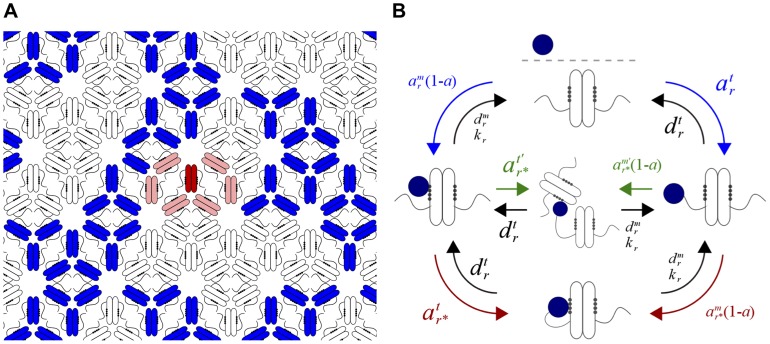
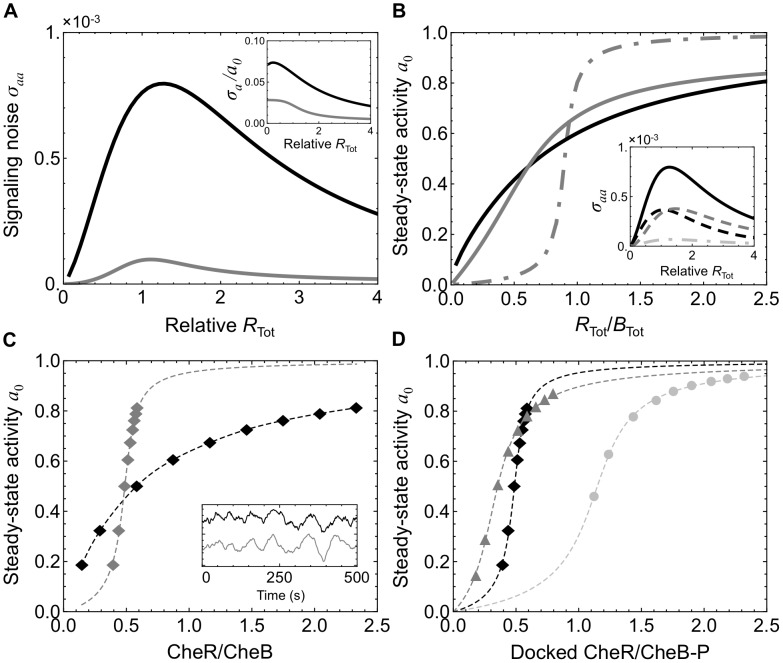
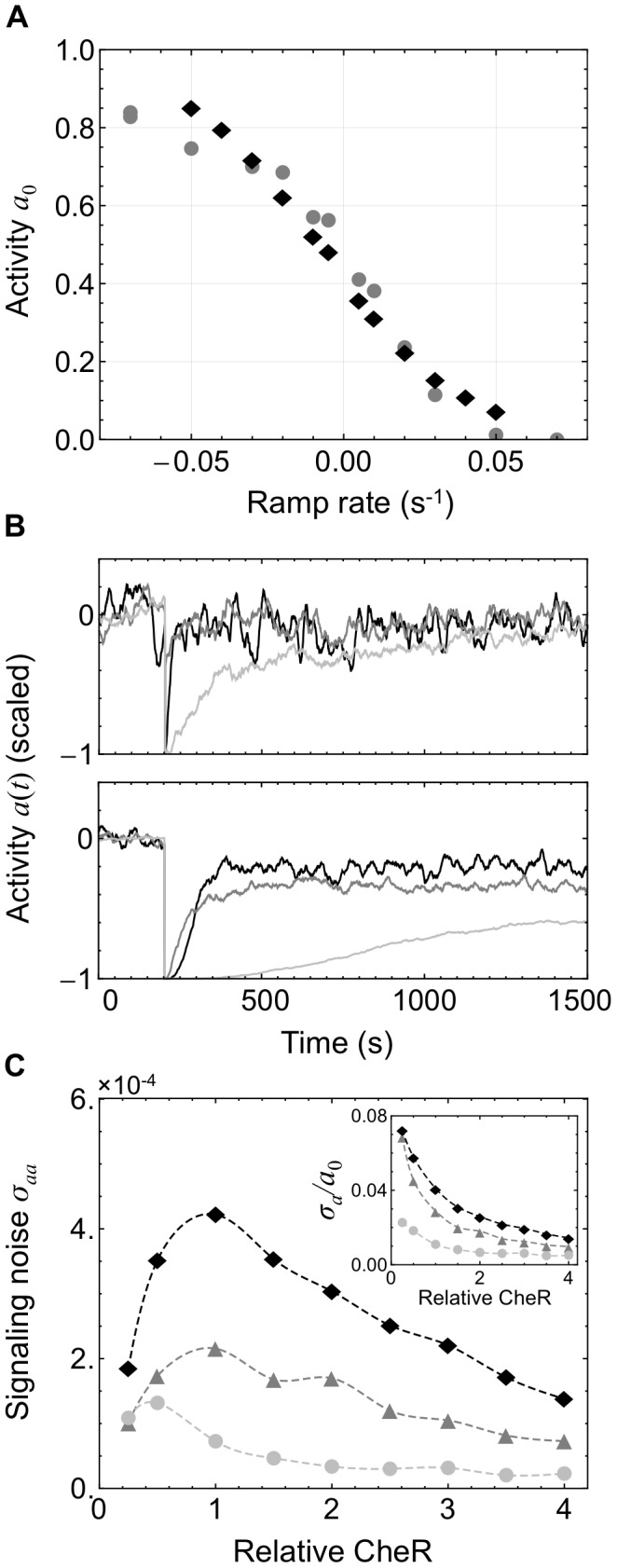
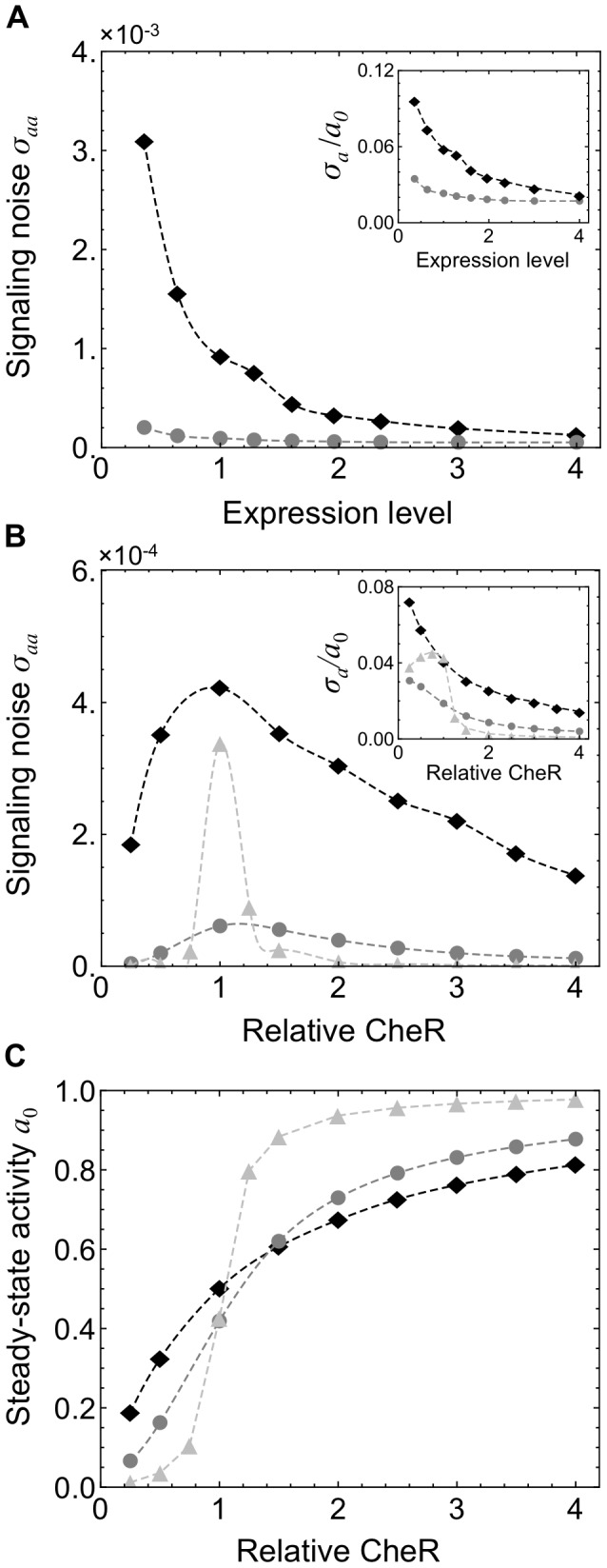
In many sensory systems, transmembrane receptors are spatially organized in large clusters. Such arrangement may facilitate signal amplification and the integration of multiple stimuli. However, this organization likely also affects the kinetics of signaling since the cytoplasmic enzymes that modulate the activity of the receptors must localize to the cluster prior to receptor modification. Here we examine how these spatial considerations shape signaling dynamics at rest and in response to stimuli. As a model system, we use the chemotaxis pathway of Escherichia coli, a canonical system for the study of how organisms sense, respond, and adapt to environmental stimuli. In bacterial chemotaxis, adaptation is mediated by two enzymes that localize to the clustered receptors and modulate their activity through methylation-demethylation. Using a novel stochastic simulation, we show that distributive receptor methylation is necessary for successful adaptation to stimulus and also leads to large fluctuations in receptor activity in the steady state. These fluctuations arise from noise in the number of localized enzymes combined with saturated modification kinetics between the localized enzymes and the receptor substrate. An analytical model explains how saturated enzyme kinetics and large fluctuations can coexist with an adapted state robust to variation in the expression levels of the pathway constituents, a key requirement to ensure the functionality of individual cells within a population. This contrasts with the well-mixed covalent modification system studied by Goldbeter and Koshland in which mean activity becomes ultrasensitive to protein abundances when the enzymes operate at saturation. Large fluctuations in receptor activity have been quantified experimentally and may benefit the cell by enhancing its ability to explore empty environments and track shallow nutrient gradients. Here we clarify the mechanistic relationship of these large fluctuations to well-studied aspects of the chemotaxis system, precise adaptation and functional robustness.
在许多感觉系统中,跨膜受体在空间上组织成大簇。这种排列方式可能有助于信号放大和多个刺激的整合。然而,这种组织方式也可能影响信号转导的动力学,因为调节受体活性的细胞质酶必须在受体修饰之前定位到簇中。在这里,我们研究了这些空间考虑因素如何影响静止状态和对刺激的信号转导动力学。作为一个模型系统,我们使用大肠杆菌的趋化途径,这是研究生物体如何感知、响应和适应环境刺激的经典系统。在细菌趋化作用中,适应性是由两种酶介导的,这两种酶定位于聚集的受体上,并通过甲基化-去甲基化来调节它们的活性。使用一种新的随机模拟方法,我们表明,分布受体甲基化对于成功适应刺激是必要的,并且在稳态下也会导致受体活性的大波动。这些波动源于定位酶数量的噪声与定位酶和受体底物之间的饱和修饰动力学相结合。一个分析模型解释了饱和酶动力学和大波动如何与适应状态共存,而适应状态对途径成分表达水平的变化具有稳健性,这是确保群体中单个细胞功能的关键要求。这与 Goldbeter 和 Koshland 研究的均相共价修饰系统形成对比,在该系统中,当酶达到饱和时,平均活性对蛋白质丰度变得非常敏感。受体活性的大波动已经在实验中被定量,通过增强细胞探索空环境和跟踪浅层营养梯度的能力,可能对细胞有益。在这里,我们阐明了这些大波动与趋化系统中经过充分研究的方面,即精确适应和功能稳健性之间的机制关系。