Medical Research Council Centre for Immune Regulation, University of Birmingham, Birmingham, United Kingdom.
PLoS One. 2013 Sep 12;8(9):e74019. doi: 10.1371/journal.pone.0074019. eCollection 2013.
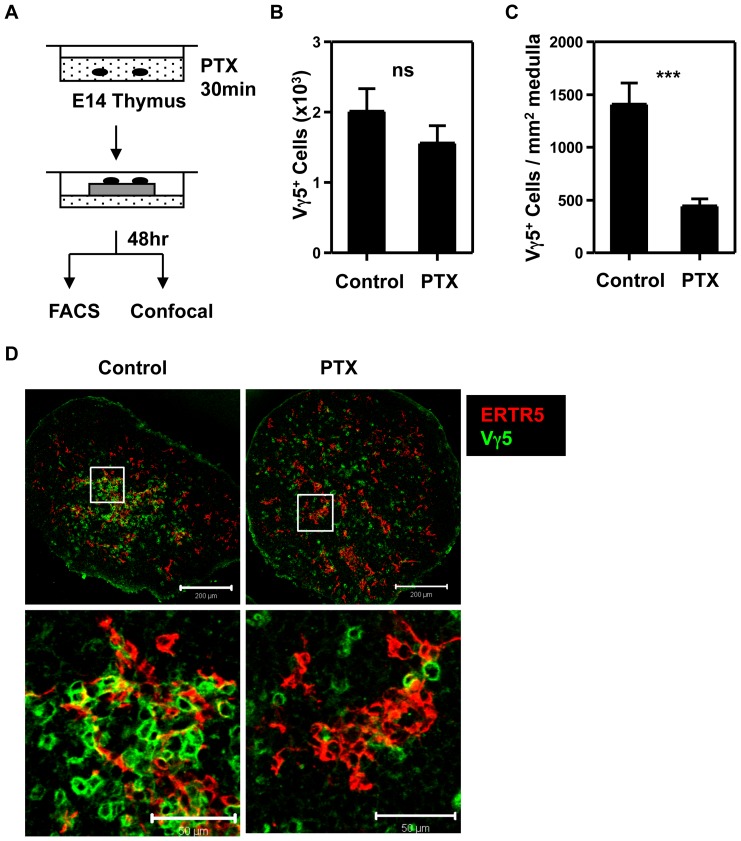
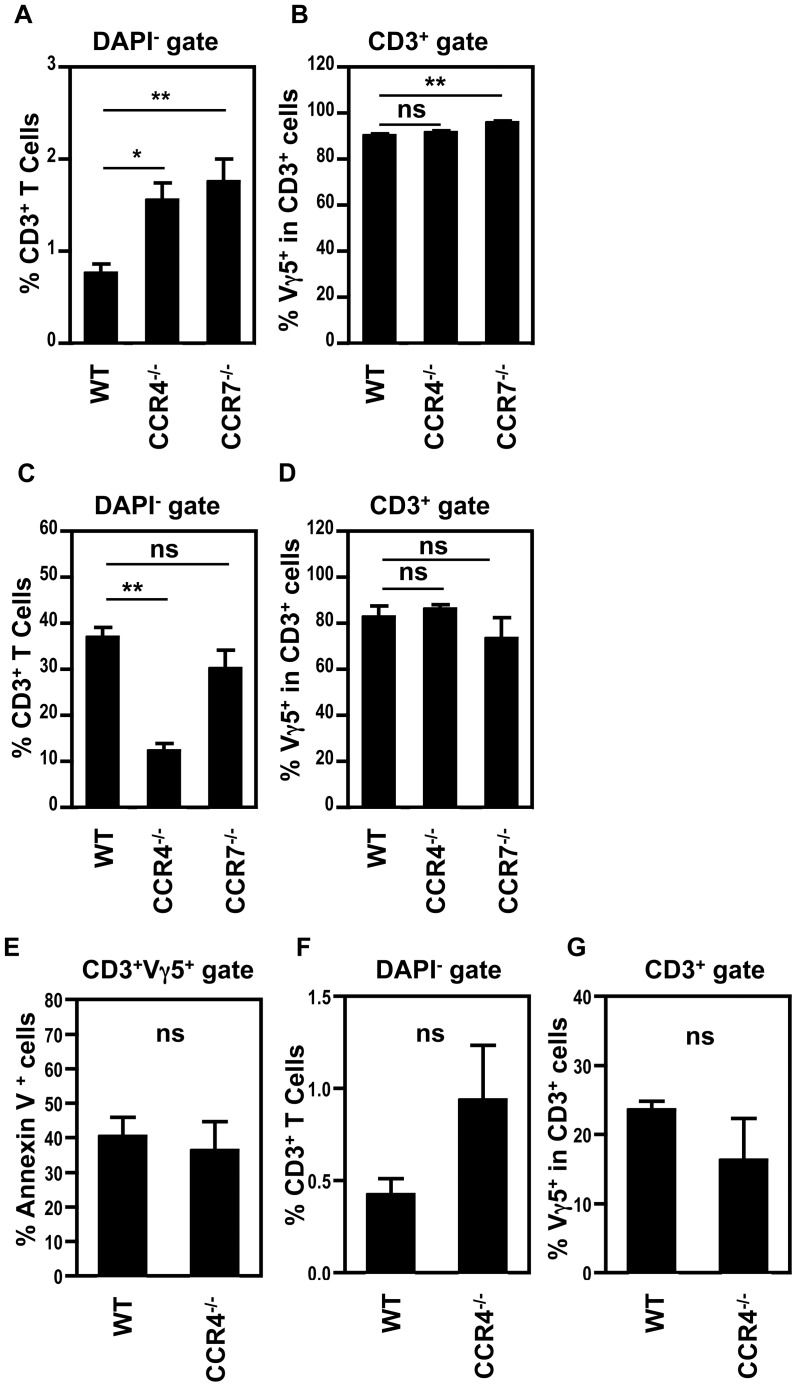
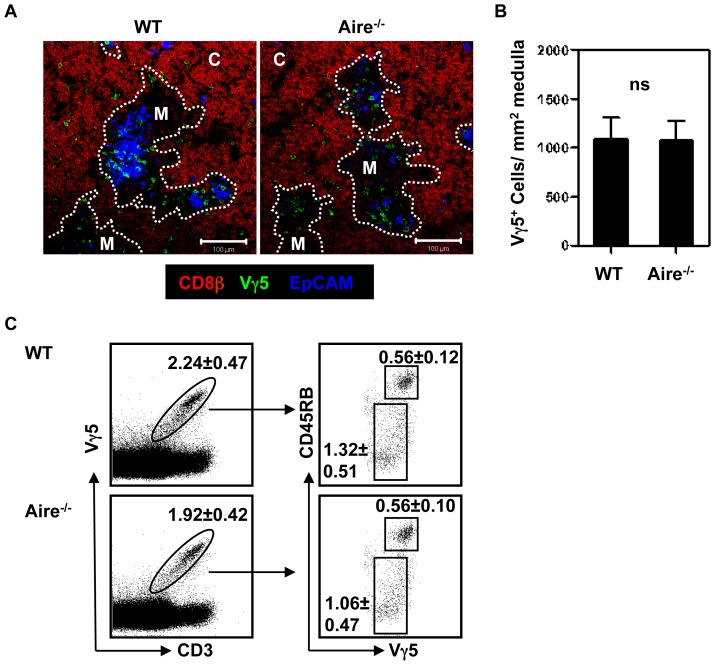
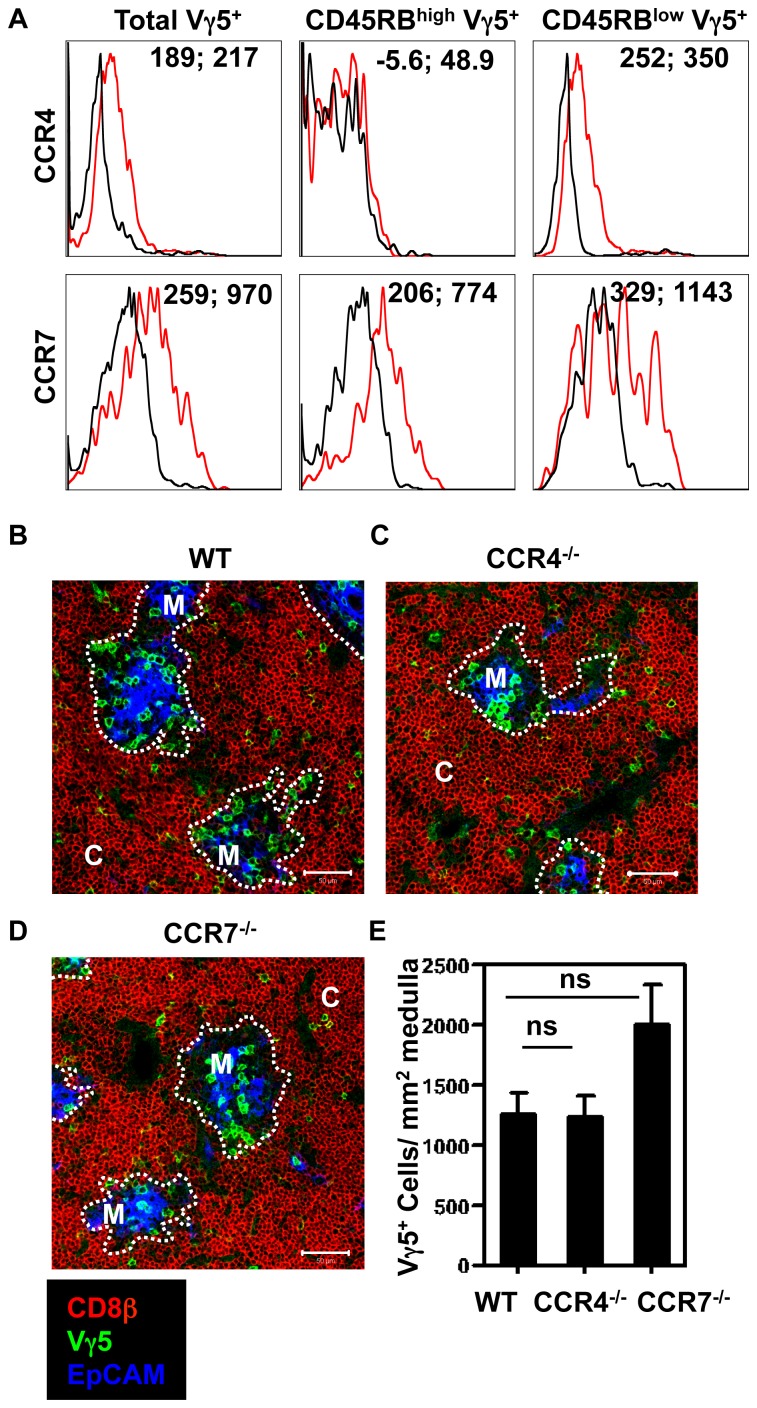
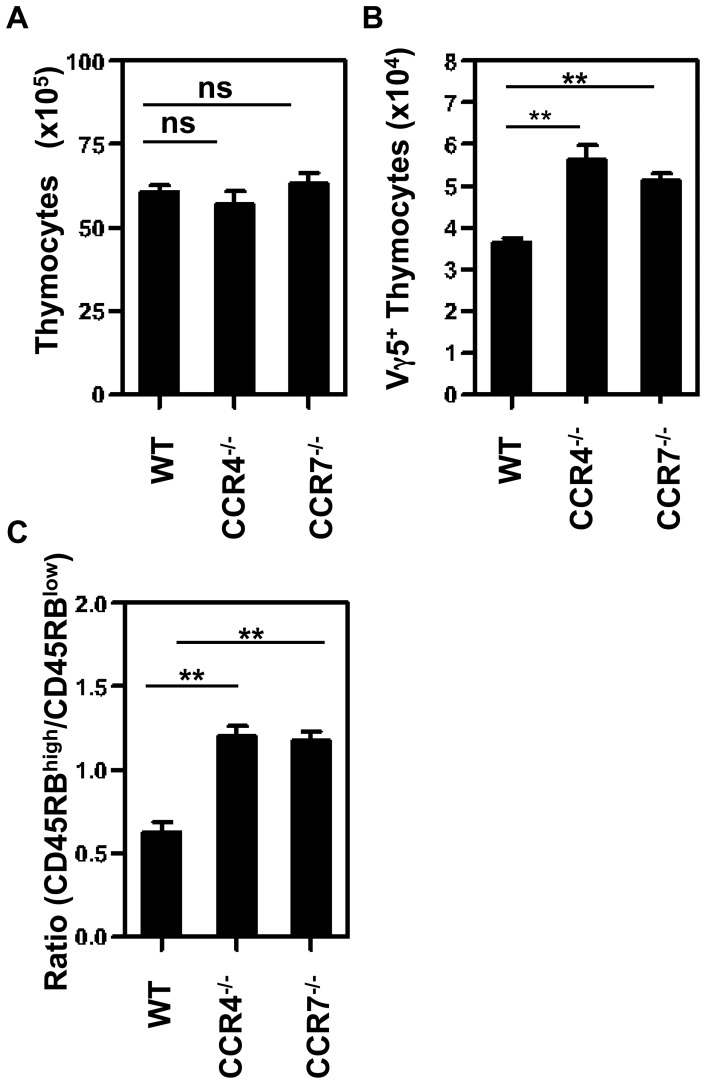
Thymocytes expressing the invariant Vγ5 γδT-cell receptor represent progenitors of dendritic epidermal T-cells (DETC) that play an important immune surveillance role in the skin. In contrast to the bulk of αβT-cell development, Vγ5(+) DETC progenitor development occurs exclusively in fetal thymus. Whilst αβT-cell development is known to require chemokine receptor mediated migration through distinct thymus regions, culminating in medullary entry and thymic egress, the importance and control of intrathymic migration for DETC progenitors is unclear. We recently revealed a link between Vγ5(+) DETC progenitor development and medullary thymic epithelial cells expressing Aire, a known regulator of thymic chemokine expression, demonstrating that normal Vγ5(+) DETC progenitor development requires regulated intramedullary positioning. Here we investigate the role of chemokines and their receptors during intrathymic Vγ5(+) DETC progenitor development and establishment of the DETC pool in the skin. We report that thymic medullary accumulation of Vγ5(+) DETC progenitors is a G-protein coupled receptor dependent process. However, this process occurs independently of Aire's influences on intrathymic chemokines, and in the absence of CCR4 and CCR7 expression by DETC progenitors. In contrast, analysis of epidermal γδT-cells at neonatal and adult stages in CCR4(-/-) mice reveals that reduced numbers of DETC in adult epidermis are not a consequence of diminished intrathymic embryonic development, nor deficiencies in initial epidermal seeding in the neonate. Collectively, our data reveal differences in the chemokine receptor requirements for intrathymic migration of αβ and invariant γδT-cells, and highlight a differential role for CCR4 in the maintenance, but not initial seeding, of DETC in the epidermis.
表达不变 Vγ5 γδT 细胞受体的胸腺细胞代表树突状表皮 T 细胞 (DETC) 的祖细胞,它们在皮肤中发挥重要的免疫监视作用。与大量的 αβT 细胞发育不同,Vγ5(+)DETC 祖细胞的发育仅发生在胎儿胸腺中。虽然已知 αβT 细胞的发育需要趋化因子受体介导的穿过不同胸腺区域的迁移,最终导致进入髓质和胸腺输出,但 DETC 祖细胞的胸腺内迁移的重要性和控制尚不清楚。我们最近揭示了 Vγ5(+)DETC 祖细胞的发育与表达 Aire 的髓质胸腺上皮细胞之间的联系,Aire 是已知的胸腺趋化因子表达调节剂,表明正常的 Vγ5(+)DETC 祖细胞的发育需要调节性的骨髓内定位。在这里,我们研究了趋化因子及其受体在胸腺内 Vγ5(+)DETC 祖细胞发育和皮肤中 DETC 池建立中的作用。我们报告说,胸腺髓质中 Vγ5(+)DETC 祖细胞的聚集是一个 G 蛋白偶联受体依赖的过程。然而,这个过程发生在 Aire 对胸腺内趋化因子的影响之外,并且在 DETC 祖细胞中不表达 CCR4 和 CCR7 的情况下发生。相比之下,在 CCR4(-/-) 小鼠的新生和成年阶段分析表皮 γδT 细胞,发现在成年表皮中 DETC 的数量减少不是由于胚胎发育中胸腺内发育减少,也不是由于新生儿初始表皮播种的缺陷所致。总的来说,我们的数据揭示了 αβ 和不变 γδT 细胞在胸腺内迁移中对趋化因子受体的要求不同,并强调了 CCR4 在维持表皮中 DETC 方面的差异作用,但不是初始播种。