The Sainsbury Laboratory, Norwich, United Kingdom.
PLoS One. 2013 Sep 17;8(9):e75293. doi: 10.1371/journal.pone.0075293. eCollection 2013.
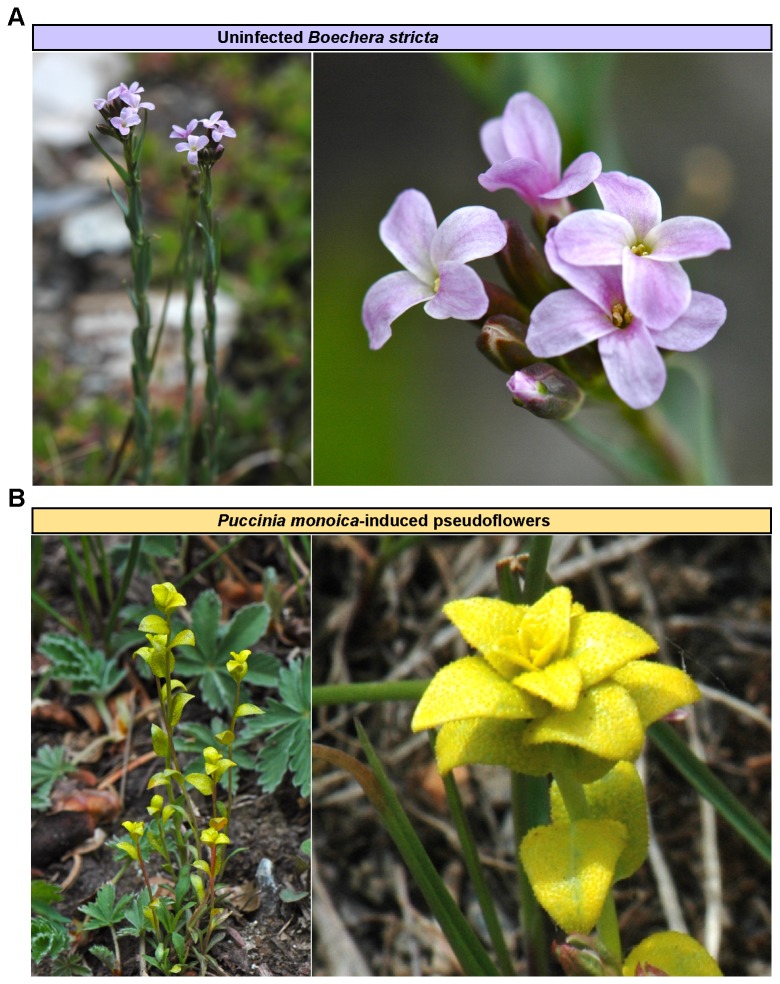
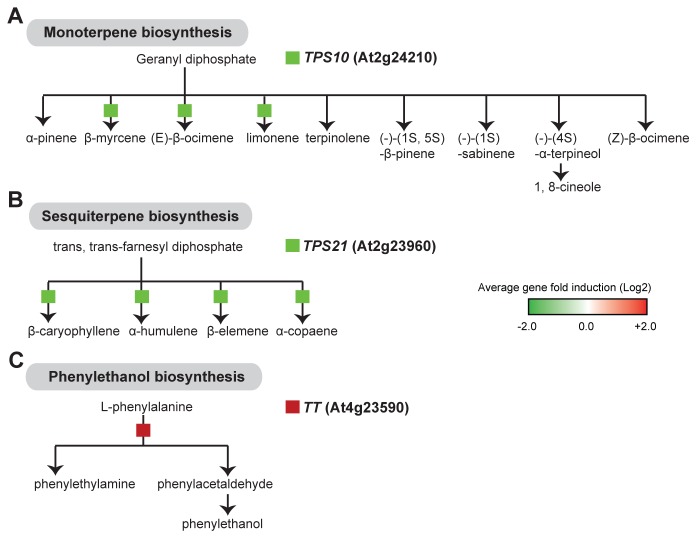
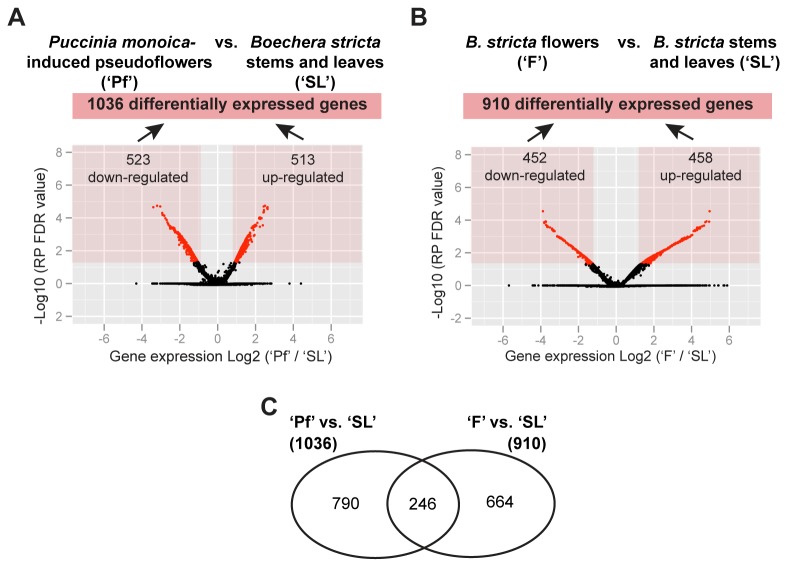
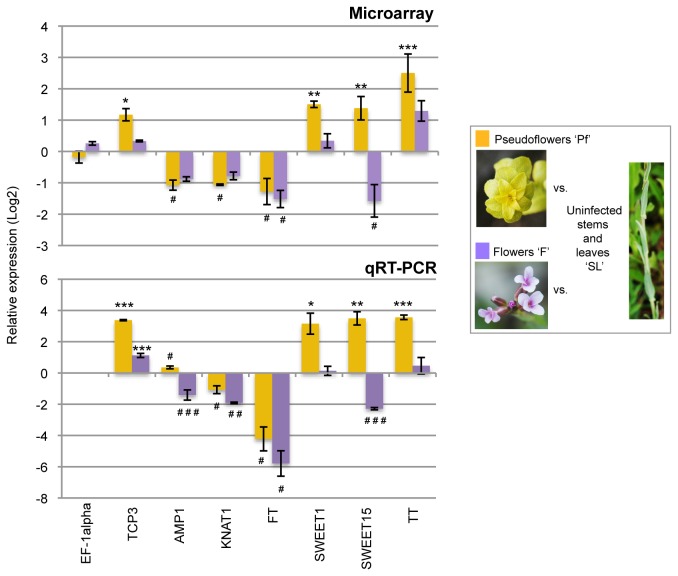
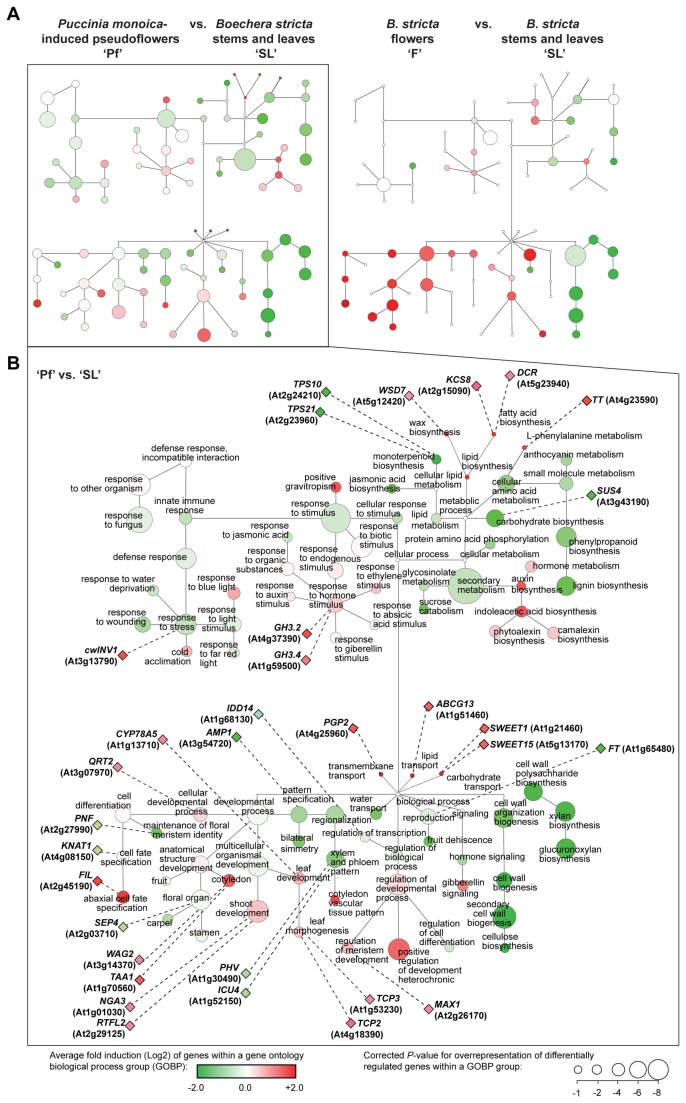
Pucciniamonoica is a spectacular plant parasitic rust fungus that triggers the formation of flower-like structures (pseudoflowers) in its Brassicaceae host plant Boecherastricta. Pseudoflowers mimic in shape, color, nectar and scent co-occurring and unrelated flowers such as buttercups. They act to attract insects thereby aiding spore dispersal and sexual reproduction of the rust fungus. Although much ecological research has been performed on P. monoica-induced pseudoflowers, this system has yet to be investigated at the molecular or genomic level. To date, the molecular alterations underlying the development of pseudoflowers and the genes involved have not been described. To address this, we performed gene expression profiling to reveal 256 plant biological processes that are significantly altered in pseudoflowers. Among these biological processes, plant genes involved in cell fate specification, regulation of transcription, reproduction, floral organ development, anthocyanin (major floral pigments) and terpenoid biosynthesis (major floral volatile compounds) were down-regulated in pseudoflowers. In contrast, plant genes involved in shoot, cotyledon and leaf development, carbohydrate transport, wax biosynthesis, cutin transport and L-phenylalanine metabolism (pathway that results in phenylethanol and phenylacetaldehyde volatile production) were up-regulated. These findings point to an extensive reprogramming of host genes by the rust pathogen to induce floral mimicry. We also highlight 31 differentially regulated plant genes that are enriched in the biological processes mentioned above, and are potentially involved in the formation of pseudoflowers. This work illustrates the complex perturbations induced by rust pathogens in their host plants, and provides a starting point for understanding the molecular mechanisms of pathogen-induced floral mimicry.
单胞锈菌是一种壮观的植物寄生锈菌,它会在其芸薹属宿主植物 Boechera stricta 上引发如花状结构(假花)的形成。假花在形状、颜色、花蜜和气味上与同时出现的和不相关的花(如毛茛)相似。它们的作用是吸引昆虫,从而帮助锈菌孢子的传播和有性繁殖。尽管对单胞锈菌诱导的假花进行了大量的生态研究,但这个系统在分子或基因组水平上尚未得到研究。迄今为止,假花发育的分子变化及其涉及的基因尚未被描述。为了解决这个问题,我们进行了基因表达谱分析,揭示了 256 个植物生物学过程在假花中显著改变。在这些生物学过程中,参与细胞命运特化、转录调控、繁殖、花器官发育、类黄酮(主要花色素)和萜类生物合成(主要花挥发性化合物)的植物基因在假花中下调。相比之下,参与茎、子叶和叶片发育、碳水化合物运输、蜡生物合成、角质素运输和 L-苯丙氨酸代谢(导致苯乙醇和苯乙醛挥发性产物的途径)的植物基因在假花中上调。这些发现表明锈菌病原体通过广泛重编程宿主基因来诱导花的模拟。我们还突出了 31 个差异调节的植物基因,这些基因在上述生物学过程中富集,并可能参与假花的形成。这项工作说明了锈菌病原体在其宿主植物中引起的复杂干扰,并为理解病原体诱导的花模拟的分子机制提供了一个起点。