Department of Urology, Essen Medical School, University Duisburg-Essen, Essen, Germany.
PLoS One. 2013 Sep 17;8(9):e75681. doi: 10.1371/journal.pone.0075681. eCollection 2013.
Hyaluronan (HA) is a carbohydrate of the extracellular matrix with tumor promoting effects in a variety of cancers. The present study addressed the role of HA matrix for progression and prognosis of human bladder cancer by studying the expression and function of HA-related genes.
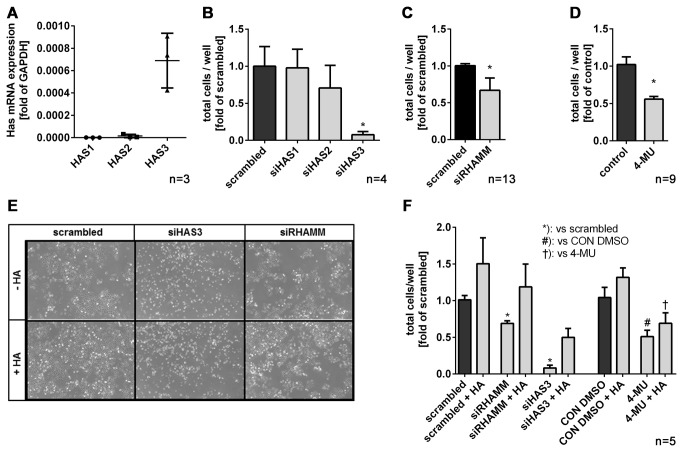
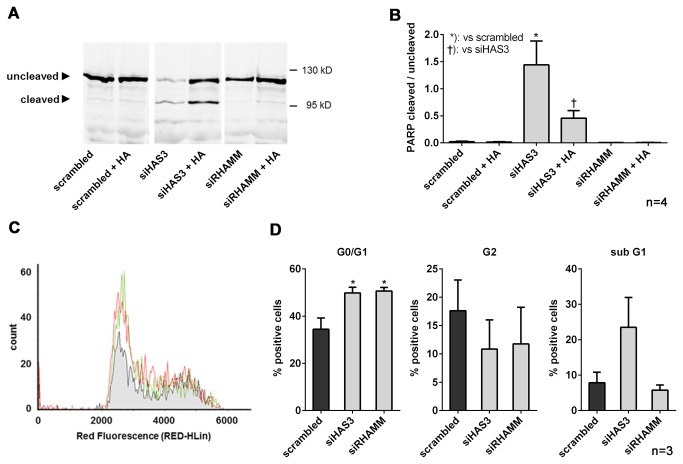
Tissue samples of 120 patients with different stages of transitional cell bladder cancer, who underwent surgical treatment for bladder cancer at the University Hospital of Essen were analysed. mRNA-expression levels of HA synthases (HAS1-3) and HA-receptors (RHAMM and CD44) were evaluated by real time RT-PCR in comparison to healthy bladder tissue as control. In uni- and multivariate cox proportional hazard survival regression analysis, the impact of the gene expression levels on survival was assessed. In vitro knock-down of RHAMM, CD44 and HAS isoenzymes was achieved by siRNA and lentiviral shRNA in J82 bladder cancer cells. Transfected cells were analysed in vitro with regard to proliferation, cell cycle and apoptosis. J82 cells after knock-down of RHAMM were xenografted into male nu/nu athymic mice to monitor tumor progression in vivo.
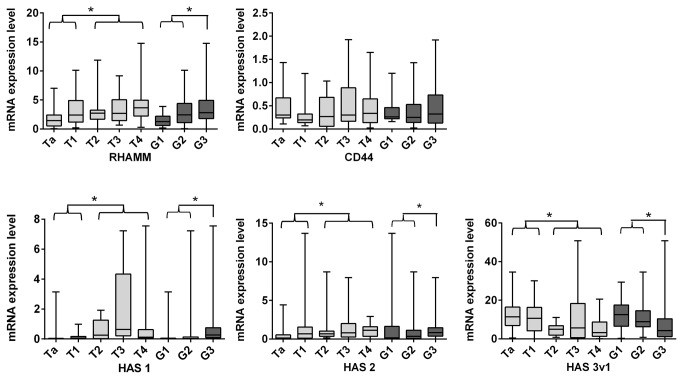
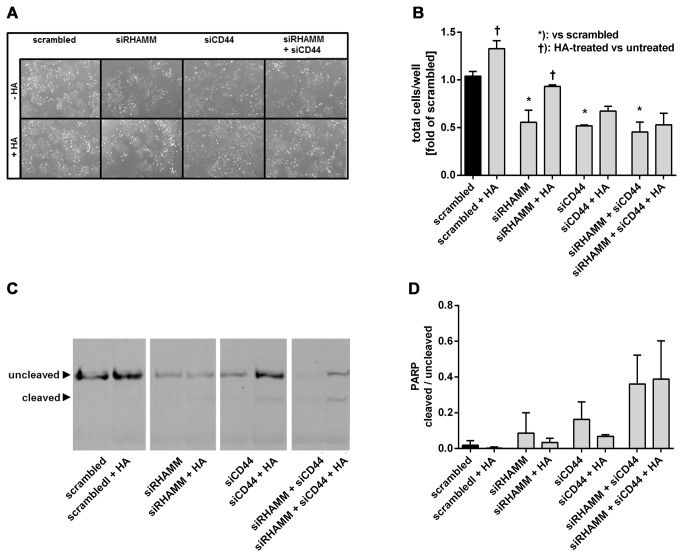
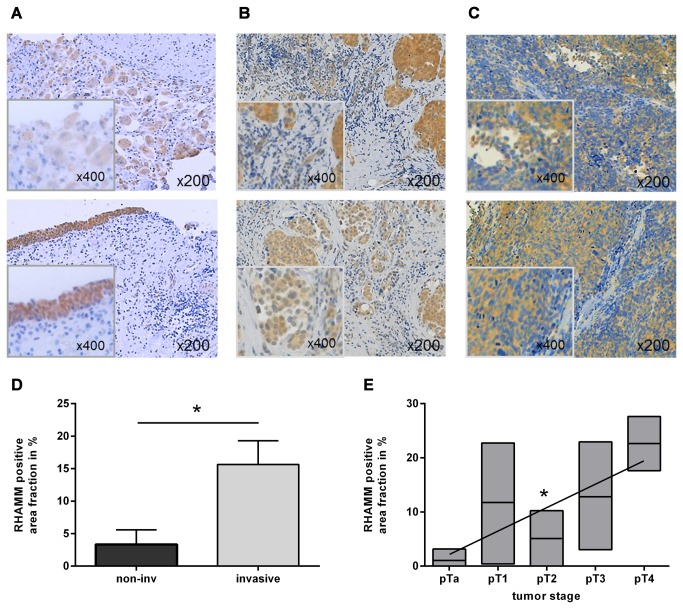
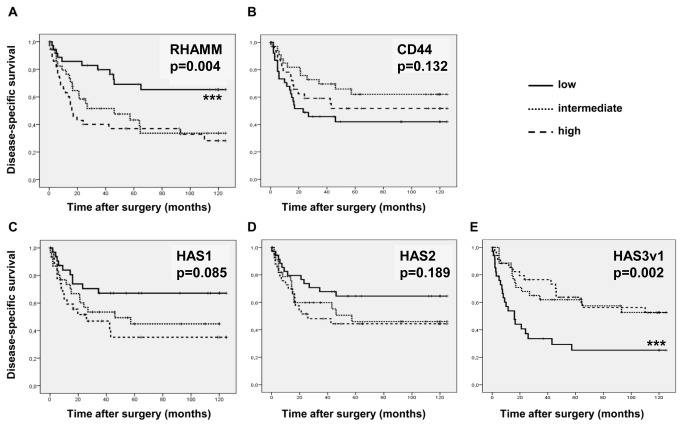
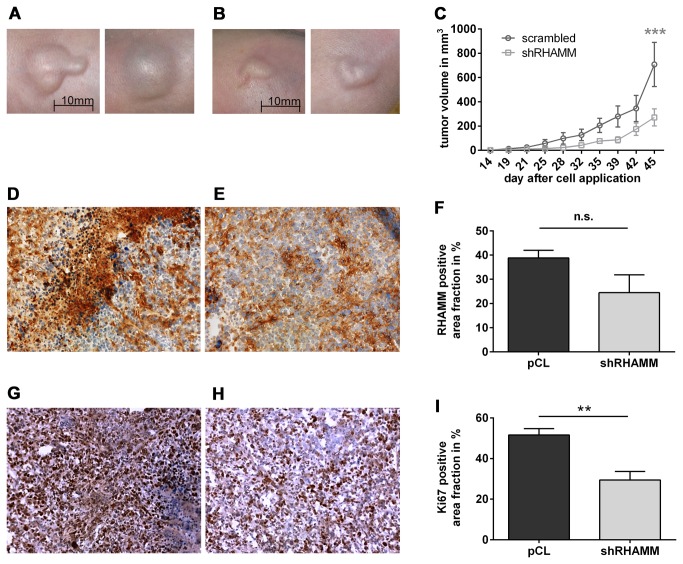
In invasive tumor stages RHAMM-, HAS1 and HAS2 mRNA-expression levels were elevated whereas HAS3v1 was reduced as compared to non-invasive tumors. Subsequently, Kaplan-Meier analysis revealed reduced bladder cancer specific survival in patients with high RHAMM mRNA and low HAS3v1 expression. Elevated RHAMM in invasive tumors was confirmed by RHAMM immunohistochemistry. Furthermore, multivariate analysis revealed that only RHAMM expression was associated with poor prognosis independent from other survival factors (HR=2.389, 95% CI 1.227-4.651, p=0.01). Lentiviral RHAMM knock-down revealed reduced J82 cell proliferation in vitro and reduced xenograft tumor growth in vivo.
The data suggest that RHAMM plays a crucial role in mediating progression of muscle-invasive bladder cancer and recommends RHAMM for further evaluation as a prognostic marker or therapeutic target in bladder cancer therapy.
透明质酸(HA)是细胞外基质中的一种碳水化合物,在多种癌症中具有促进肿瘤的作用。本研究通过研究 HA 相关基因的表达和功能,探讨了 HA 基质对人膀胱癌进展和预后的作用。
对在埃森大学医院接受膀胱癌手术治疗的 120 例不同分期的移行细胞膀胱癌患者的组织样本进行分析。通过实时 RT-PCR 比较健康膀胱组织作为对照,评估 HA 合成酶(HAS1-3)和 HA 受体(RHAMM 和 CD44)的 mRNA 表达水平。在单变量和多变量 cox 比例风险生存回归分析中,评估基因表达水平对生存的影响。通过 siRNA 和慢病毒 shRNA 在 J82 膀胱癌细胞中实现 RHAMM、CD44 和 HAS 同工酶的敲低。在体外转染细胞后,分析细胞增殖、细胞周期和细胞凋亡。敲低 RHAMM 后的 J82 细胞被异种移植到雄性 nu/nu 裸鼠中,以监测体内肿瘤进展。
在侵袭性肿瘤阶段,与非侵袭性肿瘤相比,RHAMM、HAS1 和 HAS2 的 mRNA 表达水平升高,而 HAS3v1 降低。随后,Kaplan-Meier 分析显示,高 RHAMM mRNA 和低 HAS3v1 表达的患者膀胱癌特异性生存率降低。侵袭性肿瘤中 RHAMM 的升高通过 RHAMM 免疫组化得到证实。此外,多变量分析显示,只有 RHAMM 表达与其他生存因素无关,与不良预后相关(HR=2.389,95%CI 1.227-4.651,p=0.01)。慢病毒 RHAMM 敲低显示体外 J82 细胞增殖减少,体内异种移植肿瘤生长减少。
数据表明 RHAMM 在介导肌肉浸润性膀胱癌进展中起关键作用,并建议 RHAMM 作为膀胱癌治疗中的预后标志物或治疗靶点进一步评估。