Institute of Microbiology and Hygiene, Campus Benjamin Franklin, Charité University Medicine, Berlin, Germany.
PLoS Negl Trop Dis. 2013 Sep 19;7(9):e2426. doi: 10.1371/journal.pntd.0002426. eCollection 2013.
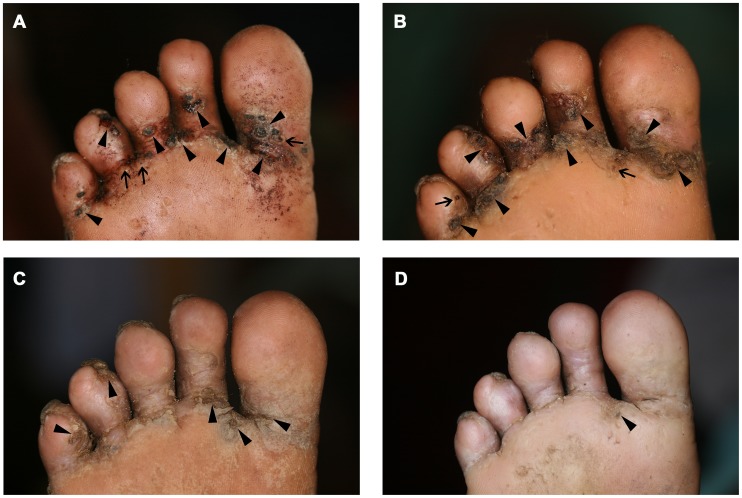
Tungiasis, a parasitic skin disease caused by the female sand flea Tunga penetrans, is a prevalent condition in impoverished communities in the tropics. In this setting, the ectoparasitosis is associated with important morbidity. It causes disfigurement and mutilation of the feet. Feasible and effective treatment is not available. So far prevention is the only means to control tungiasis-associated morbidity.
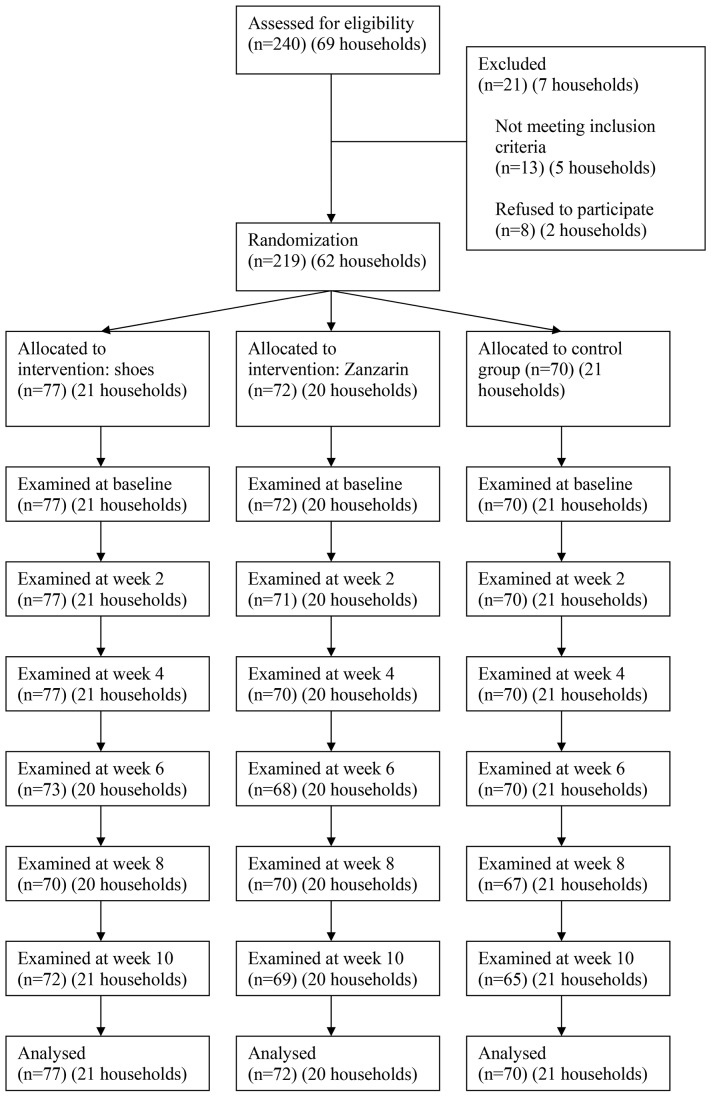
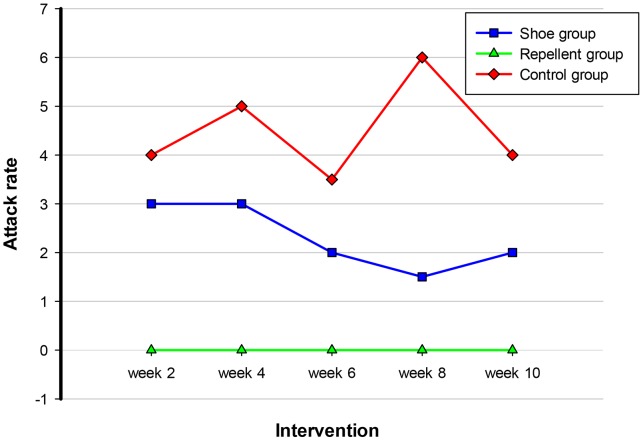
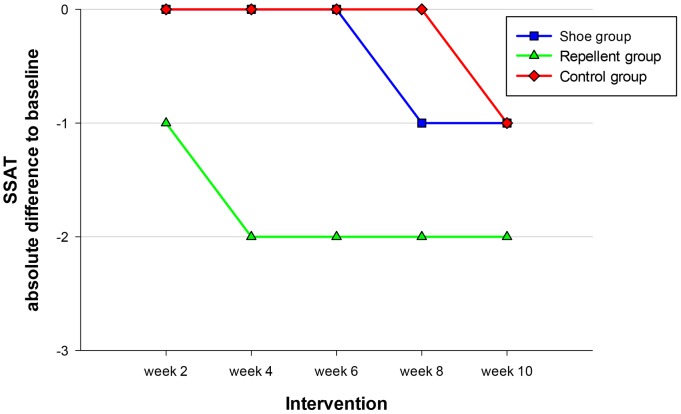
In two villages in Central Madagascar, we assessed the efficacy of the availability of closed shoes and the twice-daily application of a plant-based repellent active against sand fleas (Zanzarin) in comparison to a control group without intervention. The study population was randomized into three groups: shoe group, repellent group and control group and monitored for ten weeks. The intensity of infestation, the attack rate and the severity of tungiasis-associated morbidity were assessed every two weeks.
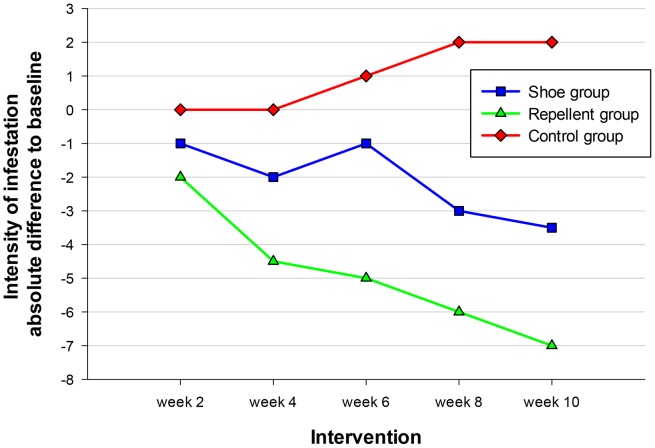
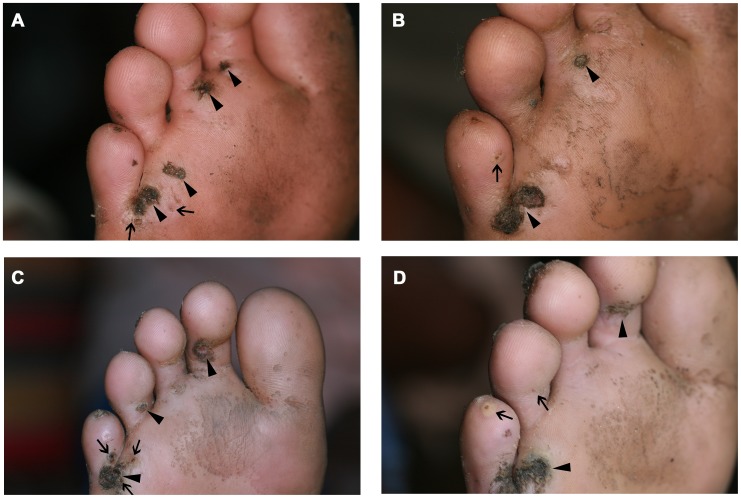
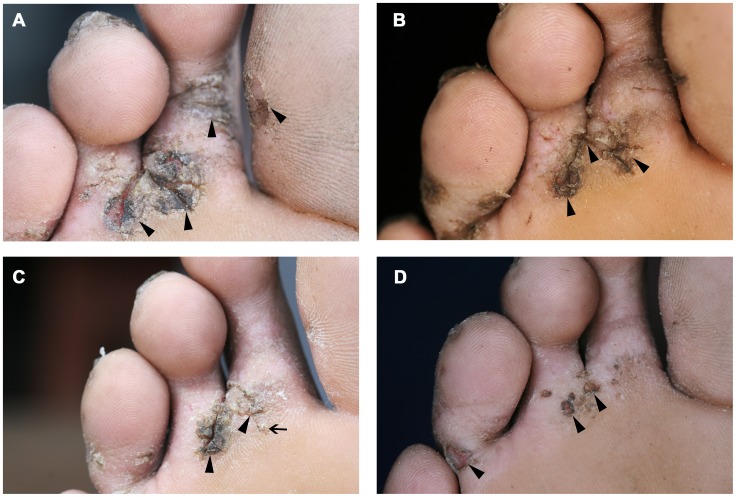
In the repellent group, the median attack rate became zero already after two weeks. The intensity of the infestation decreased constantly during the observation period and tungiasis-associated morbidity was lowered to an insignificant level. In the shoe group, only a marginal decrease in the intensity of infestation and in the attack rate was observed. At week 10, the intensity of infestation, the attack rate and the severity score for acute tungiasis remained significantly higher in the shoe group than in the repellent group. Per protocol analysis showed that the protective effect of shoes was closely related to the regularity with which shoes were worn.
Although shoes were requested by the villagers and wearing shoes was encouraged by the investigators at the beginning of the study, the availability of shoes only marginally influenced the attack rate of female sand fleas. The twice-daily application of a plant-based repellent active against sand fleas reduced the attack to zero and lowered tungiasis-associated morbidity to an insignificant level.
由雌性沙蚤 Tunga penetrans 引起的寄生性皮肤病——潜蚤病,是热带贫困社区流行的一种疾病。在这种环境下,这种外寄生虫病与严重的发病率有关。它会导致脚部畸形和残缺。目前尚无可行且有效的治疗方法。到目前为止,预防是控制与潜蚤病相关发病率的唯一手段。
我们在马达加斯加中部的两个村庄评估了提供封闭式鞋子和每天两次使用一种针对沙蚤的植物性驱虫剂(Zanzarin)的效果,与未干预的对照组进行比较。研究人群被随机分为三组:鞋子组、驱虫剂组和对照组,并进行了十周的监测。每两周评估一次感染强度、攻击率和与潜蚤病相关的发病率的严重程度。
在驱虫剂组,两周后攻击率已降为零。在观察期间,感染强度持续下降,与潜蚤病相关的发病率降低到微不足道的水平。在鞋子组,只观察到感染强度和攻击率的轻微下降。在第 10 周,鞋子组的感染强度、攻击率和急性潜蚤病的严重评分仍然显著高于驱虫剂组。根据方案分析表明,鞋子的保护作用与穿鞋子的规律性密切相关。
尽管村民们要求提供鞋子,研究人员在研究开始时也鼓励穿鞋子,但鞋子的供应仅对雌性沙蚤的攻击率产生了轻微影响。每天两次使用一种针对沙蚤的植物性驱虫剂可将攻击率降低到零,并将与潜蚤病相关的发病率降低到微不足道的水平。