Cutaneous Biology Research Center, Massachusetts General Hospital, 13th Street Building 149, Charlestown, MA 02129, USA; Department of Dermatology, Harvard Medical School, Boston, MA 02114, USA.
Trends Cell Biol. 2013 Dec;23(12):593-602. doi: 10.1016/j.tcb.2013.08.006. Epub 2013 Sep 25.
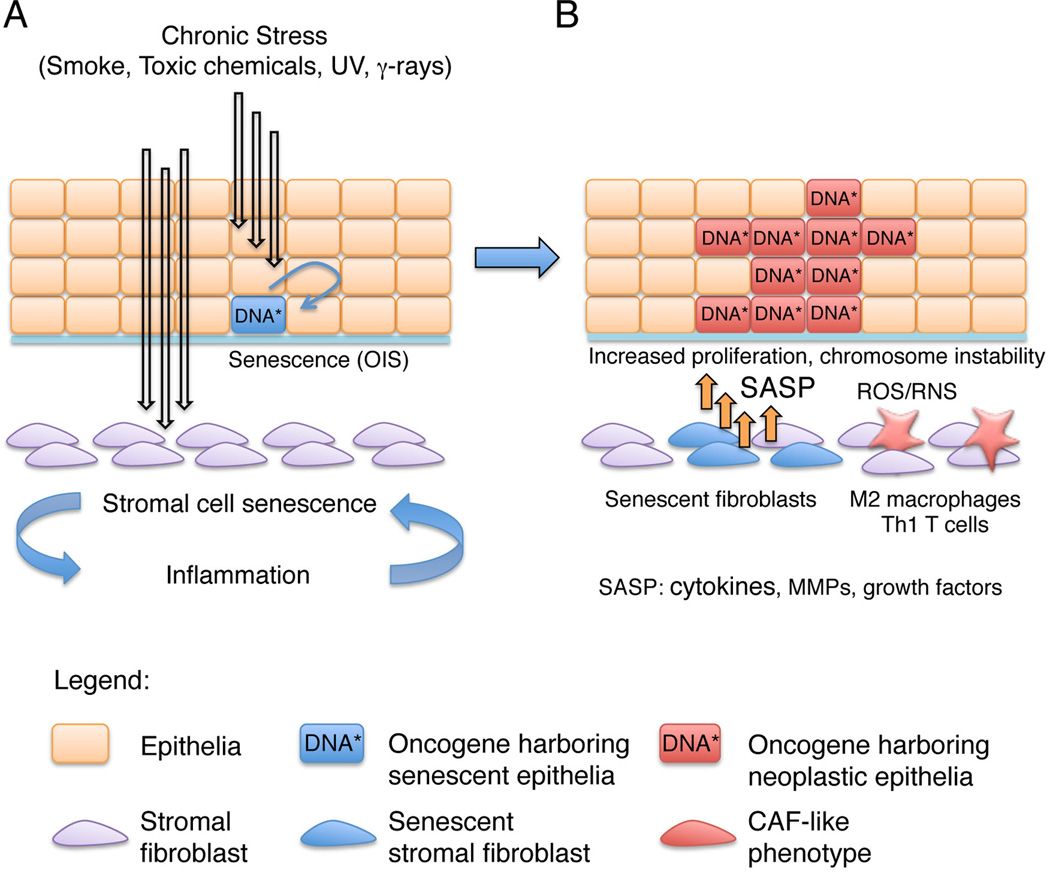
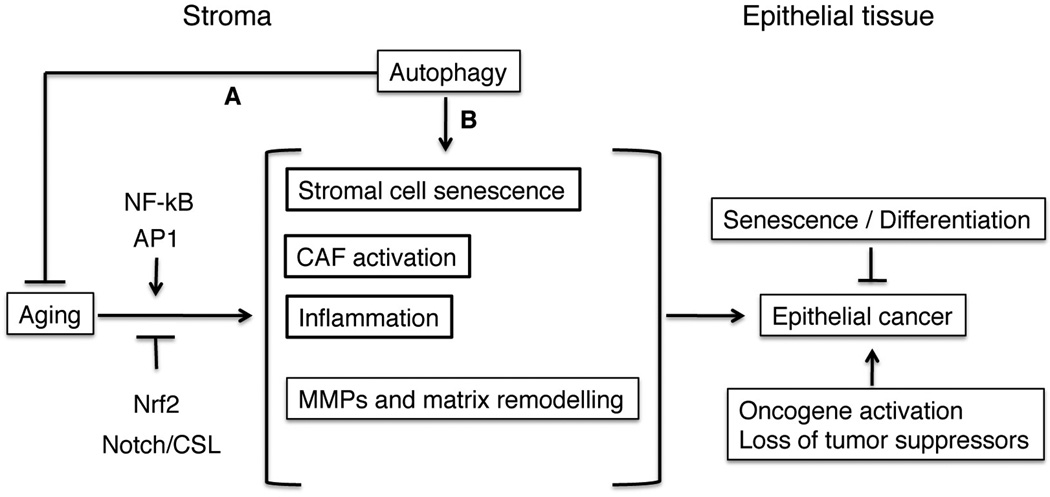
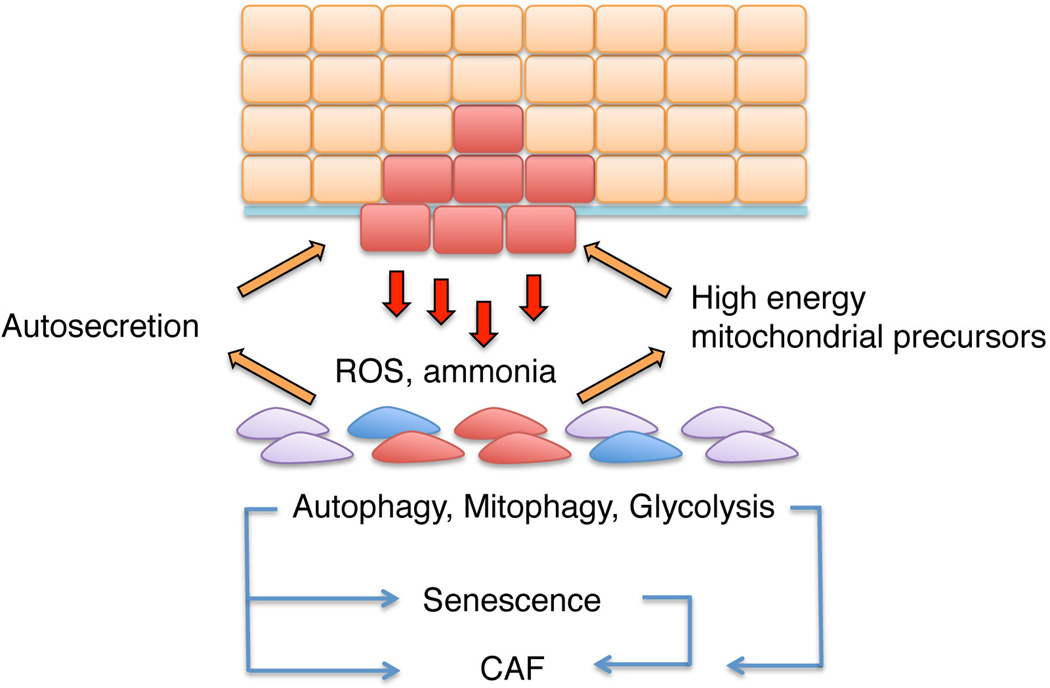
Multifocal and recurrent epithelial tumors, originating from either dormant or de novo cancer cells, are major causes of morbidity and mortality. The age-dependent increase of cancer incidence has long been assumed to result from the sequential accumulation of cancer-driving or -facilitating mutations with induction of cellular senescence as a protective mechanism. However, recent evidence suggests that the initiation and development of epithelial cancer results from a close interplay with its altered tissue microenvironment, with chronic inflammation, stromal senescence, autophagy, and the activation of cancer-associated fibroblasts (CAFs) playing possible primary roles. We will discuss recent progress in these areas, and highlight how this understanding may be used for devising novel preventive and therapeutic approaches to the epithelial cancer problem.
多灶性和复发性上皮肿瘤,源自休眠或从头发生的癌细胞,是发病率和死亡率的主要原因。长期以来,人们一直认为癌症发病率随年龄增长是由于癌症驱动或促进突变的顺序积累,同时诱导细胞衰老作为一种保护机制。然而,最近的证据表明,上皮癌的发生和发展是与其改变的组织微环境密切相互作用的结果,慢性炎症、基质衰老、自噬以及癌相关成纤维细胞 (CAFs) 的激活可能发挥主要作用。我们将讨论这些领域的最新进展,并强调如何利用这种理解来设计针对上皮癌问题的新的预防和治疗方法。