1] Department of Neurology and Neurological Sciences, Stanford University School of Medicine, Stanford, California, USA. [2] Graduate Program in Immunology, Division of Medical Sciences, Harvard Medical School, Boston, Massachusetts, USA. [3].
Nat Immunol. 2013 Nov;14(11):1166-72. doi: 10.1038/ni.2730. Epub 2013 Sep 29.
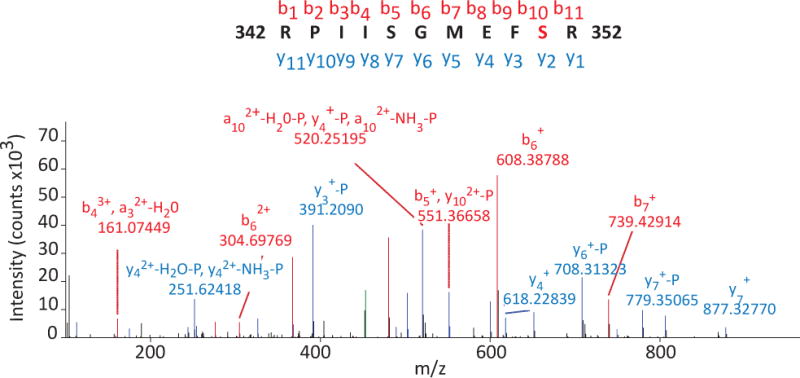
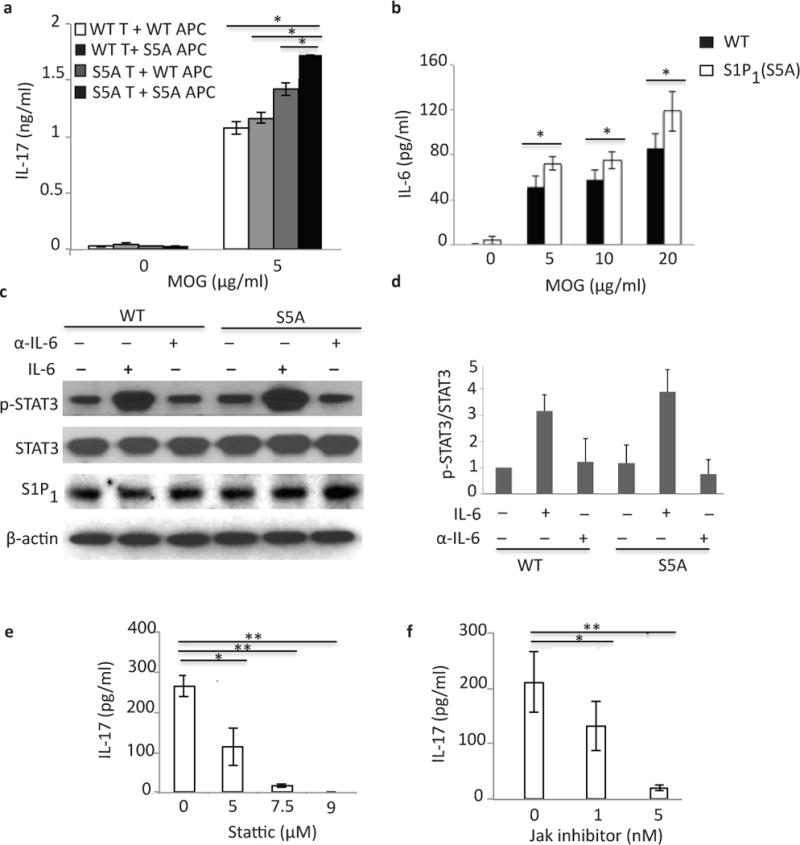
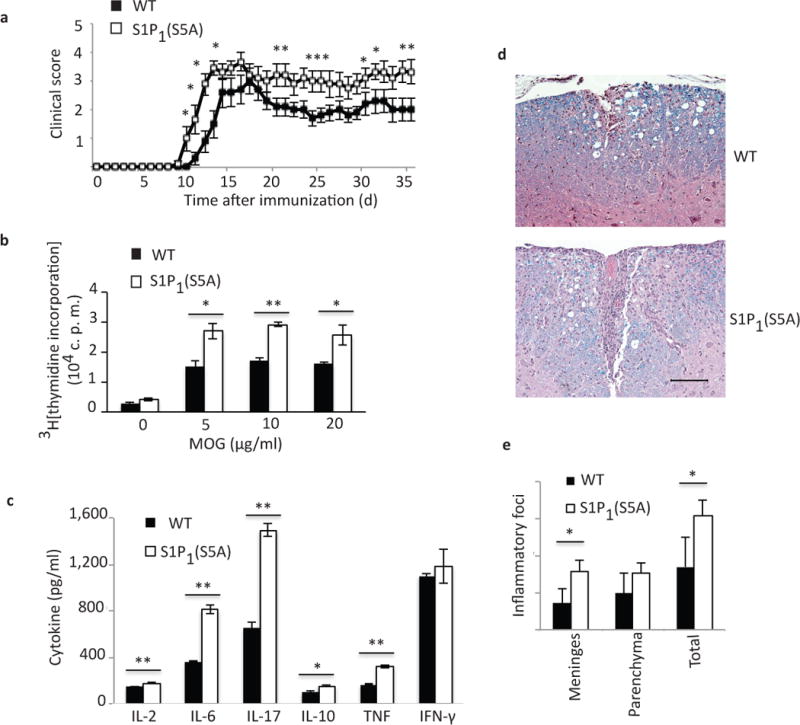
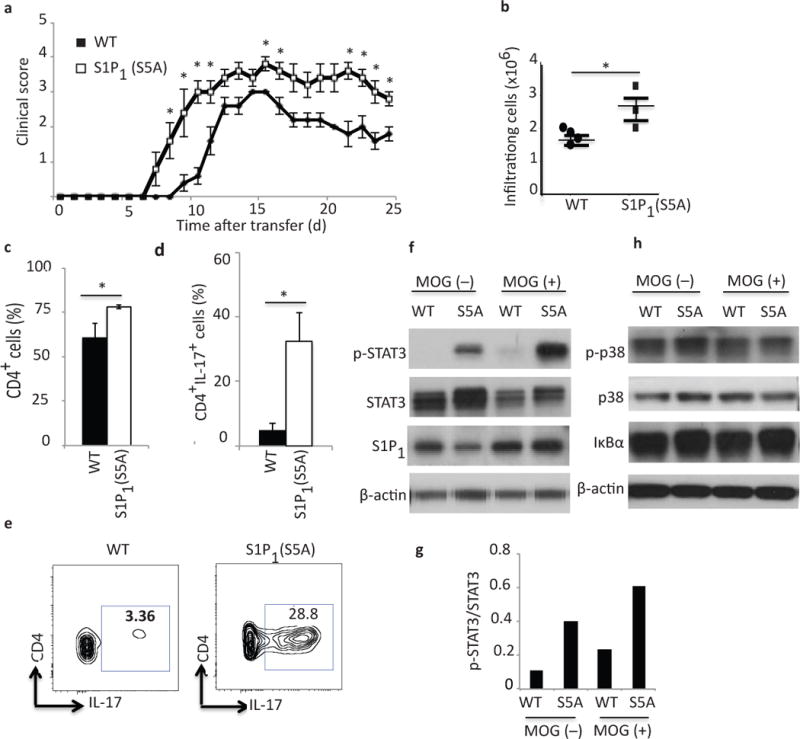
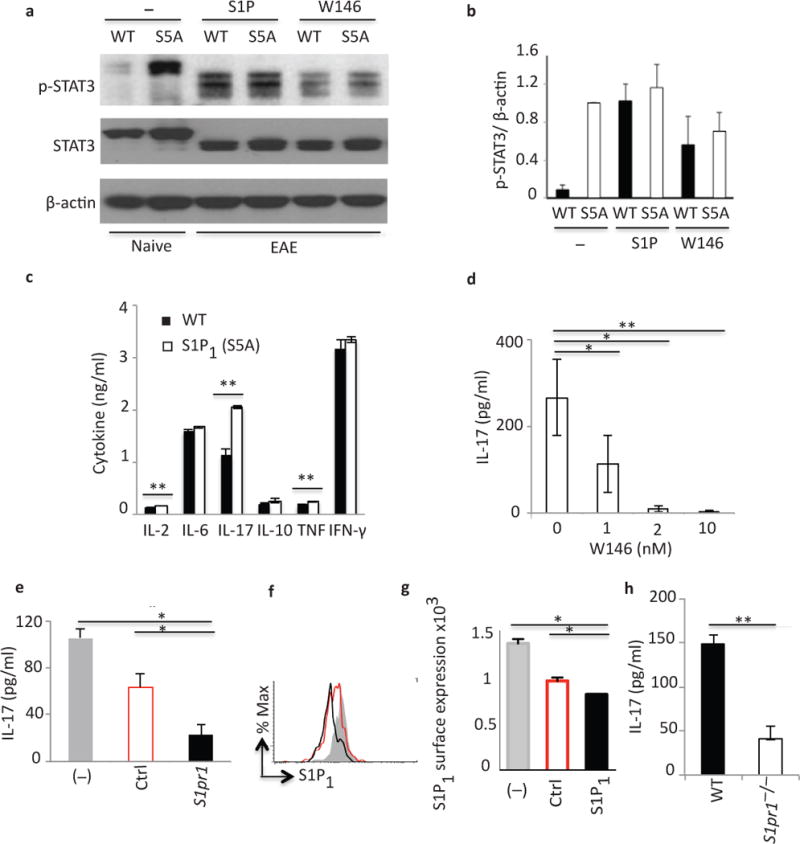
Sphingosine 1-phosphate (S1P) signaling regulates lymphocyte egress from lymphoid organs into systemic circulation. The sphingosine phosphate receptor 1 (S1P1) agonist FTY-720 (Gilenya) arrests immune trafficking and prevents multiple sclerosis (MS) relapses. However, alternative mechanisms of S1P-S1P1 signaling have been reported. Phosphoproteomic analysis of MS brain lesions revealed S1P1 phosphorylation on S351, a residue crucial for receptor internalization. Mutant mice harboring an S1pr1 gene encoding phosphorylation-deficient receptors (S1P1(S5A)) developed severe experimental autoimmune encephalomyelitis (EAE) due to autoimmunity mediated by interleukin 17 (IL-17)-producing helper T cells (TH17 cells) in the peripheral immune and nervous system. S1P1 directly activated the Jak-STAT3 signal-transduction pathway via IL-6. Impaired S1P1 phosphorylation enhances TH17 polarization and exacerbates autoimmune neuroinflammation. These mechanisms may be pathogenic in MS.
鞘氨醇 1-磷酸(S1P)信号调节淋巴细胞从淋巴器官输出到全身循环。鞘氨醇磷酸受体 1(S1P1)激动剂 FTY-720(Gilenya)阻断免疫细胞迁移,预防多发性硬化症(MS)复发。然而,已经报道了 S1P-S1P1 信号的其他机制。对 MS 脑损伤的磷酸蛋白质组学分析显示 S1P1 在 S351 上发生磷酸化,S351 是受体内化的关键残基。由于外周免疫和神经系统中白细胞介素 17(IL-17)产生的辅助性 T 细胞(TH17 细胞)介导的自身免疫,携带编码磷酸化缺陷受体(S1P1(S5A))的 S1pr1 基因突变的小鼠发生严重的实验性自身免疫性脑脊髓炎(EAE)。S1P1 通过白细胞介素 6(IL-6)直接激活 Jak-STAT3 信号转导途径。S1P1 磷酸化受损增强了 TH17 极化并加重了自身免疫性神经炎症。这些机制可能与 MS 的发病机制有关。