Department of Drug Science and Technology, University of Turin, Turin, Italy.
J Cell Mol Med. 2013 Nov;17(11):1494-505. doi: 10.1111/jcmm.12120. Epub 2013 Sep 20.
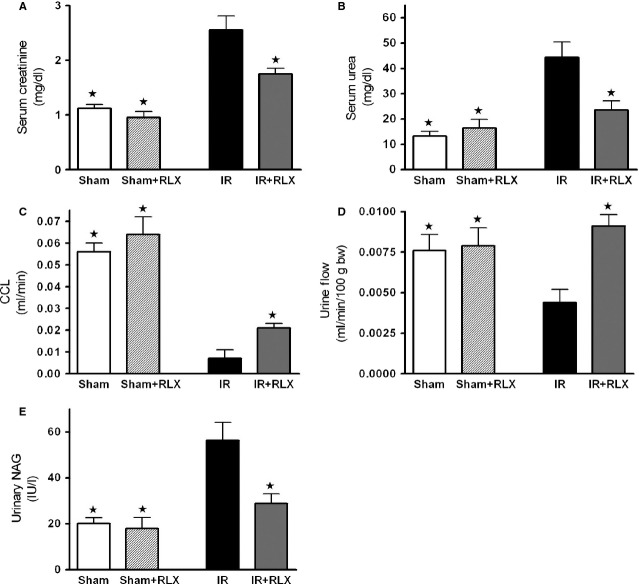
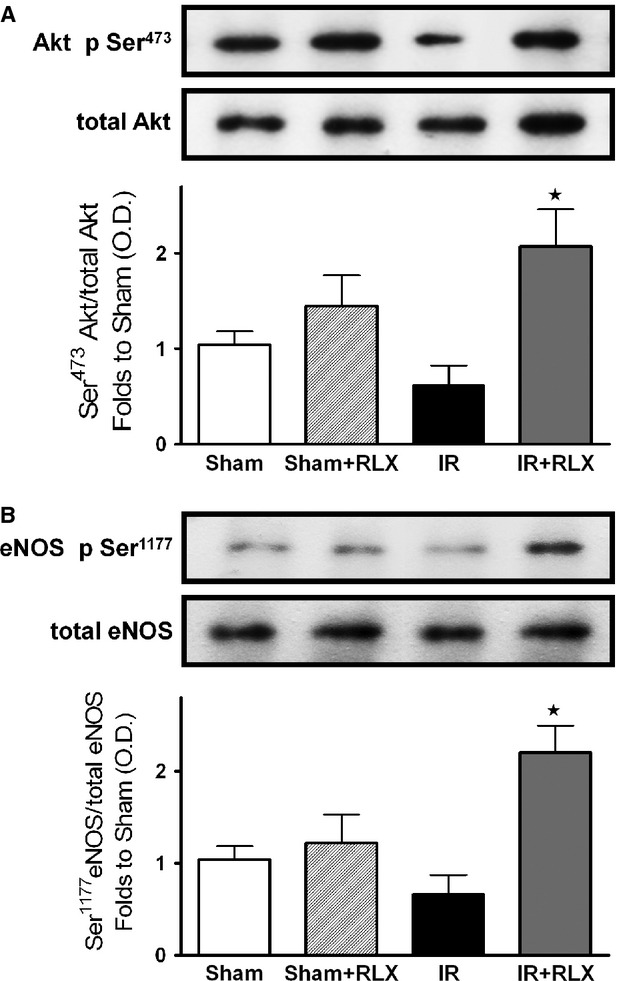
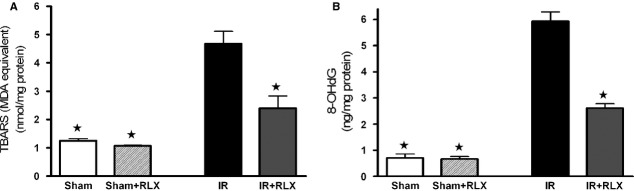
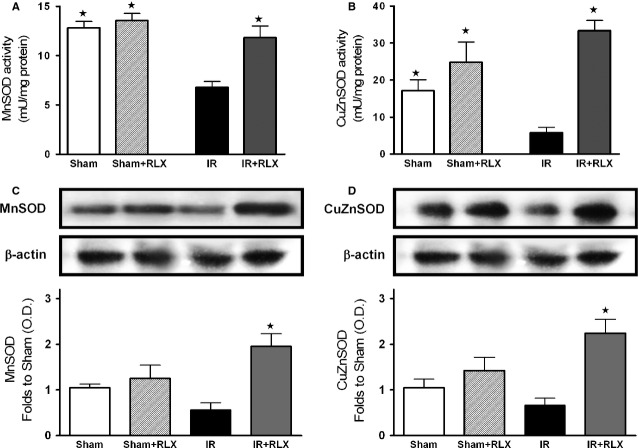
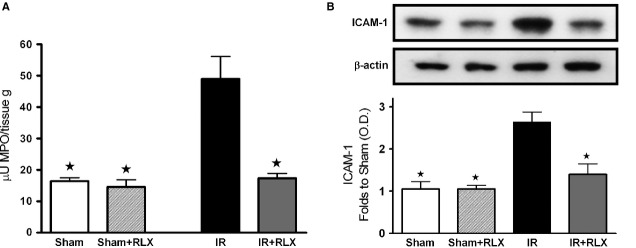
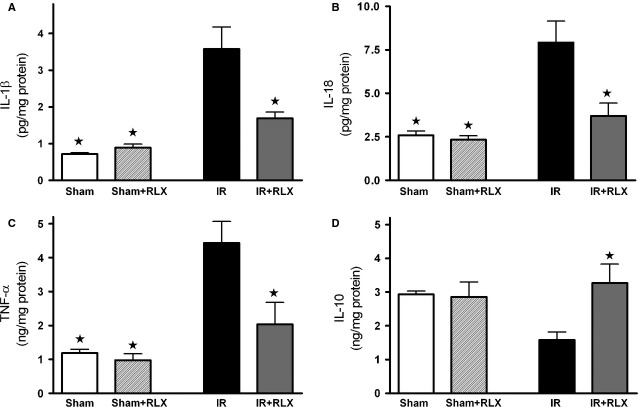
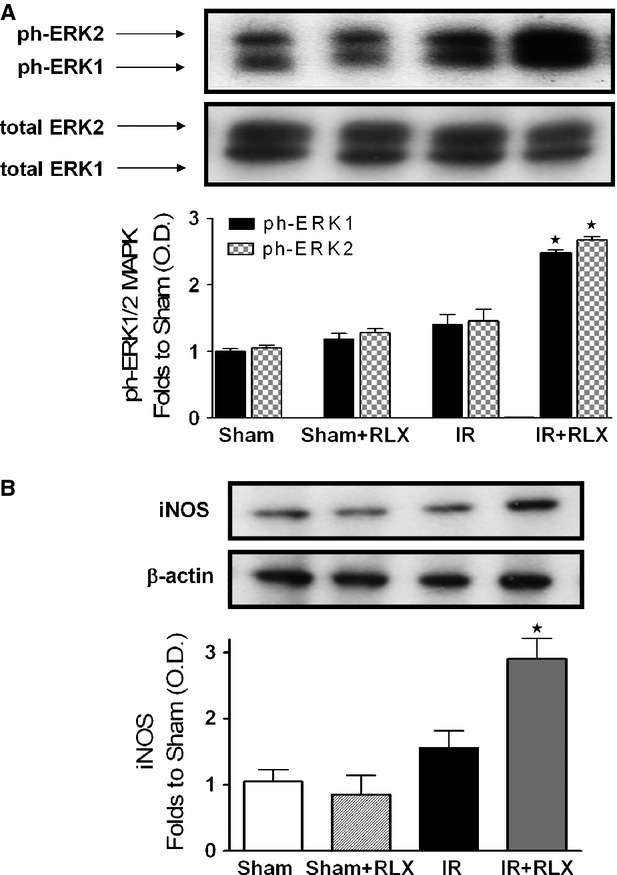
Although recent preclinical and clinical studies have demonstrated that recombinant human relaxin (rhRLX) may have important therapeutic potential in acute heart failure and chronic kidney diseases, the effects of acute rhRLX administration against renal ischaemia/reperfusion (I/R) injury have never been investigated. Using a rat model of 1-hr bilateral renal artery occlusion followed by 6-hr reperfusion, we investigated the effects of rhRLX (5 μg/Kg i.v.) given both at the beginning and after 3 hrs of reperfusion. Acute rhRLX administration attenuated the functional renal injury (increase in serum urea and creatinine), glomerular dysfunction (decrease in creatinine clearance) and tubular dysfunction (increase in urinary excretion of N-acetyl-β-glucosaminidase) evoked by renal I/R. These beneficial effects were accompanied by a significant reduction in local lipid peroxidation, free radical-induced DNA damage and increase in the expression/activity of the endogenous antioxidant enzymes Mn- and CuZn-superoxide dismutases (SOD). Furthermore, rhRLX administration attenuated the increase in leucocyte activation, as suggested by inhibition of myeloperoxidase activity, intercellular-adhesion-molecule-1 expression, interleukin (IL)-1β, IL-18 and tumour necrosis factor-α production as well as increase in IL-10 production. Interestingly, the reduced oxidative stress status and neutrophil activation here reported were associated with rhRLX-induced activation of endothelial nitric oxide synthase and up-regulation of inducible nitric oxide synthase, possibly secondary to activation of Akt and the extracellular signal-regulated protein kinase (ERK) 1/2, respectively. Thus, we report herein that rhRLX protects the kidney against I/R injury by a mechanism that involves changes in nitric oxide signalling pathway.
尽管最近的临床前和临床研究表明重组人松弛素(rhRLX)在急性心力衰竭和慢性肾脏疾病中可能具有重要的治疗潜力,但急性 rhRLX 给药对肾缺血/再灌注(I / R)损伤的影响从未被研究过。我们使用了 1 小时双侧肾动脉闭塞后再灌注 6 小时的大鼠模型,研究了 rhRLX(5μg/Kg 静脉注射)在再灌注开始时和 3 小时后给予的效果。急性 rhRLX 给药减轻了肾 I / R 引起的肾功能损伤(血清尿素和肌酐升高)、肾小球功能障碍(肌酐清除率降低)和肾小管功能障碍(N-乙酰-β-葡萄糖苷酶尿排泄增加)。这些有益作用伴随着局部脂质过氧化、自由基诱导的 DNA 损伤的显著减少和内源性抗氧化酶 Mn-和 CuZn-超氧化物歧化酶(SOD)的表达/活性增加。此外,rhRLX 给药抑制髓过氧化物酶活性、细胞间黏附分子-1 表达、白细胞介素(IL)-1β、IL-18 和肿瘤坏死因子-α的产生以及增加白细胞介素-10 的产生,从而减轻白细胞的激活增加。有趣的是,这里报道的氧化应激状态和中性粒细胞激活的减少与 rhRLX 诱导的内皮型一氧化氮合酶激活和诱导型一氧化氮合酶的上调有关,可能分别继发于 Akt 和细胞外信号调节蛋白激酶(ERK)1/2 的激活。因此,我们在此报告 rhRLX 通过改变一氧化氮信号通路来保护肾脏免受 I / R 损伤。