Department of Pharmacognosy and Isfahan Pharmaceutical Sciences Research Center, School of Pharmacy and Pharmaceutical Sciences, Isfahan University of Medical Sciences, Isfahan 81744-176, Iran.
Biomed Res Int. 2013;2013:639725. doi: 10.1155/2013/639725. Epub 2013 Sep 8.
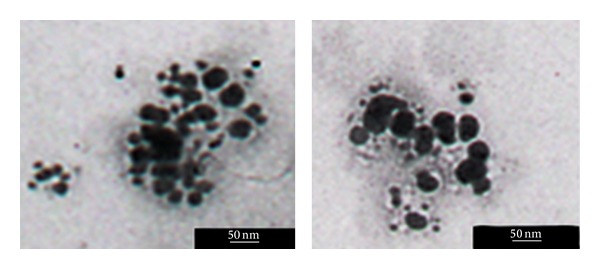
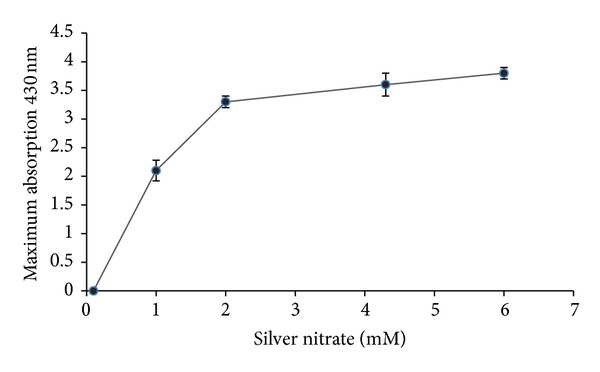
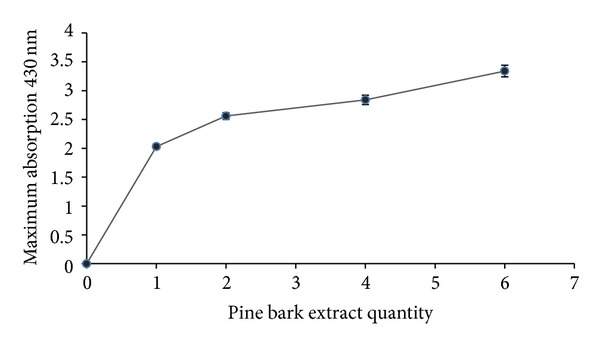
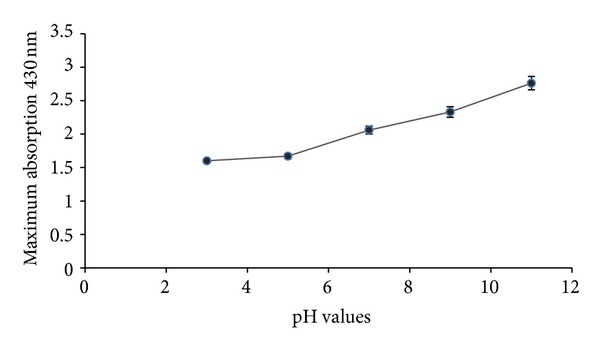
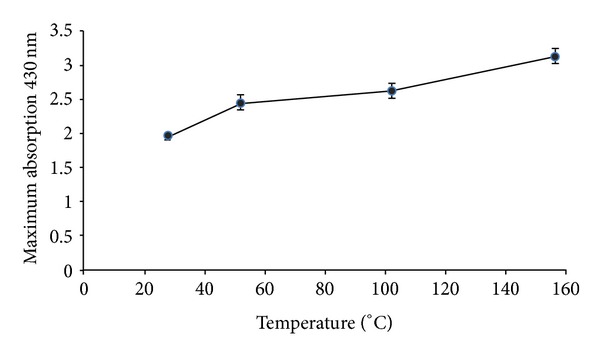
Recently, development of reliable experimental protocols for synthesis of metal nanoparticles with desired morphologies and sizes has become a major focus of researchers. Green synthesis of metal nanoparticles using organisms has emerged as a nontoxic and ecofriendly method for synthesis of metal nanoparticles. The objectives of this study were production of silver nanoparticles using Pinus eldarica bark extract and optimization of the biosynthesis process. The effects of quantity of extract, substrate concentration, temperature, and pH on the formation of silver nanoparticles are studied. TEM images showed that biosynthesized silver nanoparticles (approximately in the range of 10-40 nm) were predominantly spherical in shape. The preparation of nano-structured silver particles using P. eldarica bark extract provides an environmentally friendly option, as compared to currently available chemical and/or physical methods.
最近,开发具有所需形貌和尺寸的金属纳米粒子的可靠实验方案已成为研究人员的主要关注点。使用生物体进行金属纳米粒子的绿色合成已经成为一种无毒且环保的金属纳米粒子合成方法。本研究的目的是使用欧洲赤松树皮提取物生产银纳米粒子,并优化生物合成过程。研究了提取物的用量、基质浓度、温度和 pH 值对银纳米粒子形成的影响。TEM 图像显示,生物合成的银纳米粒子(约在 10-40nm 范围内)主要呈球形。与现有的化学和/或物理方法相比,使用欧洲赤松树皮提取物制备纳米结构银颗粒提供了一种环境友好的选择。