Department of Biology, University of Saskatchewan, Saskatoon, Saskatchewan, Canada ; National Research Council Canada, Saskatoon, Saskatchewan, Canada.
PLoS One. 2013 Sep 27;8(9):e77378. doi: 10.1371/journal.pone.0077378. eCollection 2013.
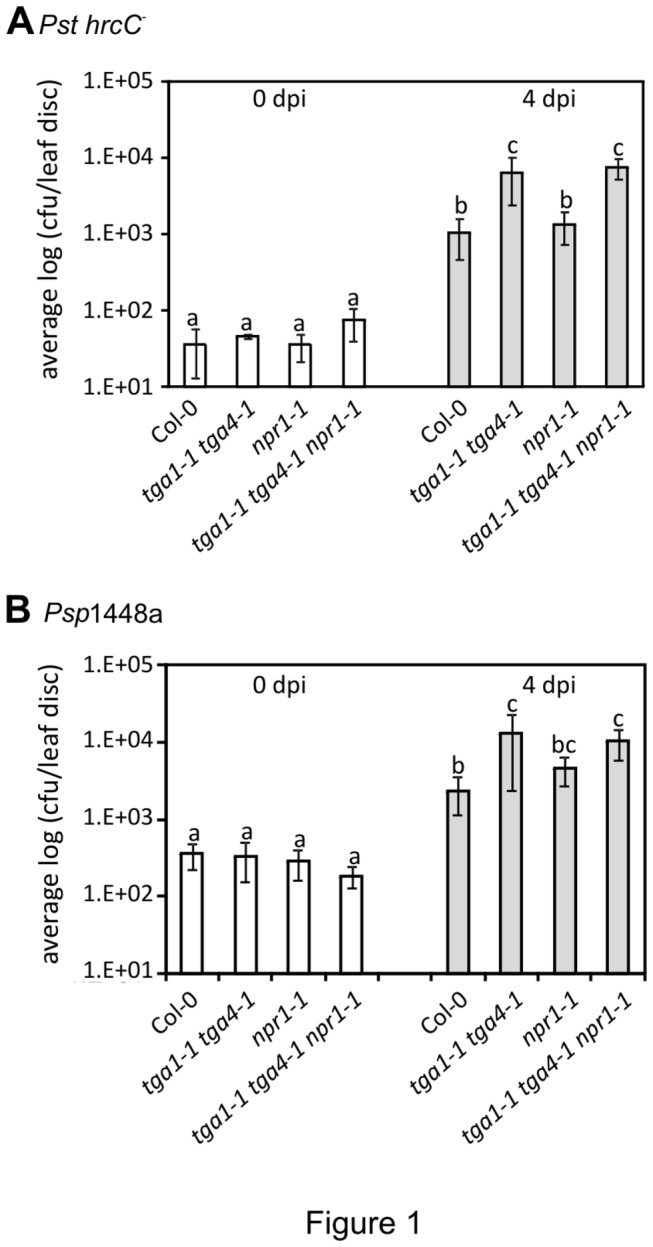
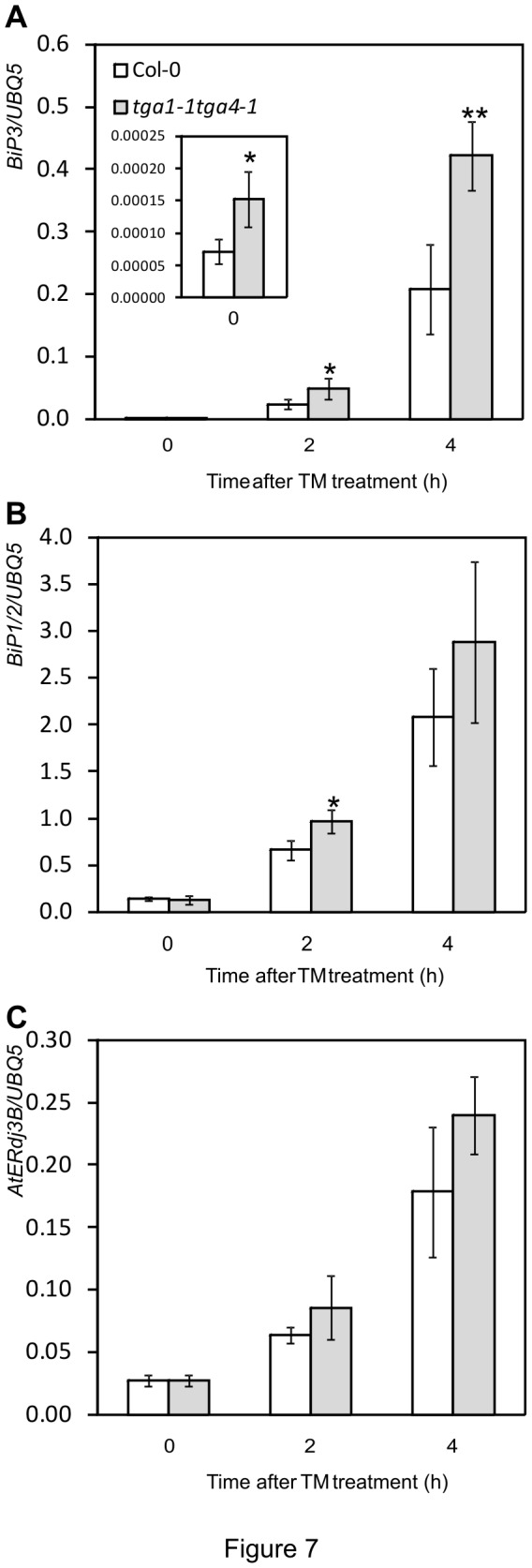
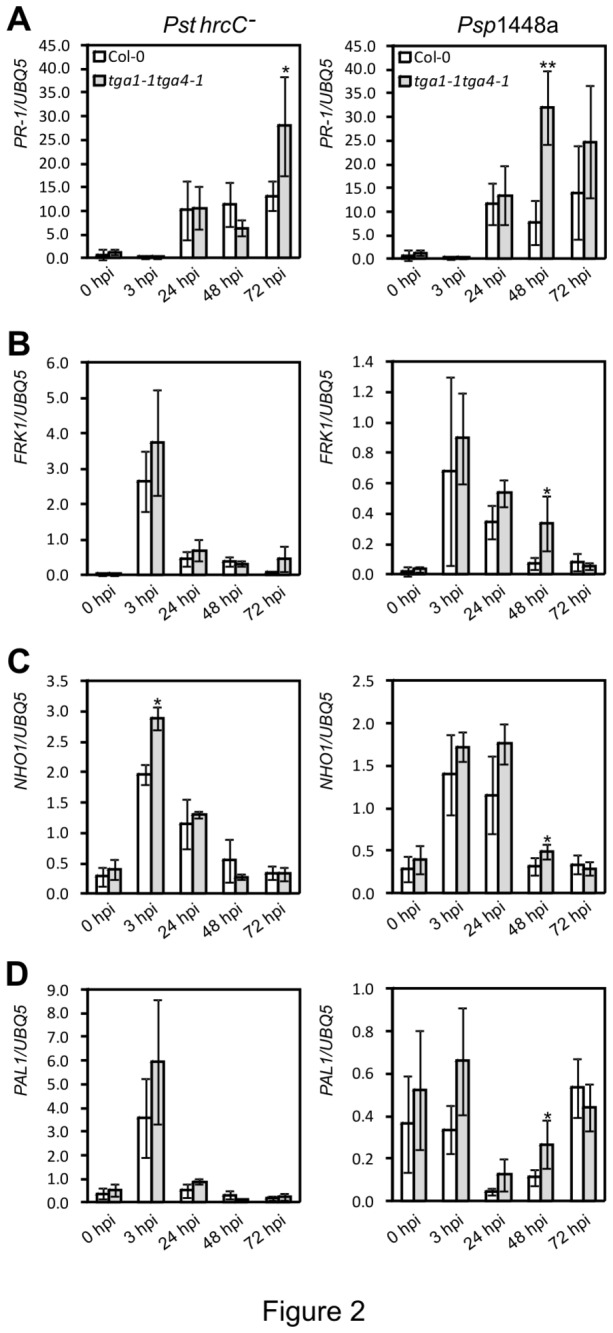
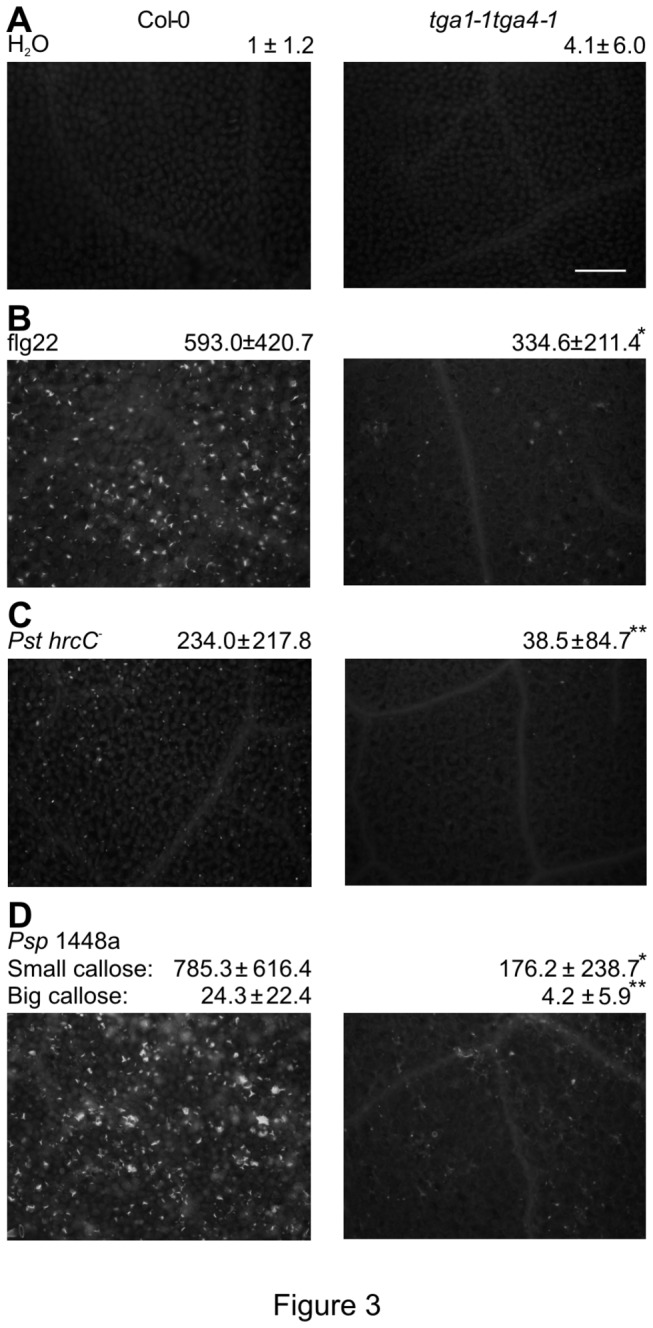
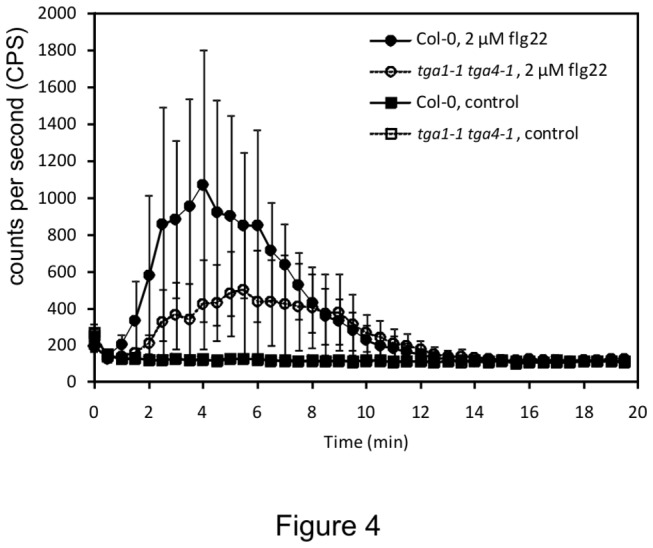
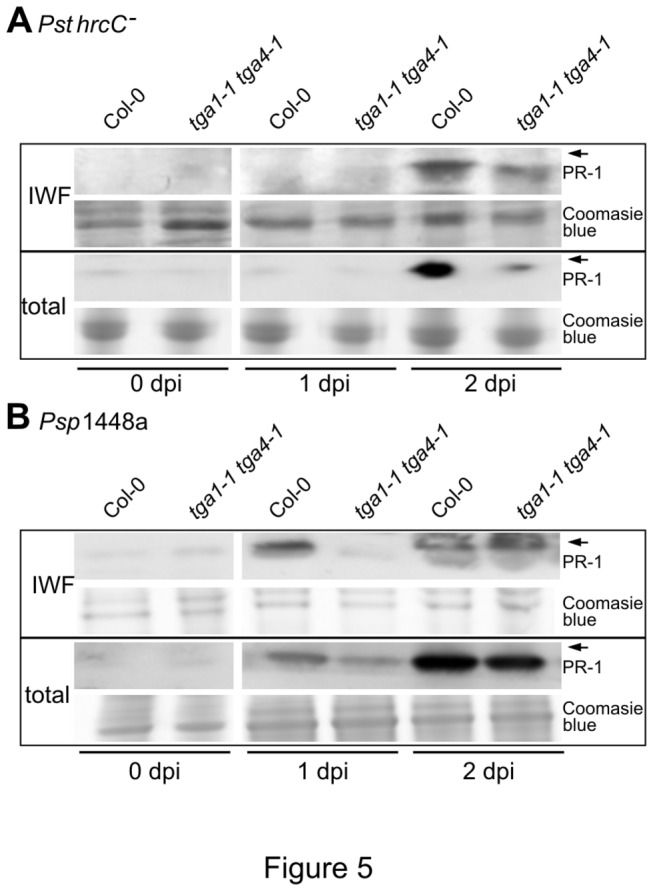
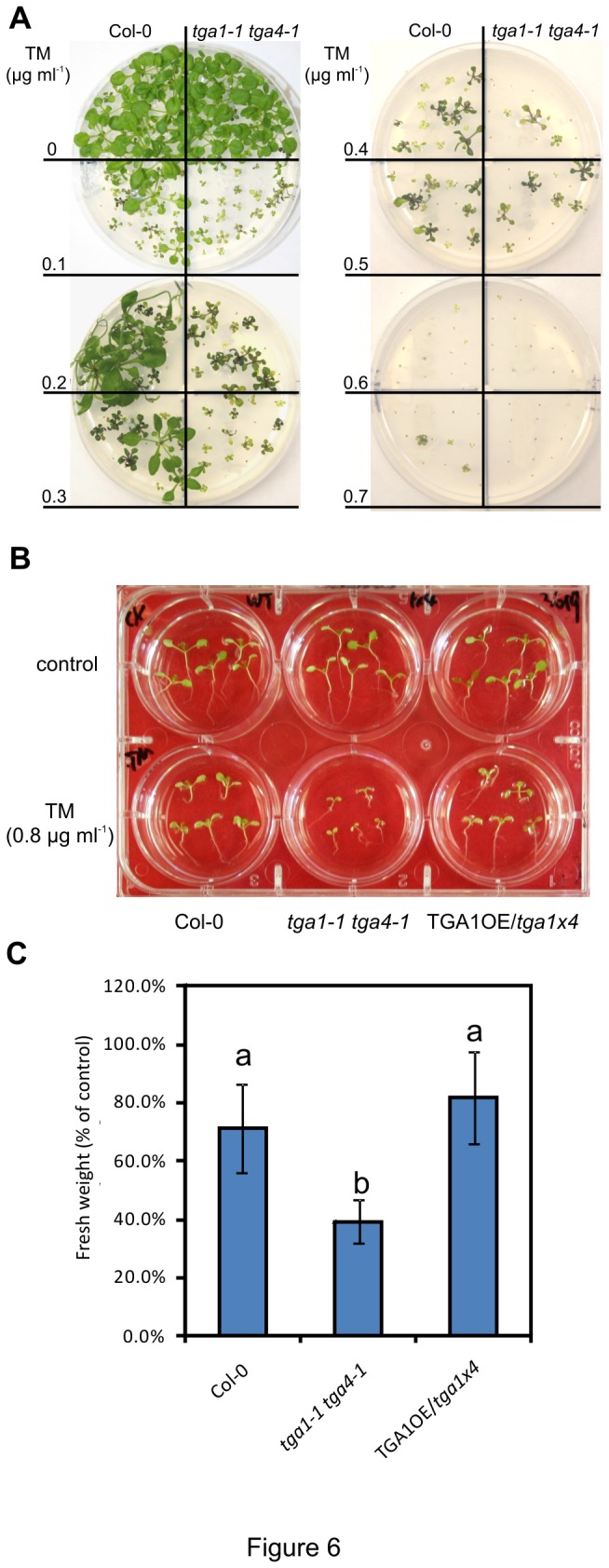
During the plant immune response, large-scale transcriptional reprogramming is modulated by numerous transcription (co) factors. The Arabidopsis basic leucine zipper transcription factors TGA1 and TGA4, which comprise the clade I TGA factors, have been shown to positively contribute to disease resistance against virulent strains of the bacterial pathogen Pseudomonas syringae. Despite physically interacting with the key immune regulator, NON-EXPRESSOR OF PATHOGENESIS-RELATED GENES 1 (NPR1), following elicitation with salicylic acid (SA), clade I function was shown to be largely independent of NPR1. Unlike mutants in NPR1, tga1-1 tga4-1 plants do not display reductions in steady-state levels of SA-pathway marker genes following treatment with this phenolic signaling metabolite or after challenge with virulent or avirulent P. syringae. By exploiting bacterial strains that have limited capacity to suppress Arabidopsis defence responses, the present study demonstrates that tga1-1 tga4-1 plants are compromised in basal resistance and defective in several apoplastic defence responses, including the oxidative burst of reactive oxygen species, callose deposition, as well as total and apoplastic PATHOGENESIS-RELATED 1 (PR-1) protein accumulation. Furthermore, analysis of npr1-1 and the tga1-1 tga4-1 npr1-1 triple mutant indicates that clade I TGA factors act substantially independent of NPR1 in mediating disease resistance against these strains of P. syringae. Increased sensitivity to the N-glycosylation inhibitor tunicamycin and elevated levels of endoplasmic reticulum (ER) stress marker genes encoding ER-resident chaperones in mutant seedlings suggest that loss of apoplastic defence responses is associated with aberrant protein secretion and implicate clade I TGA factors as positive regulators of one or more ER-related secretion pathways.
在植物免疫反应中,大量的转录因子(co)调节转录的重新编程。拟南芥碱性亮氨酸拉链转录因子 TGA1 和 TGA4,它们构成了 I 类 TGA 因子,已被证明对病原菌丁香假单胞菌的毒性菌株的抗病性有积极贡献。尽管在水杨酸(SA)诱导后与关键免疫调节剂非表达病原菌相关基因 1(NPR1)物理相互作用,但 I 类功能在很大程度上独立于 NPR1。与 NPR1 突变体不同,tga1-1 tga4-1 植物在处理这种酚类信号代谢物或用毒性或无毒丁香假单胞菌菌株攻击后,其 SA 途径标记基因的稳态水平没有降低。通过利用对拟南芥防御反应抑制能力有限的细菌菌株,本研究表明 tga1-1 tga4-1 植物在基础抗性方面受损,并且在几种质外体防御反应中存在缺陷,包括活性氧的氧化爆发、胼胝质沉积以及总和质外体病程相关 1(PR-1)蛋白的积累。此外,对 npr1-1 和 tga1-1 tga4-1 npr1-1 三突变体的分析表明,I 类 TGA 因子在介导对这些丁香假单胞菌菌株的抗病性方面实质上独立于 NPR1。突变体幼苗对 N-糖基化抑制剂衣霉素的敏感性增加和内质网(ER)应激标记基因编码 ER 驻留伴侣的水平升高表明,质外体防御反应的丧失与异常的蛋白质分泌有关,并暗示 I 类 TGA 因子是一个或多个 ER 相关分泌途径的正调节剂。