FONDAP Center for Genome Regulation, Núcleo Milenio en Biotecnología Celular Vegetal, Facultad de Ciencias Biológicas, Universidad Andrés Bello, Santiago, Chile.
PLoS One. 2012;7(2):e31944. doi: 10.1371/journal.pone.0031944. Epub 2012 Feb 16.
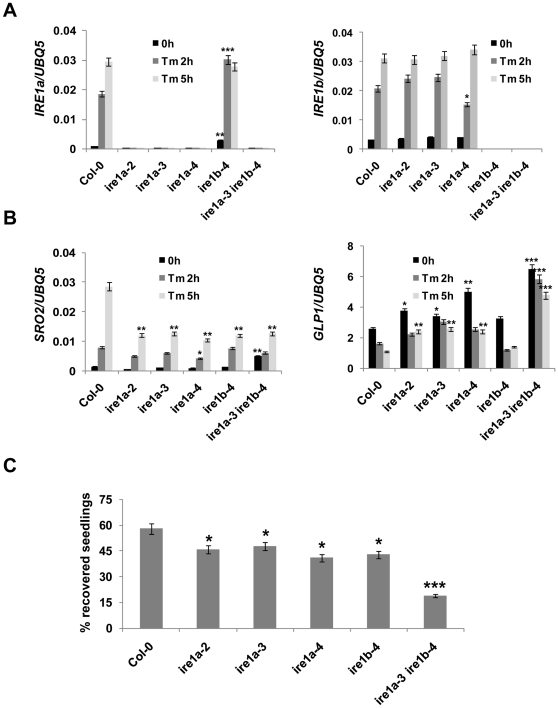
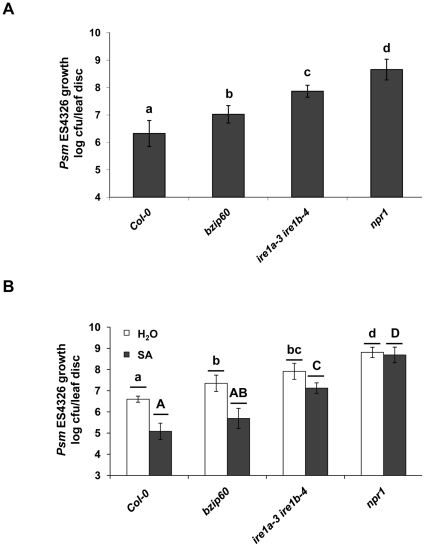
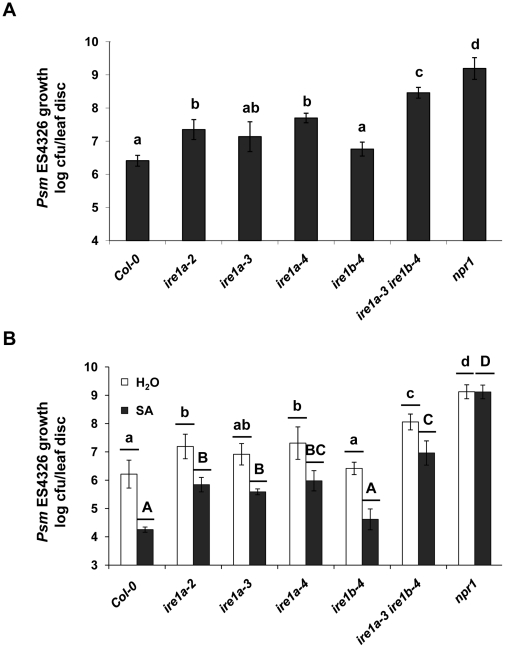
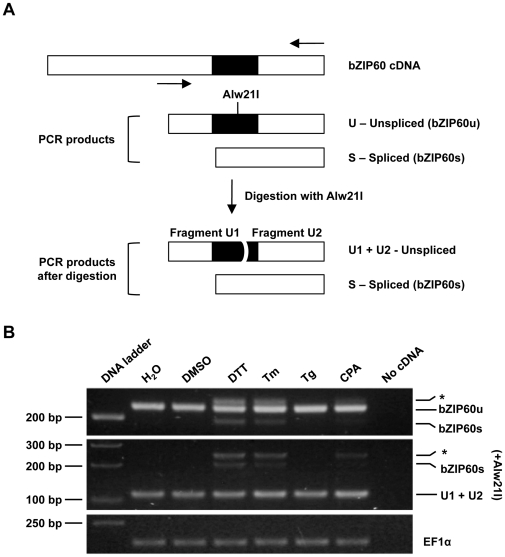
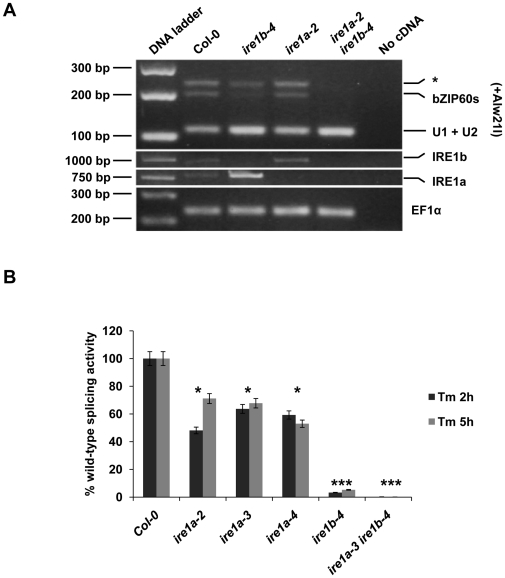
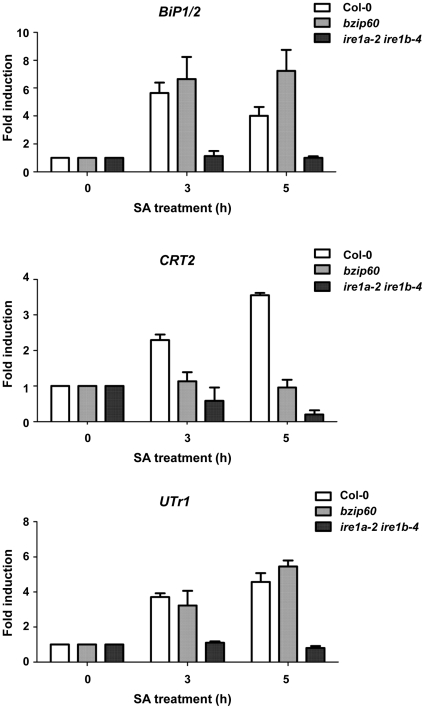
Endoplasmic reticulum (ER)-mediated protein secretion and quality control have been shown to play an important role in immune responses in both animals and plants. In mammals, the ER membrane-located IRE1 kinase/endoribonuclease, a key regulator of unfolded protein response (UPR), is required for plasma cell development to accommodate massive secretion of immunoglobulins. Plant cells can secrete the so-called pathogenesis-related (PR) proteins with antimicrobial activities upon pathogen challenge. However, whether IRE1 plays any role in plant immunity is not known. Arabidopsis thaliana has two copies of IRE1, IRE1a and IRE1b. Here, we show that both IRE1a and IRE1b are transcriptionally induced during chemically-induced ER stress, bacterial pathogen infection and treatment with the immune signal salicylic acid (SA). However, we found that IRE1a plays a predominant role in the secretion of PR proteins upon SA treatment. Consequently, the ire1a mutant plants show enhanced susceptibility to a bacterial pathogen and are deficient in establishing systemic acquired resistance (SAR), whereas ire1b is unaffected in these responses. We further demonstrate that the immune deficiency in ire1a is due to a defect in SA- and pathogen-triggered, IRE1-mediated cytoplasmic splicing of the bZIP60 mRNA, which encodes a transcription factor involved in the expression of UPR-responsive genes. Consistently, IRE1a is preferentially required for bZIP60 splicing upon pathogen infection, while IRE1b plays a major role in bZIP60 processing upon Tunicamycin (Tm)-induced stress. We also show that SA-dependent induction of UPR-responsive genes is altered in the bzip60 mutant resulting in a moderate susceptibility to a bacterial pathogen. These results indicate that the IRE1/bZIP60 branch of UPR is a part of the plant response to pathogens for which the two Arabidopsis IRE1 isoforms play only partially overlapping roles and that IRE1 has both bZIP60-dependent and bZIP60-independent functions in plant immunity.
内质网(ER)介导的蛋白质分泌和质量控制已被证明在动物和植物的免疫反应中发挥重要作用。在哺乳动物中,内质网膜定位的IRE1 激酶/内切核糖核酸酶是未折叠蛋白反应(UPR)的关键调节剂,对于浆细胞的发育以适应免疫球蛋白的大量分泌是必需的。植物细胞在受到病原体攻击时可以分泌具有抗菌活性的所谓病程相关(PR)蛋白。然而,IRE1 是否在植物免疫中发挥作用尚不清楚。拟南芥有两个 IRE1 拷贝,IRE1a 和 IRE1b。在这里,我们表明,IRE1a 和 IRE1b 在化学诱导的 ER 应激、细菌病原体感染和用免疫信号水杨酸(SA)处理期间均被转录诱导。然而,我们发现 IRE1a 在 SA 处理后 PR 蛋白的分泌中起主要作用。因此,ire1a 突变体植物对细菌病原体的敏感性增强,并且在建立系统获得性抗性(SAR)方面缺陷,而 ire1b 在这些反应中不受影响。我们进一步证明,ire1a 的免疫缺陷是由于 SA 和病原体触发的、IRE1 介导的 bZIP60 mRNA 细胞质剪接缺陷所致,该 mRNA 编码一种参与 UPR 响应基因表达的转录因子。一致地,IRE1a 在病原体感染时优先需要 bZIP60 剪接,而 IRE1b 在 Tunicamycin(Tm)诱导的应激时主要参与 bZIP60 加工。我们还表明,bzip60 突变体中 UPR 响应基因的诱导发生改变,导致对细菌病原体的中度敏感性。这些结果表明,IRE1/bZIP60 UPR 分支是植物对病原体反应的一部分,两种拟南芥 IRE1 同工型仅部分重叠,并且 IRE1 在植物免疫中具有 bZIP60 依赖性和 bZIP60 非依赖性功能。