1] Dipartimento di Psicologia dello Sviluppo e della Socializzazione, Università di Padova, Padova, Italy [2] Centre for Brain and Cognitive Development, Birkbeck, University of London, United Kingdom.
Sci Rep. 2013 Oct 4;3:2851. doi: 10.1038/srep02851.
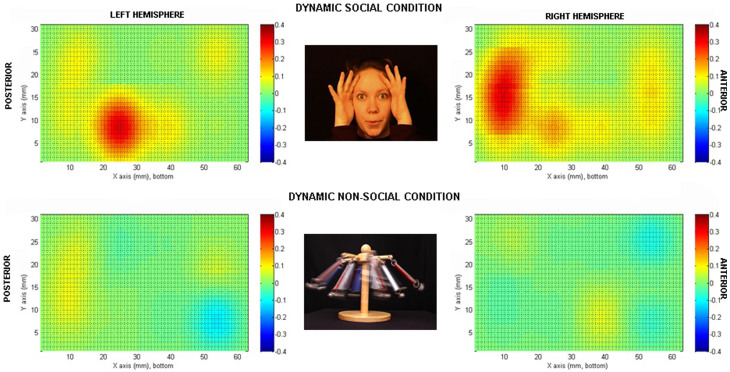
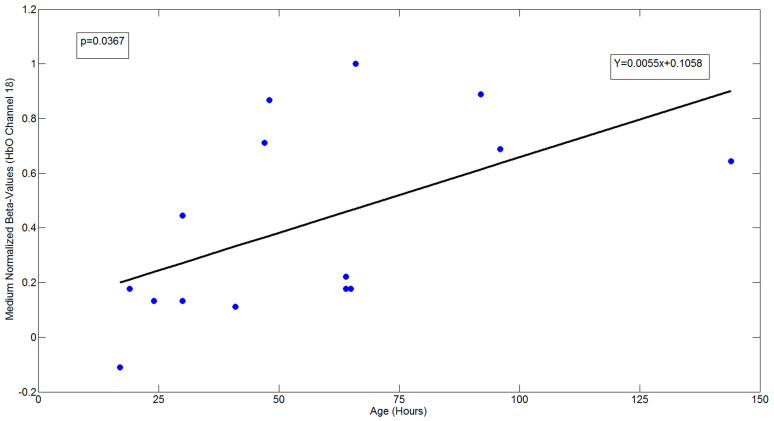
A significant feature of the adult human brain is its ability to selectively process information about conspecifics. Much debate has centred on whether this specialization is primarily a result of phylogenetic adaptation, or whether the brain acquires expertise in processing social stimuli as a result of its being born into an intensely social environment. Here we study the haemodynamic response in cortical areas of newborns (1-5 days old) while they passively viewed dynamic human or mechanical action videos. We observed activation selective to a dynamic face stimulus over bilateral posterior temporal cortex, but no activation in response to a moving human arm. This selective activation to the social stimulus correlated with age in hours over the first few days post partum. Thus, even very limited experience of face-to-face interaction with other humans may be sufficient to elicit social stimulus activation of relevant cortical regions.
成年人脑的一个显著特征是其能够有选择地处理关于同种个体的信息。许多争论集中在这种专门化主要是种系适应的结果,还是大脑由于生存在一个强烈的社会环境中而获得处理社会刺激的专业知识。在这里,我们研究了新生儿(1-5 天大)被动观看动态人类或机械动作视频时皮质区域的血液动力学反应。我们观察到双侧颞后皮质对动态面部刺激有选择性激活,但对移动的人类手臂没有反应。这种对社会刺激的选择性激活与出生后几天内的小时数呈正相关。因此,即使是与他人面对面互动的非常有限的经验,也足以引起相关皮质区域的社会刺激激活。