Moreno-Ramos Oscar Andrés, Lattig Maria Claudia, González Barrios Andrés Fernando
Grupo de Diseño de Productos y Procesos (GDPP), Universidad de los Andes, Cra, 1 Este 19 A 40 Ed, Mario Laserna, Bogotá, Colombia.
Theor Biol Med Model. 2013 Oct 5;10:59. doi: 10.1186/1742-4682-10-59.
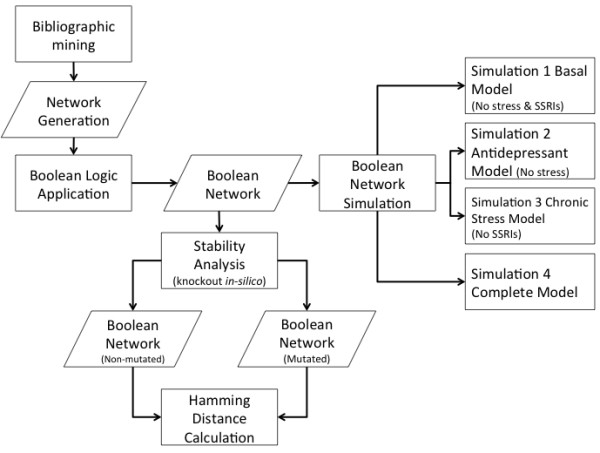
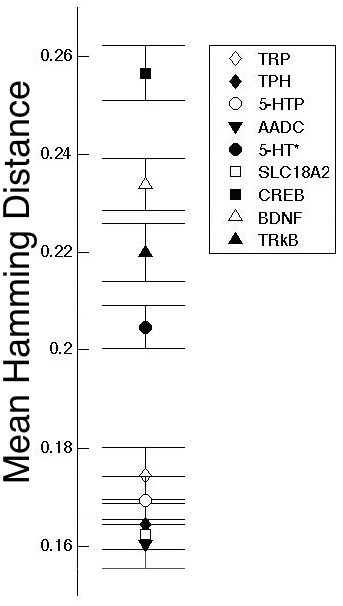
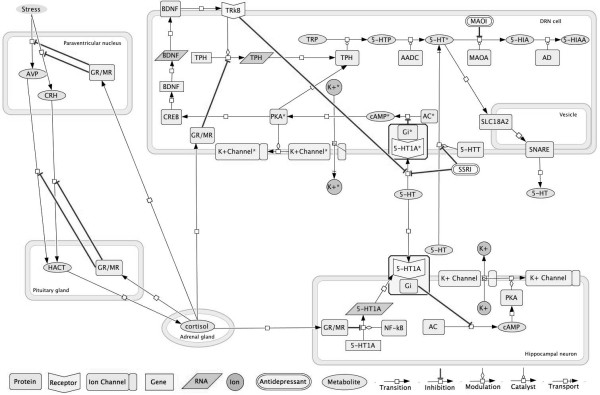
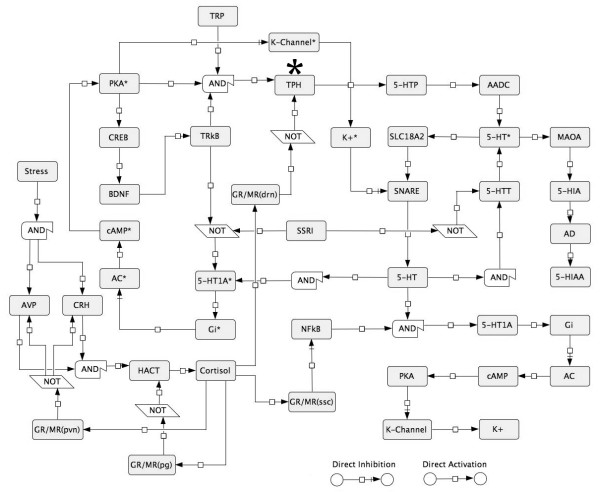
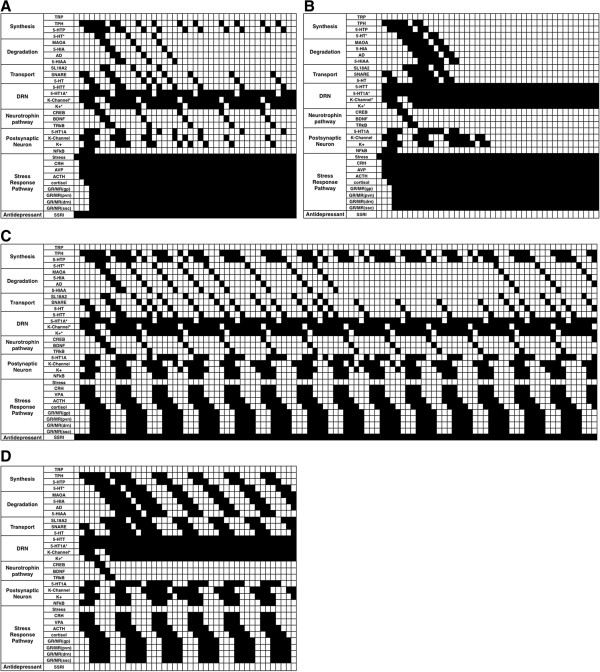
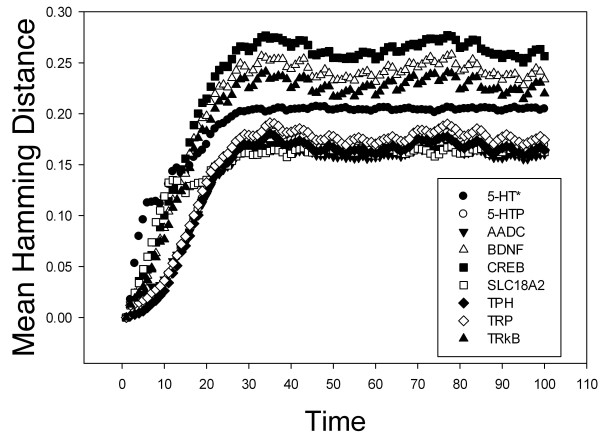
Major depressive disorder (MDD) is a multifactorial disorder known to be influenced by both genetic and environmental factors. MDD presents a heritability of 37%, and a genetic contribution has also been observed in studies of family members of individuals with MDD that imply that the probability of suffering the disorder is approximately three times higher if a first-degree family member is affected. Childhood maltreatment and stressful life events (SLEs) have been established as critical environmental factors that profoundly influence the onset of MDD. The serotonin pathway has been a strong candidate for genetic studies, but it only explains a small proportion of the heritability of the disorder, which implies the involvement of other pathways. The serotonin (5-HT) pathway interacts with the stress response pathway in a manner mediated by the hypothalamic-pituitary-adrenal (HPA) axis. To analyze the interaction between the pathways, we propose the use of a synchronous Boolean network (SBN) approximation. The principal aim of this work was to model the interaction between these pathways, taking into consideration the presence of selective serotonin reuptake inhibitors (SSRIs), in order to observe how the pathways interact and to examine if the system is stable. Additionally, we wanted to study which genes or metabolites have the greatest impact on model stability when knocked out in silico. We observed that the biological model generated predicts steady states (attractors) for each of the different runs performed, thereby proving that the system is stable. These attractors changed in shape, especially when anti-depressive drugs were also included in the simulation. This work also predicted that the genes with the greatest impact on model stability were those involved in the neurotrophin pathway, such as CREB, BDNF (which has been associated with major depressive disorder in a variety of studies) and TRkB, followed by genes and metabolites related to 5-HT synthesis.
重度抑郁症(MDD)是一种多因素疾病,已知受遗传和环境因素影响。MDD的遗传率为37%,在对MDD患者家庭成员的研究中也观察到了遗传因素的作用,这意味着如果一级家庭成员患病,那么患该疾病的概率大约会高出三倍。童年期虐待和应激性生活事件(SLEs)已被确认为深刻影响MDD发病的关键环境因素。血清素途径一直是遗传学研究的有力候选对象,但它仅解释了该疾病遗传率的一小部分,这意味着其他途径也参与其中。血清素(5-HT)途径通过下丘脑-垂体-肾上腺(HPA)轴介导的方式与应激反应途径相互作用。为了分析这些途径之间的相互作用,我们建议使用同步布尔网络(SBN)近似法。这项工作的主要目的是对这些途径之间的相互作用进行建模,同时考虑选择性5-羟色胺再摄取抑制剂(SSRIs)的存在,以便观察这些途径如何相互作用,并检验系统是否稳定。此外,我们想研究在计算机模拟中敲除哪些基因或代谢物对模型稳定性影响最大。我们观察到所生成的生物学模型为每次不同的运行预测了稳态(吸引子),从而证明该系统是稳定的。这些吸引子的形状发生了变化,尤其是在模拟中也加入抗抑郁药物时。这项工作还预测,对模型稳定性影响最大的基因是那些参与神经营养因子途径的基因,如CREB、BDNF(在各种研究中已与重度抑郁症相关联)和TRkB,其次是与5-HT合成相关的基因和代谢物。