Department of Genetics, University of North Carolina, Chapel Hill, North Carolina, United States of America ; Lineberger Comprehensive Cancer Center, University of North Carolina, Chapel Hill, North Carolina, United States of America ; Carolina Center for Genome Sciences, University of North Carolina, Chapel Hill, North Carolina, United States of America ; Curriculum in Genetics and Molecular Biology, University of North Carolina, Chapel Hill, North Carolina, United States of America.
PLoS Genet. 2013;9(10):e1003853. doi: 10.1371/journal.pgen.1003853. Epub 2013 Oct 3.
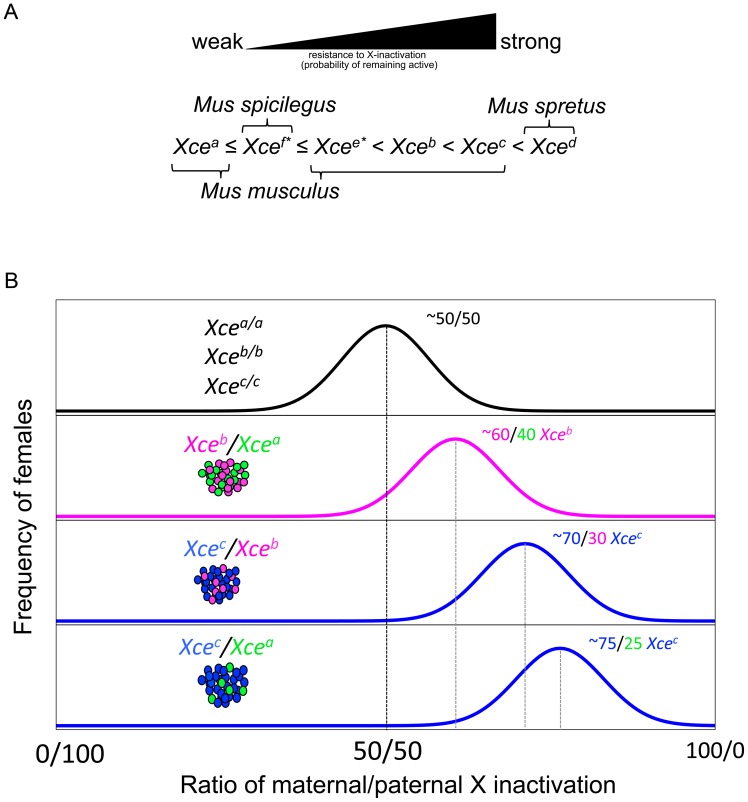
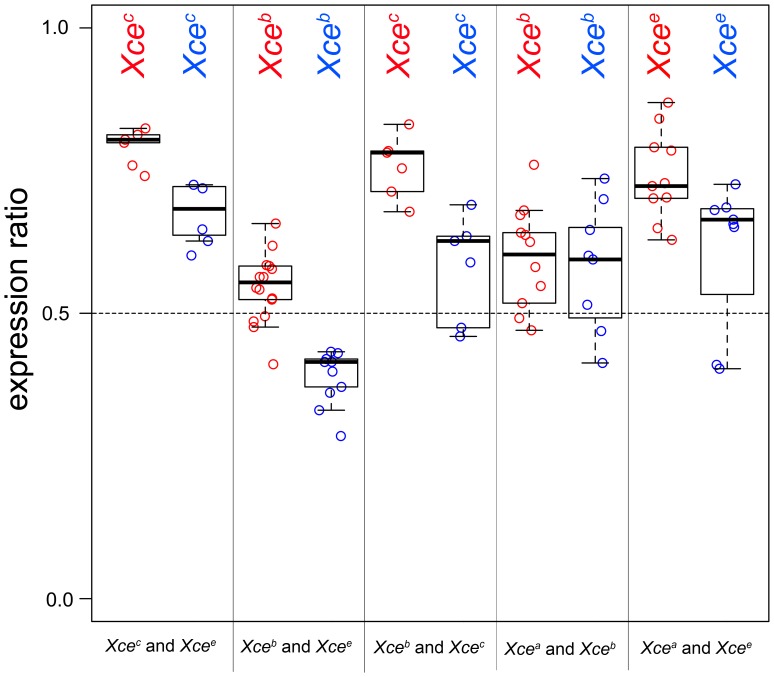
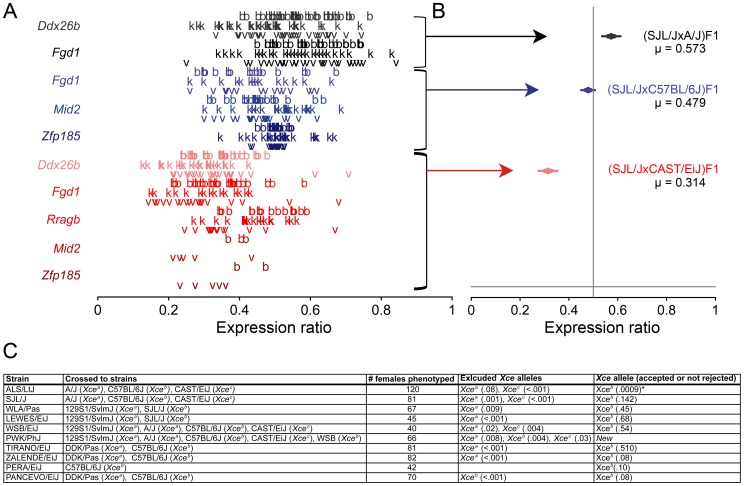
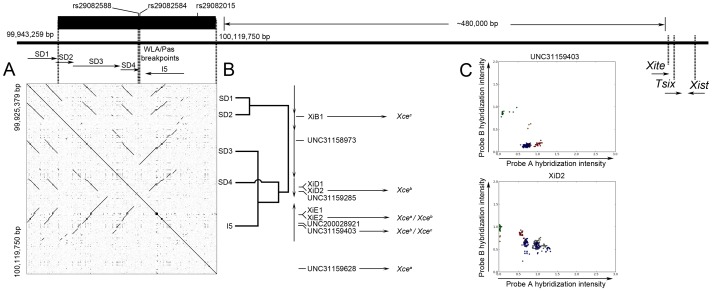
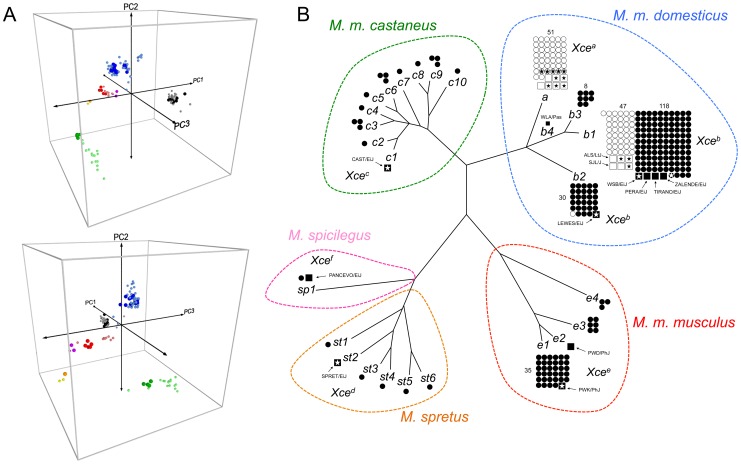
X chromosome inactivation (XCI) is the mammalian mechanism of dosage compensation that balances X-linked gene expression between the sexes. Early during female development, each cell of the embryo proper independently inactivates one of its two parental X-chromosomes. In mice, the choice of which X chromosome is inactivated is affected by the genotype of a cis-acting locus, the X-chromosome controlling element (Xce). Xce has been localized to a 1.9 Mb interval within the X-inactivation center (Xic), yet its molecular identity and mechanism of action remain unknown. We combined genotype and sequence data for mouse stocks with detailed phenotyping of ten inbred strains and with the development of a statistical model that incorporates phenotyping data from multiple sources to disentangle sources of XCI phenotypic variance in natural female populations on X inactivation. We have reduced the Xce candidate 10-fold to a 176 kb region located approximately 500 kb proximal to Xist. We propose that structural variation in this interval explains the presence of multiple functional Xce alleles in the genus Mus. We have identified a new allele, Xce(e) present in Mus musculus and a possible sixth functional allele in Mus spicilegus. We have also confirmed a parent-of-origin effect on X inactivation choice and provide evidence that maternal inheritance magnifies the skewing associated with strong Xce alleles. Based on the phylogenetic analysis of 155 laboratory strains and wild mice we conclude that Xce(a) is either a derived allele that arose concurrently with the domestication of fancy mice but prior the derivation of most classical inbred strains or a rare allele in the wild. Furthermore, we have found that despite the presence of multiple haplotypes in the wild Mus musculus domesticus has only one functional Xce allele, Xce(b). Lastly, we conclude that each mouse taxa examined has a different functional Xce allele.
X 染色体失活(XCI)是哺乳动物的一种剂量补偿机制,可平衡性别之间的 X 连锁基因表达。在雌性胚胎发育早期,胚胎自身的每个细胞都会独立失活其两条亲本 X 染色体中的一条。在小鼠中,选择失活的 X 染色体受顺式作用基因座——X 染色体控制元件(Xce)的基因型影响。Xce 已被定位到 X 失活中心(Xic)内的 1.9Mb 区间内,但它的分子身份和作用机制仍不清楚。我们将小鼠品系的基因型和序列数据与十种近交系的详细表型相结合,并开发了一种统计模型,该模型整合了来自多个来源的表型数据,以在自然雌性群体的 X 失活中分离 XCI 表型变异的来源。我们已将 Xce 候选区域缩小到一个 176kb 的区域,该区域位于大约 500kb 近端的 Xist 处。我们提出,该间隔中的结构变异解释了 Mus 属中多个功能性 Xce 等位基因的存在。我们已经确定了一个新的等位基因,Xce(e),存在于 Mus musculus 中,并且在 Mus spicilegus 中可能存在第六个功能性等位基因。我们还证实了 X 失活选择的亲本来源效应,并提供了证据表明母系遗传放大了与强 Xce 等位基因相关的偏斜。基于对 155 个实验室品系和野生小鼠的系统发育分析,我们得出结论,Xce(a)要么是一个衍生等位基因,它与 fancy 小鼠的驯化同时出现,但早于大多数经典近交系的起源,要么是野生中的稀有等位基因。此外,我们发现,尽管在野生 Mus musculus domesticus 中有多个单倍型,但只有一个功能性 Xce 等位基因 Xce(b)。最后,我们得出结论,每个被检查的小鼠类群都有不同的功能性 Xce 等位基因。