Department of Dermatology and Allergology, Helsinki University Central Hospital, University of Helsinki, Helsinki, Finland.
PLoS One. 2013 Oct 1;8(10):e76281. doi: 10.1371/journal.pone.0076281. eCollection 2013.
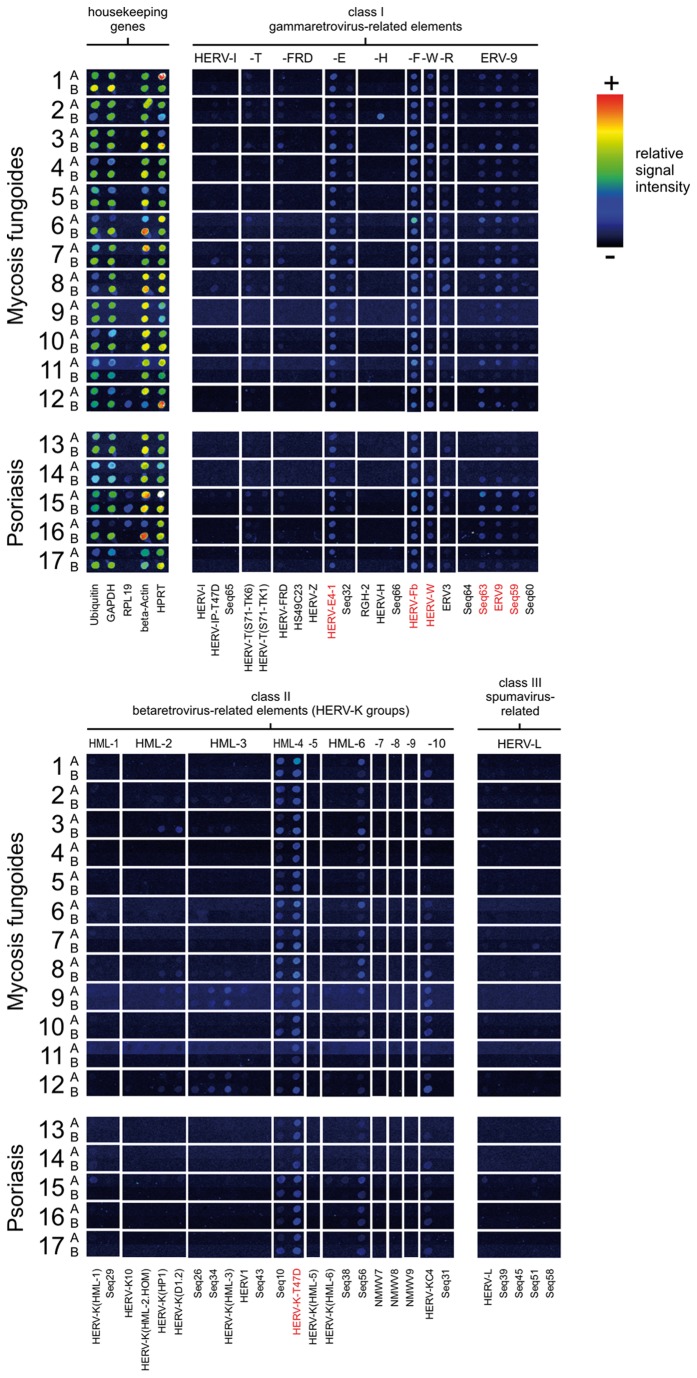
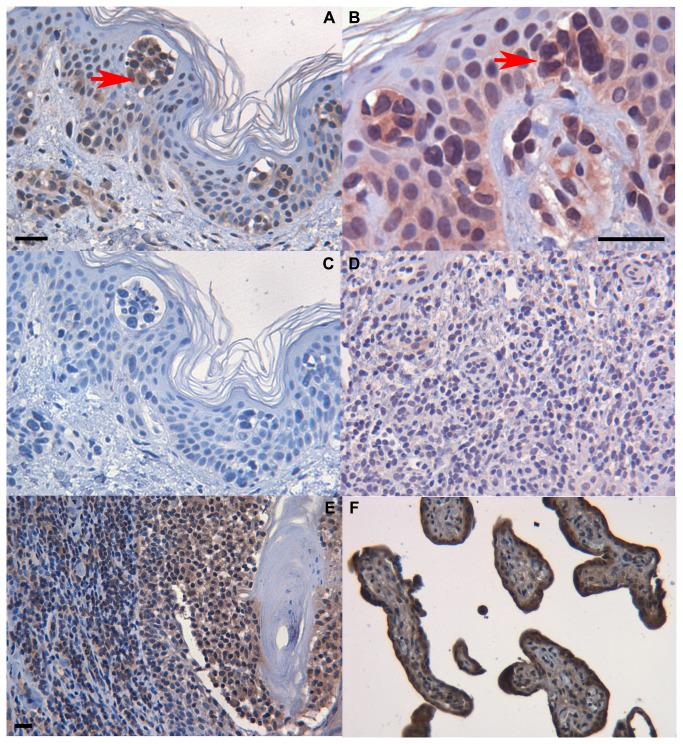
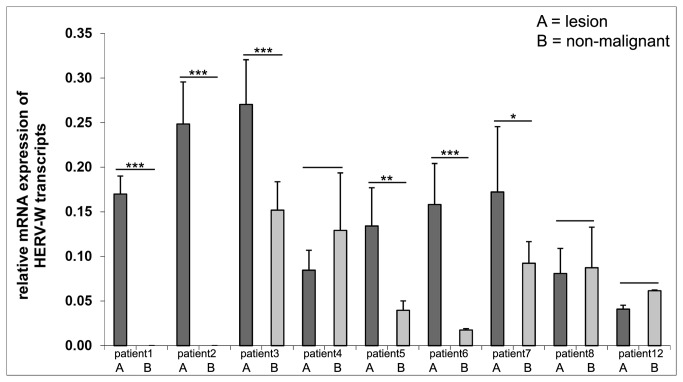
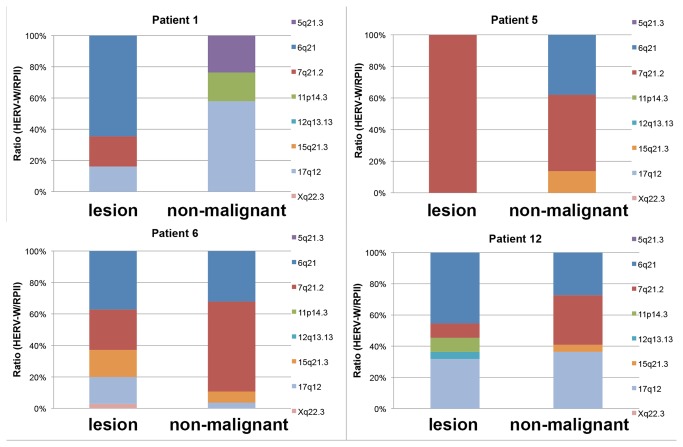
The pathomechanism of mycosis fungoides (MF), the most common type of primary cutaneous T-cell lymphomas (CTCLs) and a malignancy of non-recirculating, skin-resident T-cells, is unknown albeit underlying viral infections have been sought for. Human endogenous retroviruses (HERVs) are ancient retroviral sequences in the human genome and their transcription is often deregulated in cancers. We explored the transcriptional activity of HERV sequences in a total of 34 samples comprising MF and psoriasis skin lesions, as well as corresponding non-malignant skin using a retrovirus-specific microarray and quantitative RT-PCR. To identify active HERV-W loci, we cloned the HERV-W specific RT-PCR products, sequenced the cDNA clones and assigned the sequences to HERV-W loci. Finally, we used immunohistochemistry on MF patient and non-malignant inflammatory skin samples to confirm specific HERV-encoded protein expression. Firstly, a distinct, skin-specific transcription profile consisting of five constitutively active HERV groups was established. Although individual variability was common, HERV-W showed significantly increased transcription in MF lesions compared to clinically intact skin from the same patient. Predominantly transcribed HERV-W loci were found to be located in chromosomes 6q21 and 7q21.2, chromosomal regions typically altered in CTCL. Surprisingly, we also found the expression of 7q21.2/ERVWE1-encoded Syncytin-1 (Env) protein in MF biopsies and expression of Syncytin-1 was seen in malignant lymphocytes, especially in the epidermotropic ones, in 15 of 30 cases studied. Most importantly, no Syncytin-1 expression was detected in inflammatory dermatosis (Lichen ruber planus) with skin-homing, non-malignant T lymphocytes. The expression of ERVWE1 mRNA was further confirmed in 3/7 MF lesions analyzed. Our observations strengthen the association between activated HERVs and cancer. The study offers a new perspective into the pathogenesis of CTCL since we demonstrate that differences in HERV-W transcription levels between lesional MF and non-malignant skin are significant, and that ERVWE1-encoded Syncytin-1 is expressed in MF lymphoma cells.
蕈样肉芽肿(MF)是最常见的原发性皮肤 T 细胞淋巴瘤(CTCL),也是一种非循环、皮肤驻留 T 细胞的恶性肿瘤,其发病机制尚不清楚,尽管人们一直在寻找潜在的病毒感染。人类内源性逆转录病毒(HERV)是人类基因组中的古老逆转录病毒序列,其转录在癌症中经常失调。我们使用逆转录病毒特异性微阵列和定量 RT-PCR 研究了总共 34 个样本中的 HERV 序列的转录活性,这些样本包括 MF 和银屑病皮肤损伤,以及相应的非恶性皮肤。为了鉴定活性 HERV-W 基因座,我们克隆了 HERV-W 特异性 RT-PCR 产物,对 cDNA 克隆进行测序,并将序列分配给 HERV-W 基因座。最后,我们使用 MF 患者和非恶性炎症性皮肤样本的免疫组织化学方法来确认特定的 HERV 编码蛋白表达。首先,建立了一个独特的、皮肤特异性的转录谱,由五个组成性激活的 HERV 组组成。尽管个体变异性很常见,但与同一患者的临床无损伤皮肤相比,MF 病变中 HERV-W 的转录明显增加。主要转录的 HERV-W 基因座位于染色体 6q21 和 7q21.2 上,这些染色体区域通常在 CTCL 中发生改变。令人惊讶的是,我们还在 MF 活检中发现了 7q21.2/ERVWE1 编码的 Syncytin-1(Env)蛋白的表达,并且在 30 例研究中的 15 例中,在恶性淋巴细胞中,特别是在表皮浸润性淋巴细胞中,观察到 Syncytin-1 的表达。最重要的是,在具有皮肤归巢、非恶性 T 淋巴细胞的炎症性皮肤病(扁平苔藓)中未检测到 Syncytin-1 的表达。在分析的 7 个 MF 病变中的 3 个中进一步证实了 ERVWE1 mRNA 的表达。我们的观察结果加强了激活的 HERV 与癌症之间的关联。这项研究为 CTCL 的发病机制提供了一个新的视角,因为我们证明了病变 MF 和非恶性皮肤之间 HERV-W 转录水平的差异是显著的,并且 ERVWE1 编码的 Syncytin-1 在 MF 淋巴瘤细胞中表达。