Obstetrics and Gynecology Hospital of Shanghai Fudan University, the Shanghai Key Laboratory of Female Reproductive Endocrine-Related Diseases, Shanghai, China.
PLoS One. 2013 Oct 2;8(10):e76314. doi: 10.1371/journal.pone.0076314. eCollection 2013.
The current study aimed to develop a reliable targeted array comparative genomic hybridization (aCGH) to detect microdeletions and microduplications in congenital conotruncal defects (CTDs), especially on 22q11.2 region, and for some other chromosomal aberrations, such as 5p15-5p, 7q11.23 and 4p16.3.
Twenty-seven patients with CTDs, including 12 pulmonary atresia (PA), 10 double-outlet right ventricle (DORV), 3 transposition of great arteries (TGA), 1 tetralogy of Fallot (TOF) and one ventricular septal defect (VSD), were enrolled in this study and screened for pathogenic copy number variations (CNVs), using Agilent 8 x 15K targeted aCGH. Real-time quantitative polymerase chain reaction (qPCR) was performed to test the molecular results of targeted aCGH.
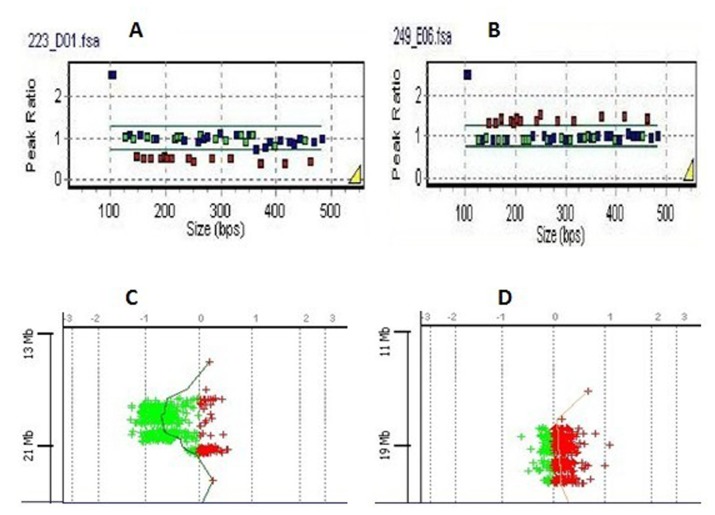
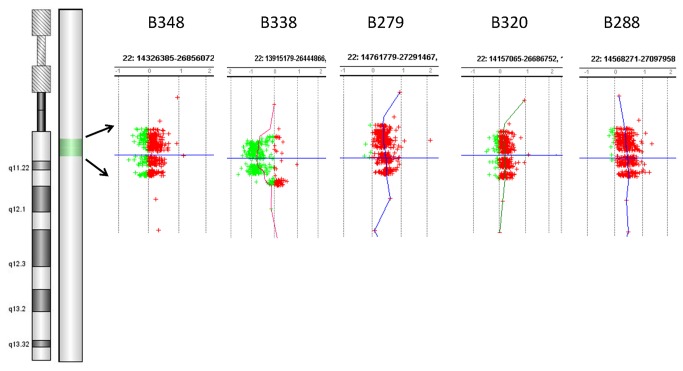
Four of 27 patients (14.8%) had 22q11.2 CNVs, 1 microdeletion and 3 microduplications. qPCR test confirmed the microdeletion and microduplication detected by the targeted aCGH.
Chromosomal abnormalities were a well-known cause of multiple congenital anomalies (MCA). This aCGH using arrays with high-density coverage in the targeted regions can detect genomic imbalances including 22q11.2 and other 10 kinds CNVs effectively and quickly. This approach has the potential to be applied to detect aneuploidy and common microdeletion/microduplication syndromes on a single microarray.
本研究旨在开发一种可靠的靶向比较基因组杂交(aCGH)技术,以检测先天性圆锥动脉干畸形(CTD)中的微缺失和微重复,特别是在 22q11.2 区域,以及其他一些染色体异常,如 5p15-5p、7q11.23 和 4p16.3。
本研究纳入了 27 例 CTD 患者,包括 12 例肺动脉闭锁(PA)、10 例右心室双出口(DORV)、3 例大动脉转位(TGA)、1 例法洛四联症(TOF)和 1 例室间隔缺损(VSD),对其进行致病性拷贝数变异(CNVs)筛查,使用 Agilent 8x15K 靶向 aCGH。实时定量聚合酶链反应(qPCR)用于检测靶向 aCGH 的分子结果。
27 例患者中有 4 例(14.8%)存在 22q11.2 区 CNVs,1 例为微缺失,3 例为微重复。qPCR 验证了靶向 aCGH 检测到的微缺失和微重复。
染色体异常是多种先天性畸形(MCA)的已知原因。该靶向区域高覆盖率的 aCGH 可有效快速地检测基因组失衡,包括 22q11.2 及其他 10 种 CNVs。这种方法有可能应用于在单个微阵列上检测非整倍体和常见的微缺失/微重复综合征。