Department of Clinical Neurosciences and the Hotchkiss Brain Institute, University of Calgary, Calgary, Alberta, Canada.
PLoS One. 2013 Sep 30;8(9):e75877. doi: 10.1371/journal.pone.0075877. eCollection 2013.
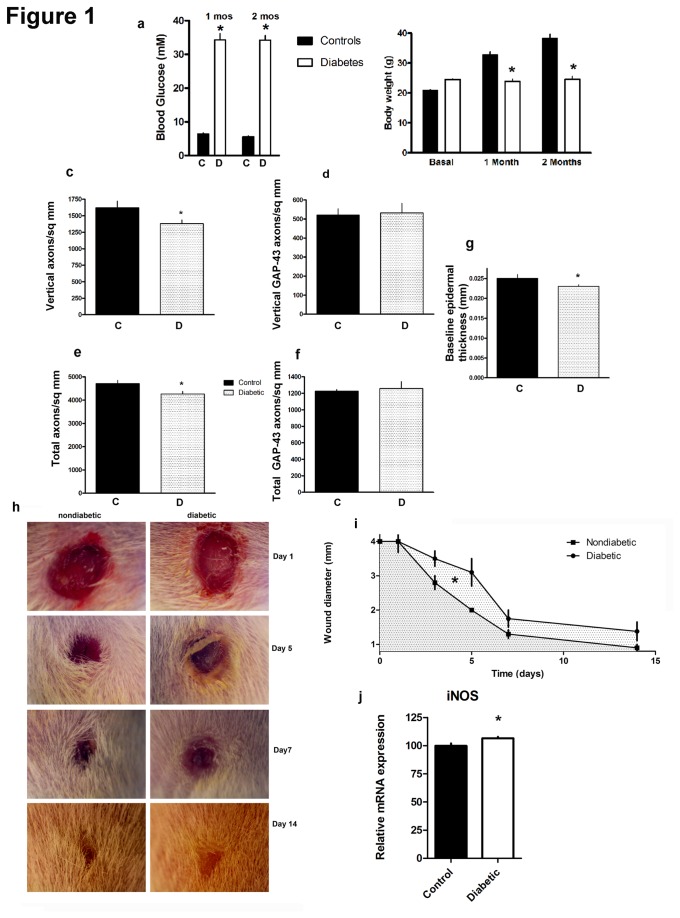
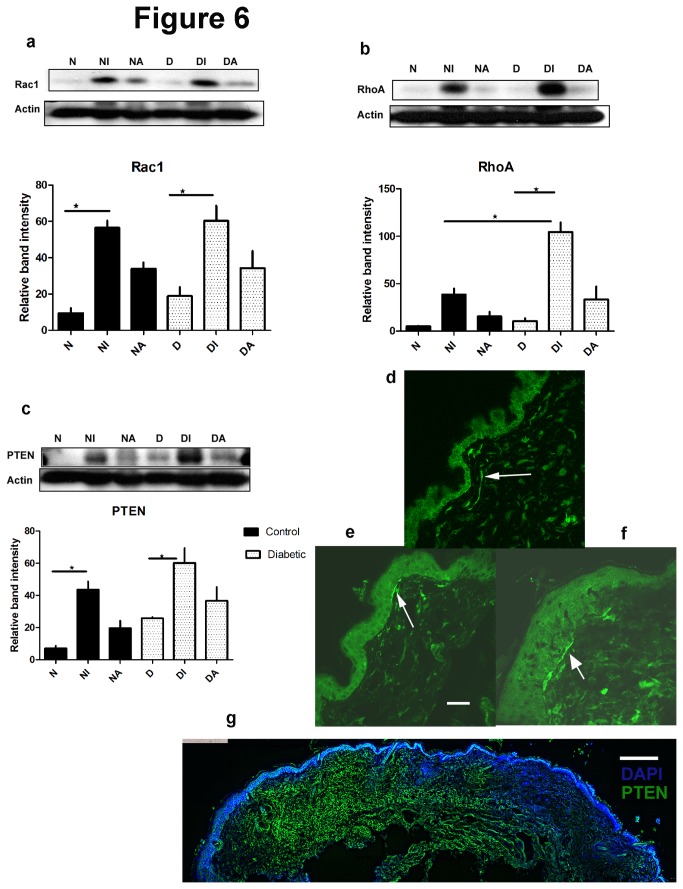
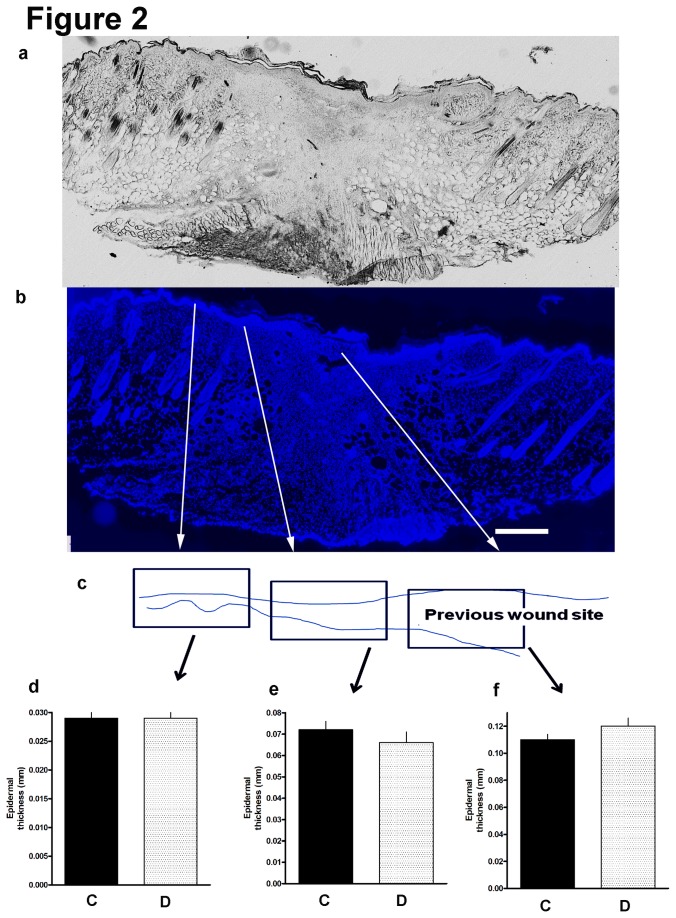
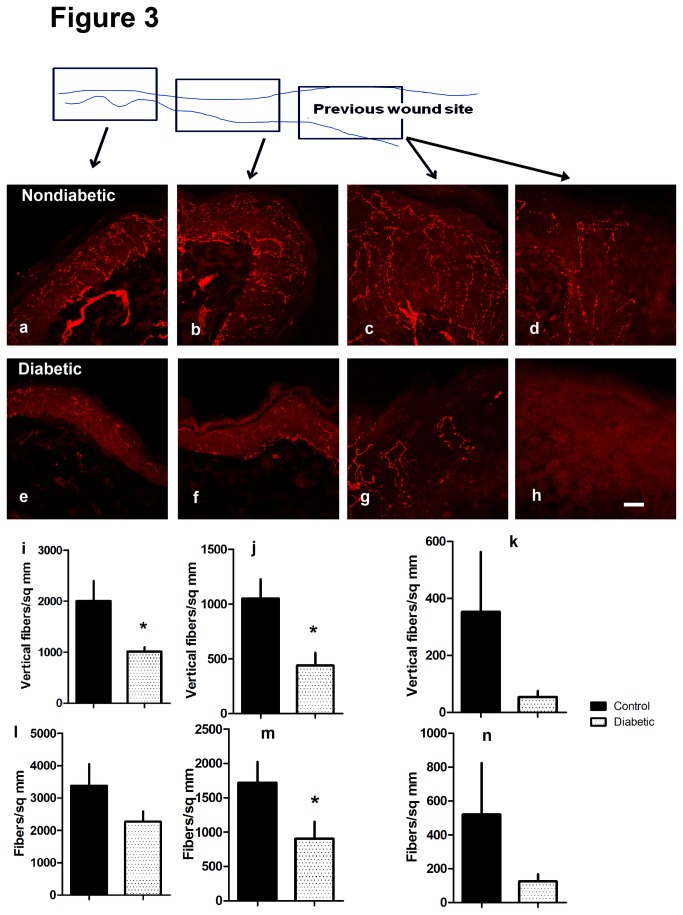
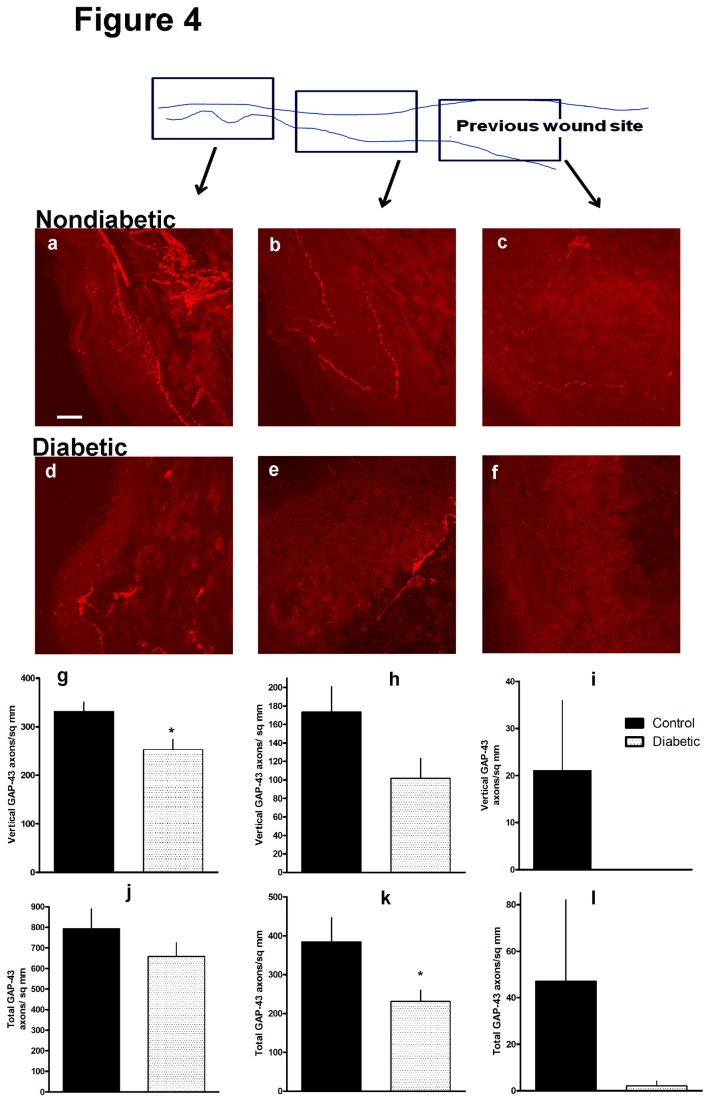
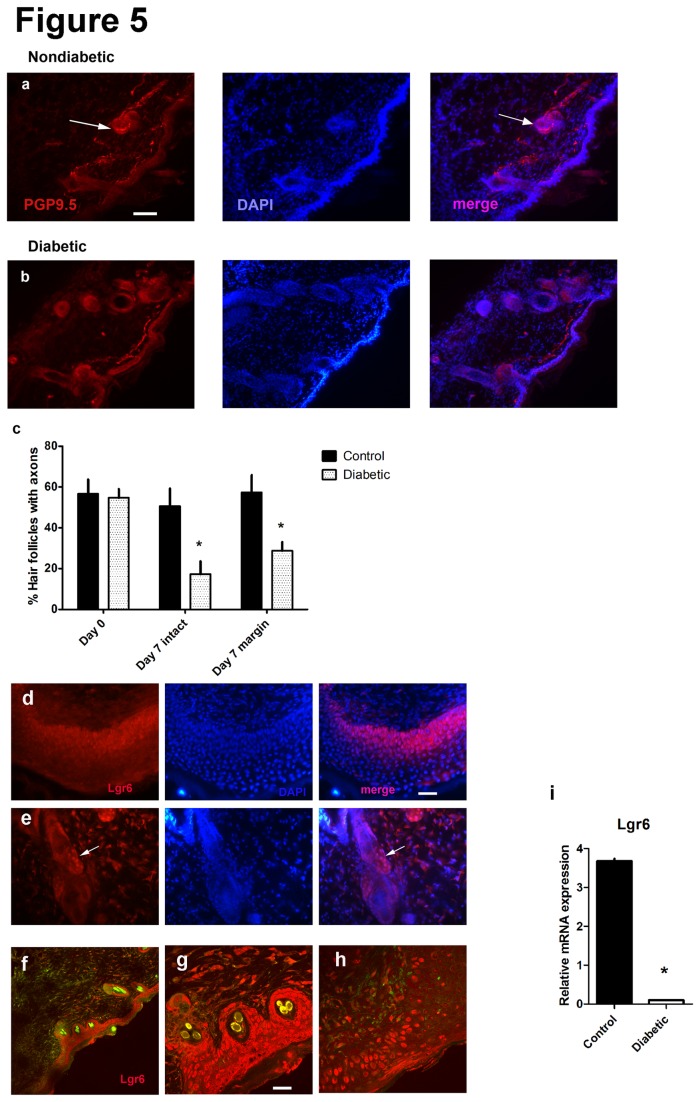
Loss of cutaneous innervation from sensory neuropathy is included among mechanisms for impaired healing of diabetic skin wounds. The relationships between cutaneous axons and their local microenvironment during wound healing are challenged in diabetes. Here, we show that secondary wound closure of the hairy dorsal skin of mice is delayed by diabetes and is associated with not only a pre-existing loss of cutaneous axons but substantial retraction of axons around the wound. At 7d following a 3mm punch wound, a critical period of healing and reinnervation, both intact skin nearby the wound and skin directly at the wound margins had over 30-50% fewer axons and a larger deficit of ingrowing axons in diabetics. These findings contrasted with a pre-existing 10-15% deficit in axons. Moreover, new diabetic ingrowing axons had less evidence of plasticity. Unexpectedly, hair follicles adjacent to the wounds had a 70% reduction in their innervation associated with depleted expression of hair follicular stem cell markers. These impairments were associated with the local upregulation of two established axon regenerative 'roadblocks': PTEN and RHOA, potential but thus far unexplored mediators of these changes. The overall findings identify striking and unexpected superimposed cutaneous axon loss or retraction beyond that expected of diabetic neuropathy alone, associated with experimental diabetic skin wounding, a finding that prompts new considerations in diabetic wounds.
皮肤神经病变导致的感觉神经损伤被认为是糖尿病皮肤伤口愈合受损的机制之一。在糖尿病中,皮肤轴突及其在伤口愈合过程中的局部微环境之间的关系受到挑战。在这里,我们表明,糖尿病会延迟小鼠有毛背部皮肤的二次伤口闭合,这不仅与预先存在的皮肤轴突丧失有关,还与伤口周围的轴突大量回缩有关。在 3mm 打孔伤后的第 7 天,即愈合和再神经支配的关键时期,不仅是伤口附近的完整皮肤,还有伤口边缘的皮肤,其轴突数量减少了 30-50%,并且在糖尿病患者中,进入的轴突数量减少更多。这些发现与预先存在的 10-15%的轴突缺失形成对比。此外,新的糖尿病有丝分裂轴突的可塑性证据较少。出乎意料的是,与伤口相邻的毛囊其神经支配减少了 70%,与毛囊干细胞标志物表达减少有关。这些损伤与两种已确立的轴突再生“路障”的局部上调有关:PTEN 和 RHOA,它们是这些变化的潜在但迄今为止尚未探索的介质。总的来说,这些发现表明,在实验性糖尿病皮肤创伤中,除了单独的糖尿病神经病变所预期的之外,还存在明显且出乎意料的皮肤轴突丧失或回缩,这一发现促使人们对糖尿病伤口重新进行考虑。