Urosev Dunja, Ferrer-Navarro Mario, Pastorello Ilaria, Cartocci Elena, Costenaro Lionel, Zhulenkovs Dmitrijs, Maréchal Jean-Didier, Leonchiks Ainars, Reverter David, Serino Laura, Soriani Marco, Daura Xavier
Institute of Biotechnology and Biomedicine, Universitat Autònoma de Barcelona, Bellaterra 08193, Spain.
BMC Struct Biol. 2013 Oct 7;13:19. doi: 10.1186/1472-6807-13-19.
Increasing rates of antimicrobial resistance among uropathogens led, among other efforts, to the application of subtractive reverse vaccinology for the identification of antigens present in extraintestinal pathogenic E. coli (ExPEC) strains but absent or variable in non-pathogenic strains, in a quest for a broadly protective Escherichia coli vaccine. The protein coded by locus c5321 from CFT073 E. coli was identified as one of nine potential vaccine candidates against ExPEC and was able to confer protection with an efficacy of 33% in a mouse model of sepsis. c5321 (known also as EsiB) lacks functional annotation and structurally belongs to the Sel1-like repeat (SLR) family. Herein, as part of the general characterization of this potential antigen, we have focused on its structural properties.
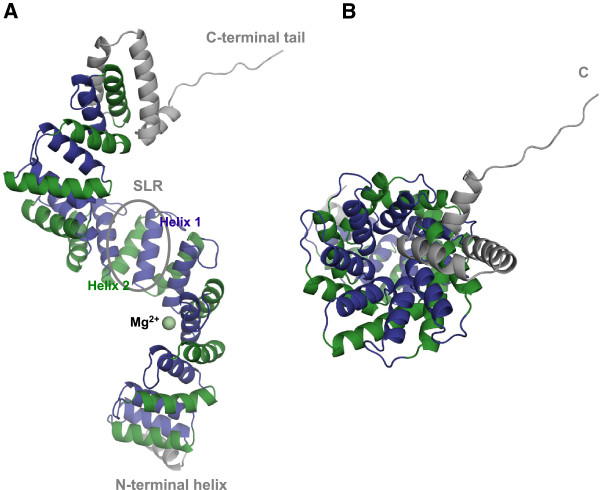
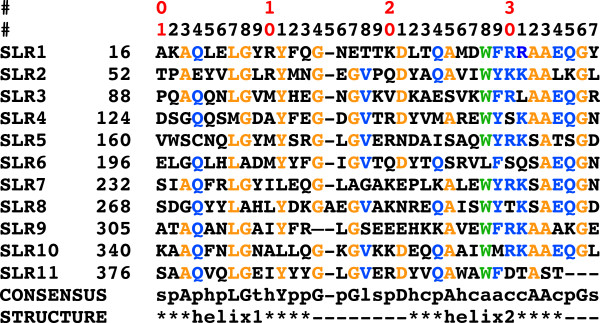
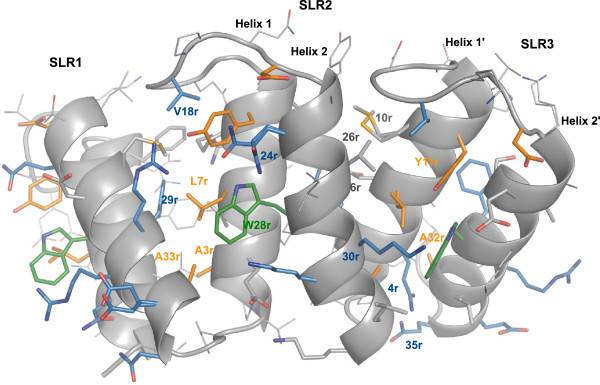
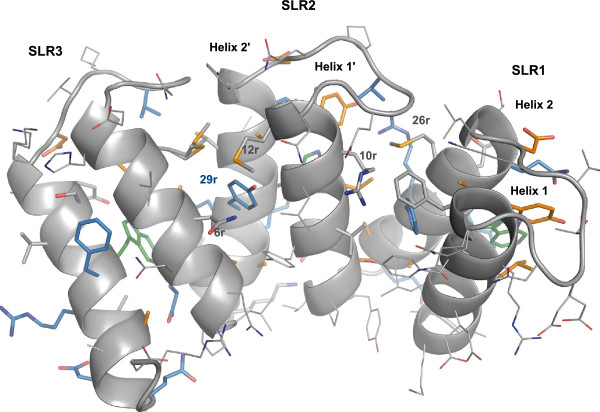
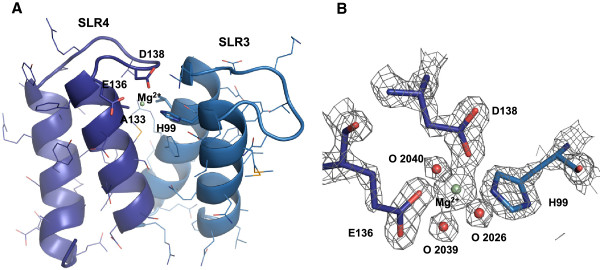
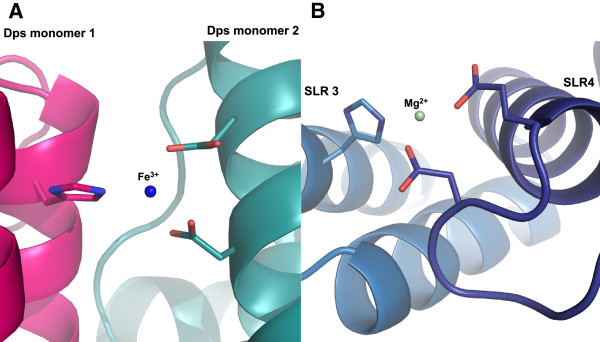
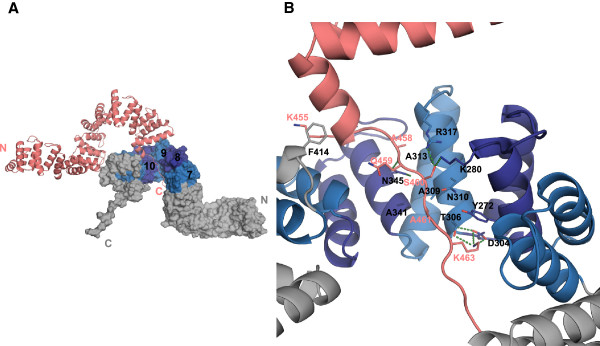
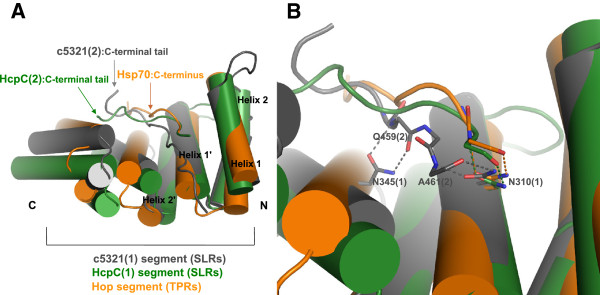
We report the 1.74 Å-resolution crystal structure of c5321 from CFT073 E. coli determined by Se-Met SAD phasing. The structure is composed of 11 SLR units in a topological organisation that highly resembles that found in HcpC from Helicobacter pylori, with the main difference residing in how the super-helical fold is stabilised. The stabilising effect of disulfide bridges in HcpC is replaced in c5321 by a strengthening of the inter-repeat hydrophobic core. A metal-ion binding site, uncharacteristic of SLR proteins, is detected between SLR units 3 and 4 in the region of the inter-repeat hydrophobic core. Crystal contacts are observed between the C-terminal tail of one molecule and the C-terminal amphipathic groove of a neighbouring one, resembling interactions between ligand and proteins containing tetratricopeptide-like repeats.
The structure of antigen c5321 presents a mode of stabilization of the SLR fold different from that observed in close homologs of known structure. The location of the metal-ion binding site and the observed crystal contacts suggest a potential role in regulation of conformational flexibility and interaction with yet unidentified target proteins, respectively. These findings open new perspectives in both antigen design and for the identification of a functional role for this protective antigen.
尿路致病菌中抗菌药物耐药率不断上升,促使人们采取多种措施,其中包括应用消减反向疫苗学来鉴定肠外致病性大肠杆菌(ExPEC)菌株中存在但非致病性菌株中不存在或可变的抗原,以寻求一种具有广泛保护作用的大肠杆菌疫苗。来自CFT073大肠杆菌的基因座c5321编码的蛋白质被鉴定为针对ExPEC的九种潜在疫苗候选物之一,并且在败血症小鼠模型中能够提供33%的保护效力。c5321(也称为EsiB)缺乏功能注释,在结构上属于Sel1样重复(SLR)家族。在此,作为对这种潜在抗原进行全面表征的一部分,我们重点研究了其结构特性。
我们报告了通过硒代甲硫氨酸单波长反常散射(Se-Met SAD)相位法测定的来自CFT073大肠杆菌的c5321的1.74 Å分辨率晶体结构。该结构由11个SLR单元组成,其拓扑结构与幽门螺杆菌的HcpC高度相似,主要区别在于超螺旋折叠的稳定方式。HcpC中二硫键的稳定作用在c5321中被重复序列间疏水核心的强化所取代。在重复序列间疏水核心区域的SLR单元3和4之间检测到一个金属离子结合位点,这在SLR蛋白中并不常见。观察到一个分子的C末端尾巴与相邻分子的C末端两亲性凹槽之间存在晶体接触,类似于配体与含有四肽重复序列的蛋白质之间的相互作用。
抗原c5321的结构呈现出一种与已知结构的紧密同源物中观察到的不同的SLR折叠稳定模式。金属离子结合位点的位置和观察到的晶体接触分别表明其在调节构象灵活性和与尚未鉴定的靶蛋白相互作用方面可能发挥的作用。这些发现为抗原设计以及确定这种保护性抗原的功能作用开辟了新的视角。