Vryghem Jérôme C, Heireman Steven
Brussels Eye Doctors, Brussels, Belgium ; Clinique Saint-Jean, Brussels, Belgium.
Clin Ophthalmol. 2013;7:1957-65. doi: 10.2147/OPTH.S44415. Epub 2013 Oct 1.
To evaluate the subjective and objective visual results after the implantation of a new trifocal diffractive intraocular lens.
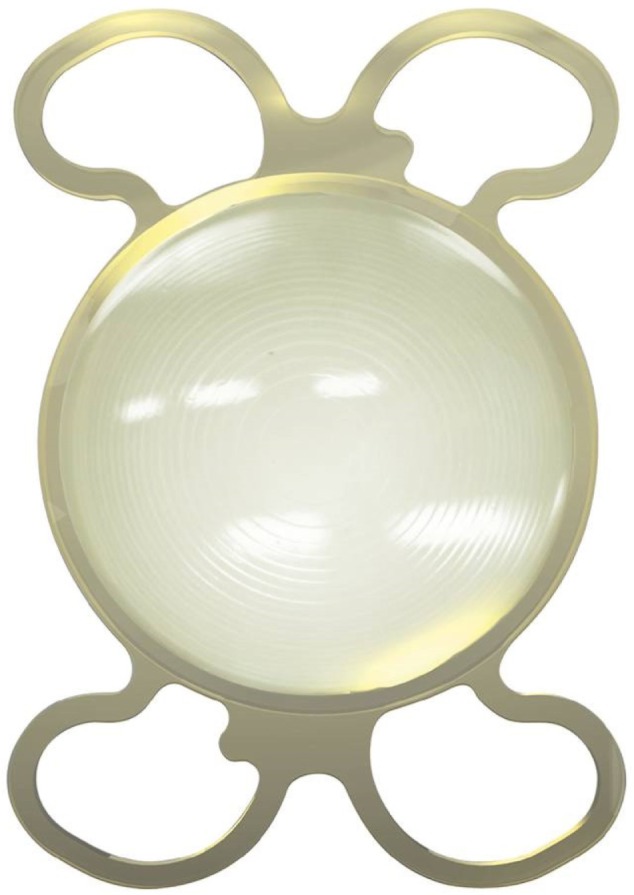
A NEW TRIFOCAL DIFFRACTIVE INTRAOCULAR LENS WAS DESIGNED COMBINING TWO SUPERIMPOSED DIFFRACTIVE PROFILES: one with +1.75 diopters (D) addition for intermediate vision and the other with +3.50 D addition for near vision. Fifty eyes of 25 patients that were operated on by one surgeon are included in this study. The uncorrected and best distance-corrected monocular and binocular, near, intermediate, and distance visual acuities, contrast sensitivity, and defocus curves were measured 6 months postoperatively. In addition to the standard clinical follow-up, a questionnaire evaluating individual satisfaction and quality of life was submitted to the patients.
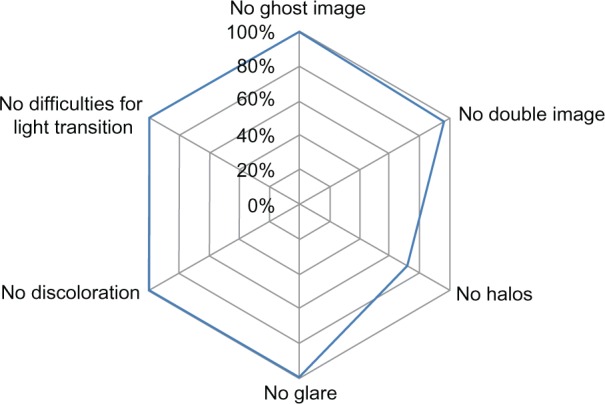
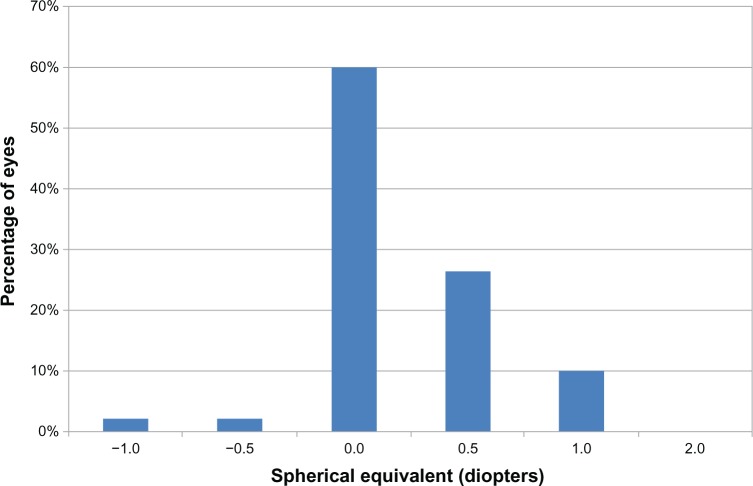
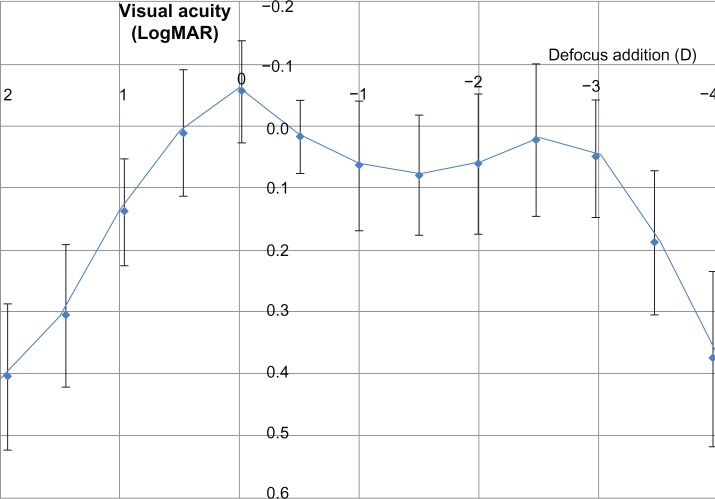
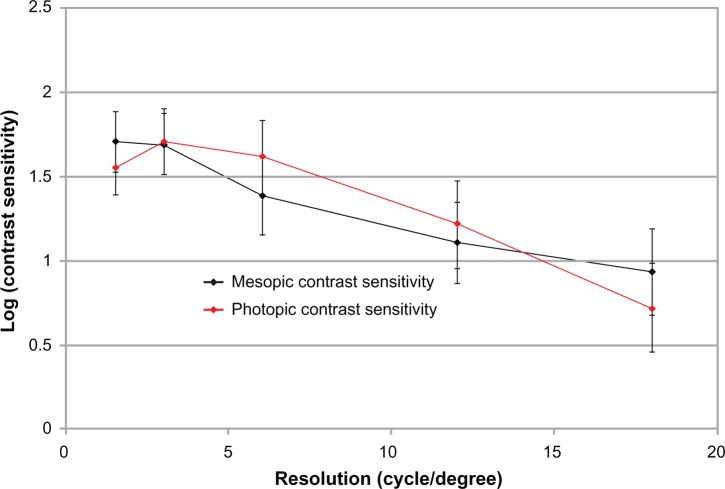
The mean age of patients at the time of surgery was 70 ± 10 years. The mean uncorrected and corrected monocular distance visual acuity (VA) were LogMAR 0.06 ± 0.10 and LogMAR 0.00 ± 0.08, respectively. The outcomes for the binocular uncorrected distance visual acuity were almost the same (LogMAR -0.04 ± 0.09). LogMAR -010 ± 0.15 and 0.02 ± 0.06 were measured for the binocular uncorrected intermediate and near VA, respectively. The distance-corrected visual acuity was maintained in mesopic conditions. The contrast sensitivity was similar to that obtained after implantation of a bifocal intraocular lens and did not decrease in mesopic conditions. The binocular defocus curve confirms good VA even in the intermediate distance range, with a moderate decrease of less than LogMAR 0.2 at -1.5 D, with respect to the best distance VA at 0 D defocus. Patient satisfaction was high. No discrepancy between the objective and subjective outcomes was evidenced.
The introduction of a third focus in diffractive multifocal intraocular lenses improves the intermediate vision with minimal visual discomfort for the patient.
评估新型三焦点衍射人工晶状体植入术后的主观和客观视觉效果。
设计了一种新型三焦点衍射人工晶状体,它结合了两个叠加的衍射轮廓:一个用于中间视力,附加度数为+1.75屈光度(D);另一个用于近视力,附加度数为+3.50 D。本研究纳入了由一位外科医生实施手术的25例患者的50只眼。术后6个月测量未矫正和最佳距离矫正的单眼及双眼、近、中间和远距离视力、对比敏感度和散焦曲线。除了标准的临床随访外,还向患者发放了一份评估个人满意度和生活质量的问卷。
手术时患者的平均年龄为70±10岁。未矫正和矫正后的单眼远距离视力(VA)平均值分别为LogMAR 0.06±0.10和LogMAR 0.00±0.08。双眼未矫正远距离视力的结果几乎相同(LogMAR -0.04±0.09)。双眼未矫正中间视力和近视力的LogMAR分别为-0.10±0.15和0.02±0.06。在中间视觉条件下,距离矫正视力得以维持。对比敏感度与双焦点人工晶状体植入后的相似,且在中间视觉条件下没有下降。双眼散焦曲线证实即使在中间距离范围内视力也良好,在-1.5 D时相对于0 D散焦时的最佳远距离视力,下降幅度小于LogMAR 0.2,且下降幅度适中。患者满意度较高。客观和主观结果之间未发现差异。
衍射多焦点人工晶状体引入第三个焦点可改善中间视力,且患者的视觉不适最小。