Gengiah Tanuja N, Moosa Atika, Naidoo Anushka, Mansoor Leila E
Centre for the AIDS Programme of Research in South Africa (CAPRISA), 2nd Floor, K-RITH Tower Building, University of KwaZulu-Natal, 719 Umbilo Road, Durban, 4001, South Africa,
Int J Clin Pharm. 2014 Feb;36(1):70-85. doi: 10.1007/s11096-013-9861-1. Epub 2013 Oct 16.
There are 34 million people living with human immunodeficiency virus (HIV) worldwide and each year this number increases. Until a vaccine is discovered, the prevention of new HIV infections remains an urgent priority. Several trials studying the use of oral and topical agents for the prevention of HIV infection have already been completed. Adherence has proved to be a major challenge in achieving product efficacy.
To provide the clinical pharmacist with an understanding of the oral pre-exposure prophylaxis (PrEP) and topical microbicide product pipeline whilst emphasizing the critical importance of adherence to these drugs to avert HIV infection.
PubMed/Medline and the web-based clinical trials registry (ClinTrials.gov) were searched using appropriate key words. For the time period 1992-2013--all phase II and phase III safety and effectiveness studies--testing agents for prevention of HIV infection were included in the review. Efficacy estimates, adherence estimates and reported challenges with adherence were extracted.
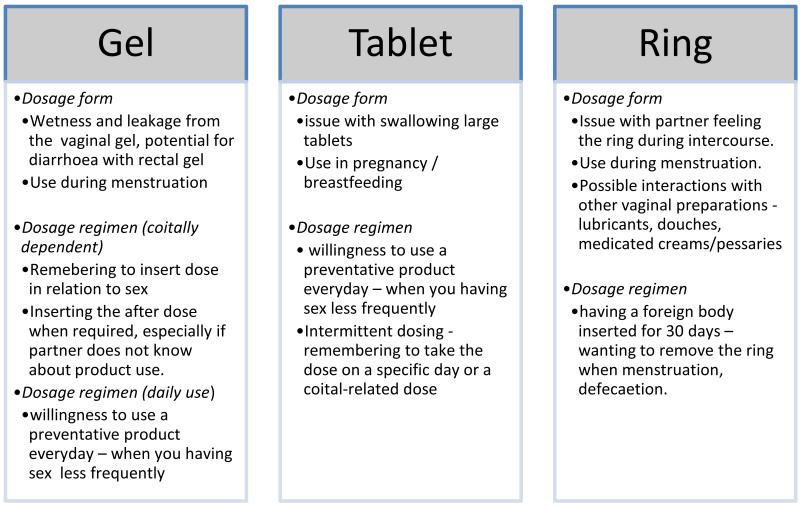
Twenty-four phase II and III clinical trials were found during review. Of these, 20 trials have been completed, and six trials show effectiveness in preventing HIV infection. The majority of the successful trials were to oral PrEP and to date only one microbicide trial of a vaginal antiretroviral microbicide gel has showed effectiveness. Adherence to study product played a major role in trial outcomes and there are several reasons for non-adherence. These include high on-trial pregnancy rates, low trial retention rates, low participant perception of risk, participant characteristics such as age <25 years, single status, migratory partners and trial fatigue. Study product characteristics such as dosage form, dosing interval, as well as associated adverse events may also influence adherence.
Moderate to high adherence is critical to demonstrate efficacy of drugs for HIV prevention. For topical agents, intermittent use associated with coitus is more effective than daily use, particularly if sex is infrequent or partners migrant. For oral agents, daily use is effective but the motivation to use the drug and high risk perception is important. In serodiscordant couples, early initiation of highly active antiretroviral therapy in the infected partner affords almost complete protection to the negative partner. Drugs need to be tailored to the population at risk and availability of multiple drug options are important.
全球有3400万人感染人类免疫缺陷病毒(HIV),且这一数字每年都在增加。在发现疫苗之前,预防新的HIV感染仍然是一项紧迫的优先任务。几项研究口服和局部用药预防HIV感染的试验已经完成。事实证明,依从性是实现产品疗效的一项重大挑战。
让临床药剂师了解口服暴露前预防(PrEP)和局部杀菌剂产品的研发进展,同时强调坚持服用这些药物对于预防HIV感染的至关重要性。
使用适当的关键词检索PubMed/Medline和基于网络的临床试验注册库(ClinicalTrials.gov)。对于1992年至2013年期间——所有II期和III期安全性和有效性研究——检测预防HIV感染药物的研究都纳入了本综述。提取了疗效评估、依从性评估以及所报告的依从性挑战。
综述期间发现了24项II期和III期临床试验。其中,20项试验已经完成,6项试验显示在预防HIV感染方面有效。大多数成功的试验是关于口服PrEP,迄今为止只有一项阴道抗逆转录病毒微凝胶杀菌剂试验显示有效。对研究产品的依从性在试验结果中起主要作用,不依从有几个原因。这些原因包括试验期间怀孕率高、试验保留率低、参与者对风险的认知度低、参与者特征如年龄<25岁、单身状态、性伴侣流动以及试验疲劳。研究产品的特征如剂型、给药间隔以及相关不良事件也可能影响依从性。
中等到高的依从性对于证明预防HIV感染药物的疗效至关重要。对于局部用药,与性交相关的间歇使用比每日使用更有效,特别是在性交不频繁或性伴侣流动的情况下。对于口服药物,每日使用是有效的,但用药动机和高风险认知很重要。在血清学不一致的夫妻中,感染伴侣尽早开始高效抗逆转录病毒治疗能为未感染伴侣提供几乎完全的保护。药物需要针对高危人群进行调整,多种药物选择的可得性很重要。