Department of Theraputic Research and Medicine Evaluation, Istituto Superiore di Sanità, Rome, Italy.
Cell Death Dis. 2013 Oct 17;4(10):e863. doi: 10.1038/cddis.2013.389.
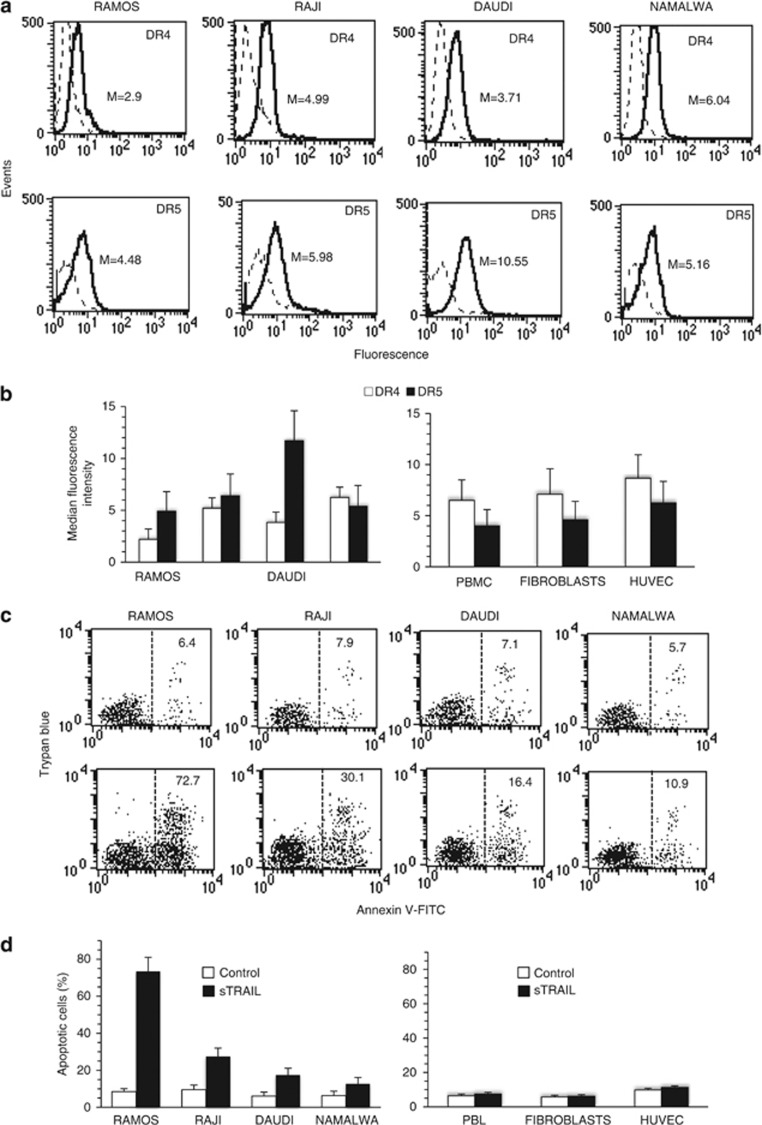
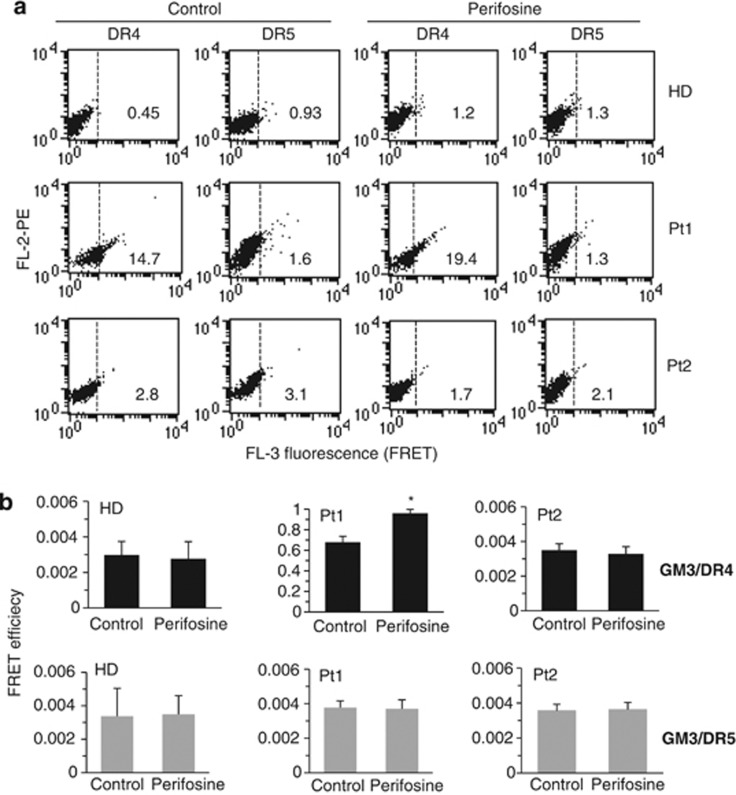
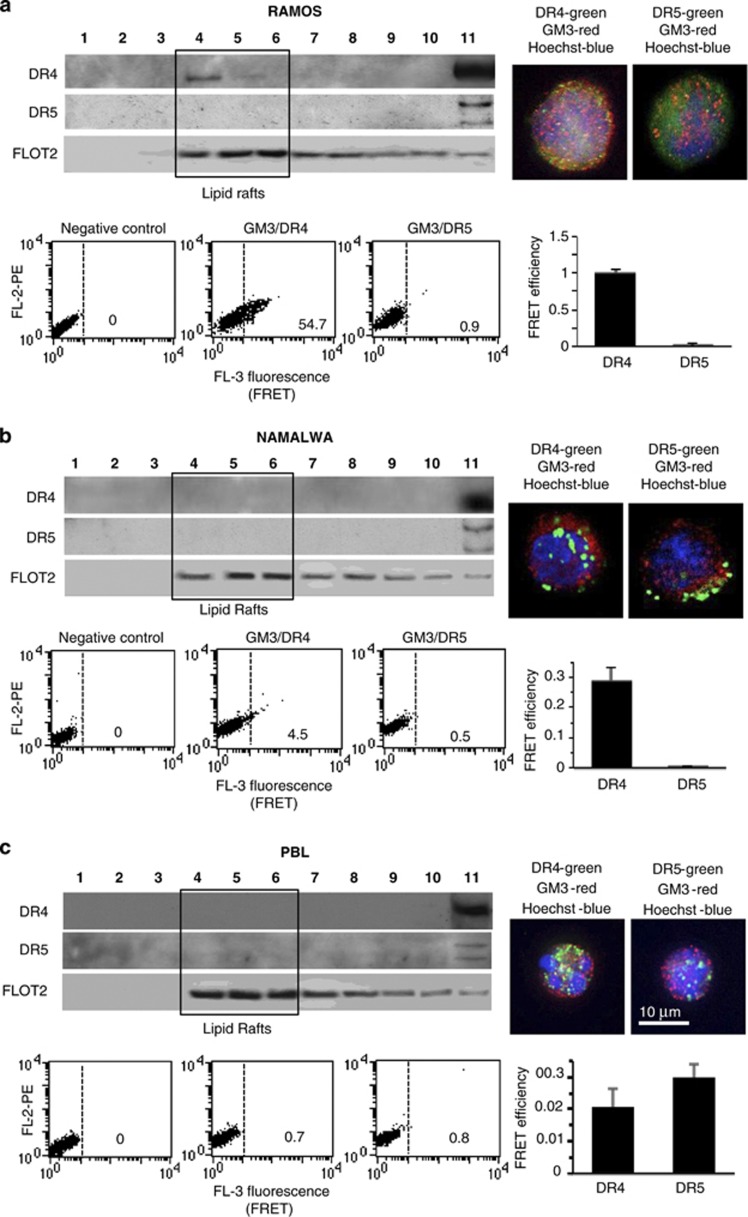
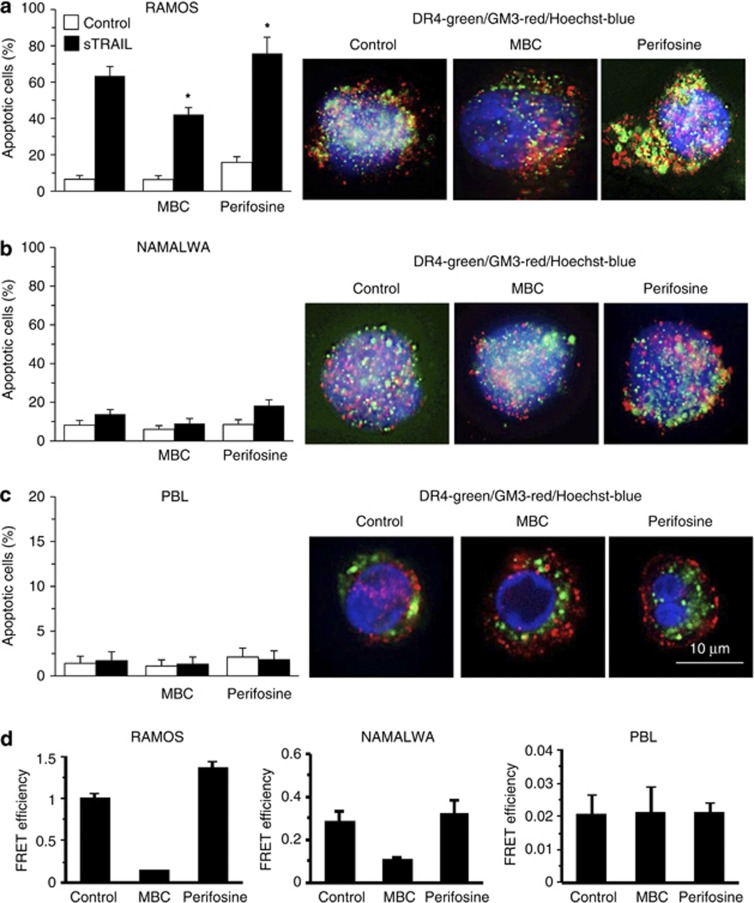
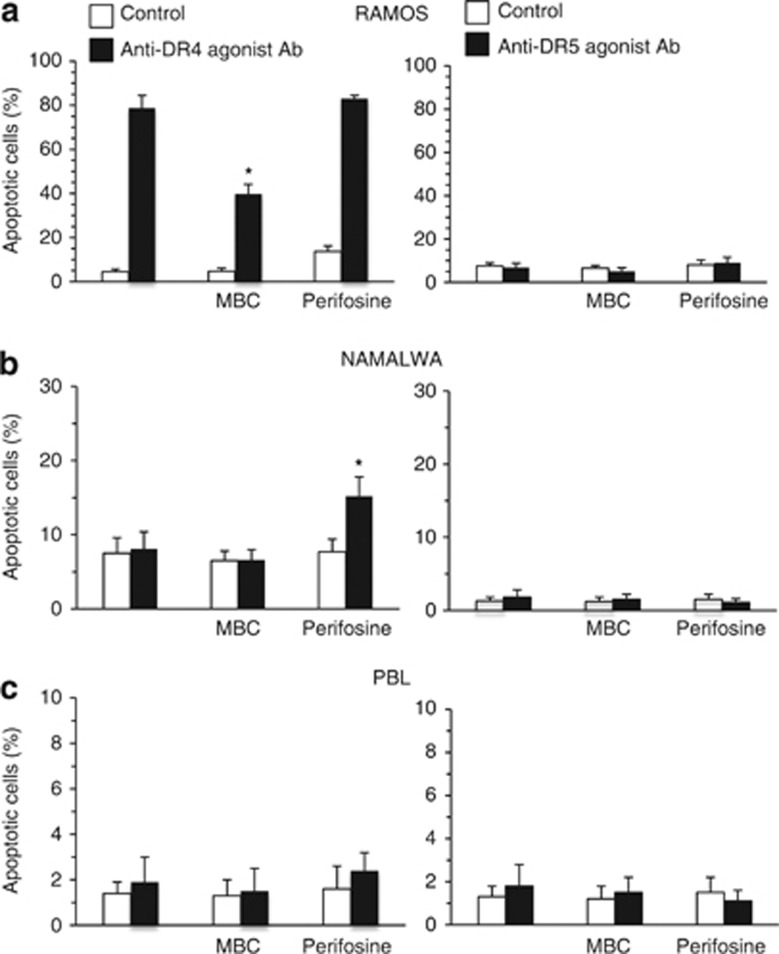
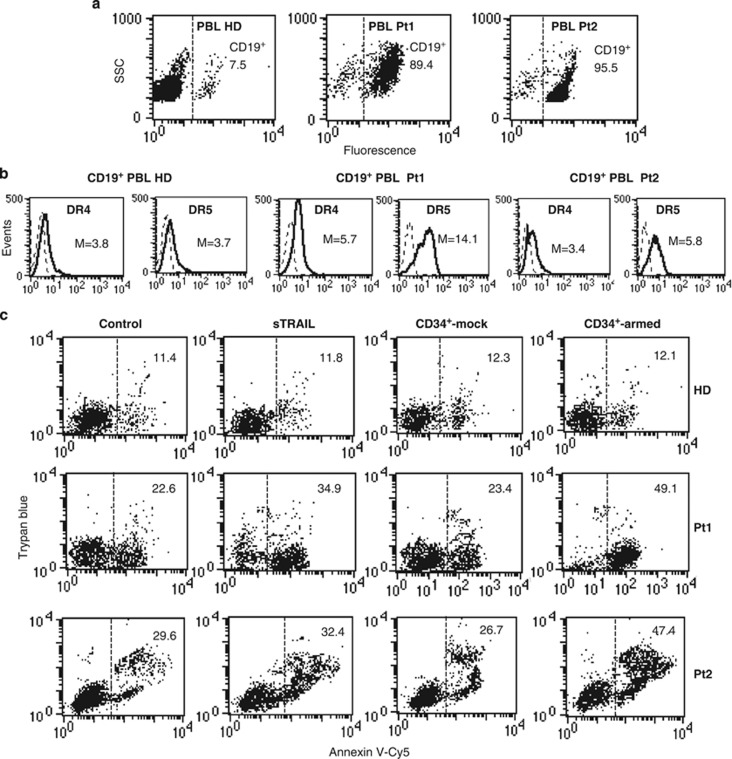
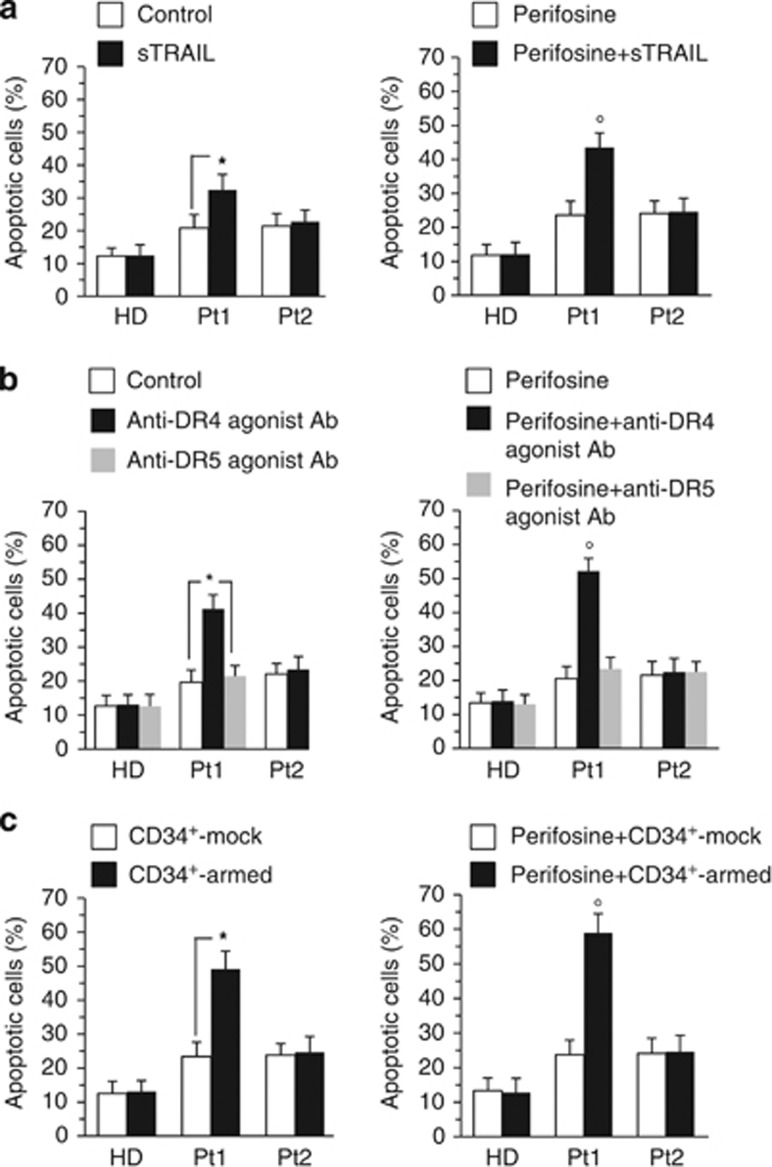
Tumor necrosis factor-related apoptosis-inducing ligand (TRAIL) acts as an apoptosis inducer for cancer cells sparing non-tumor cell targets. However, several phase I/II clinical trials have shown limited benefits of this molecule. In the present work, we investigated whether cell susceptibility to TRAIL ligation could be due to the presence of TRAIL death receptors (DRs) 4 and 5 in membrane microdomains called lipid rafts. We performed a series of analyses, either by biochemical methods or fluorescence resonance energy transfer (FRET) technique, on normal cells (i.e. lymphocytes, fibroblasts, endothelial cells), on a panel of human cancer B-cell lines as well as on CD19(+) lymphocytes from patients with B-chronic lymphocytic leukemia, treated with different TRAIL ligands, that is, recombinant soluble TRAIL, specific agonistic antibodies to DR4 and DR5, or CD34(+) TRAIL-armed cells. Irrespective to the expression levels of DRs, a molecular interaction between ganglioside GM3, abundant in lymphoid cells, and DR4 was detected. This association was negligible in all non-transformed cells and was strictly related to TRAIL susceptibility of cancer cells. Interestingly, lipid raft disruptor methyl-beta-cyclodextrin abrogated this susceptibility, whereas the chemotherapic drug perifosine, which induced the recruitment of TRAIL into lipid microdomains, improved TRAIL-induced apoptosis. Accordingly, in ex vivo samples from patients with B-chronic lymphocytic leukemia, the constitutive embedding of DR4 in lipid microdomains was associated per se with cell death susceptibility, whereas its exclusion was associated with TRAIL resistance. These results provide a key mechanism for TRAIL sensitivity in B-cell malignances: the association, within lipid microdomains, of DR4 but not DR5, with a specific ganglioside, that is the monosialoganglioside GM3. On these bases we suggest that lipid microdomains could exert a catalytic role for DR4-mediated cell death and that an ex vivo quantitative FRET analysis could be predictive of cancer cell sensitivity to TRAIL.
肿瘤坏死因子相关凋亡诱导配体(TRAIL)可作为一种凋亡诱导剂,特异性诱导癌细胞凋亡而不影响正常细胞。然而,多项 I/II 期临床试验表明该分子的疗效有限。本研究旨在探讨 TRAIL 与细胞膜微区(脂质筏)中死亡受体(DR)4 和 5 的结合是否会导致细胞对 TRAIL 的敏感性。我们通过生化方法或荧光共振能量转移(FRET)技术,分析了正常细胞(如淋巴细胞、成纤维细胞、内皮细胞)、一组人 B 细胞肿瘤系以及接受不同 TRAIL 配体(即重组可溶性 TRAIL、DR4 和 DR5 的特异性激动性抗体或 CD34+TRAIL 武装细胞)治疗的 B 慢性淋巴细胞白血病患者 CD19+淋巴细胞对 TRAIL 的敏感性。无论 DR 表达水平如何,均检测到神经节苷脂 GM3 与 DR4 之间的分子相互作用。这种结合在所有未转化细胞中都很少见,与癌细胞对 TRAIL 的敏感性密切相关。有趣的是,脂质筏破坏剂甲基-β-环糊精可消除这种敏感性,而化学治疗药物培非司亭可诱导 TRAIL 进入脂质微区,从而增强 TRAIL 诱导的细胞凋亡。因此,在 B 慢性淋巴细胞白血病患者的体外样本中,DR4 与脂质微区的组成性结合本身与细胞死亡敏感性相关,而其排除与 TRAIL 耐药性相关。这些结果为 B 细胞恶性肿瘤中 TRAIL 敏感性提供了关键机制:DR4 而非 DR5 与特定神经节苷脂(即单唾液酸神经节苷脂 GM3)在脂质微区中的结合。基于这些结果,我们认为脂质微区可能在 DR4 介导的细胞死亡中发挥催化作用,并且体外定量 FRET 分析可能可预测 TRAIL 对癌细胞的敏感性。