College of Life Science and Technology, Hebei Normal University of Science and Technology Qinhuangdao, China.
Front Plant Sci. 2013 Oct 16;4:391. doi: 10.3389/fpls.2013.00391. eCollection 2013.
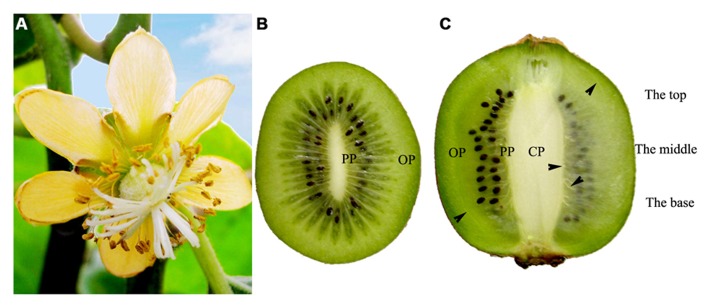
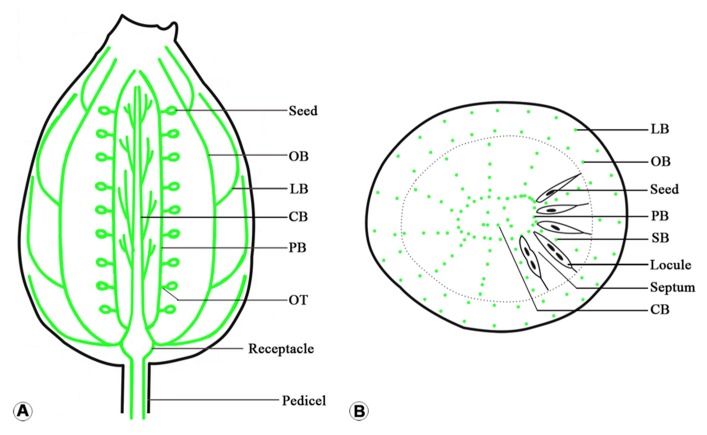
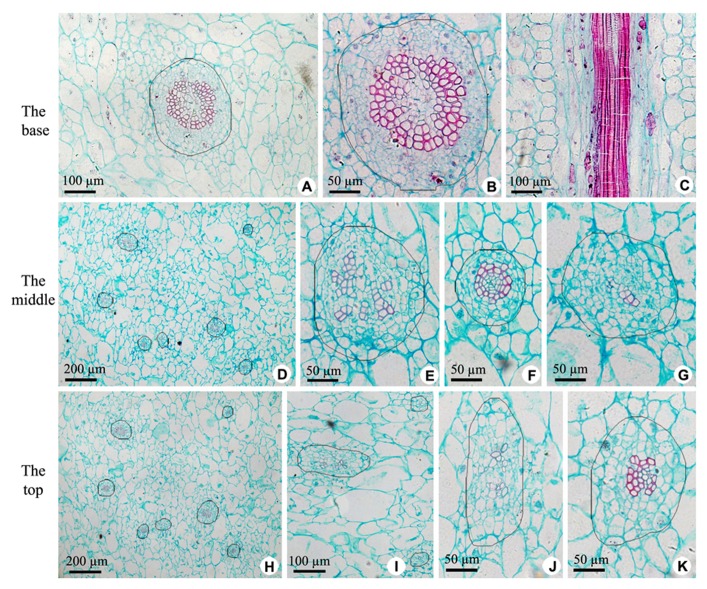
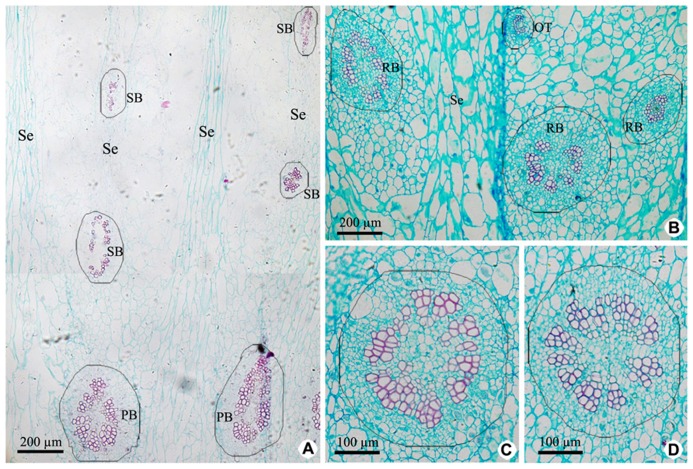
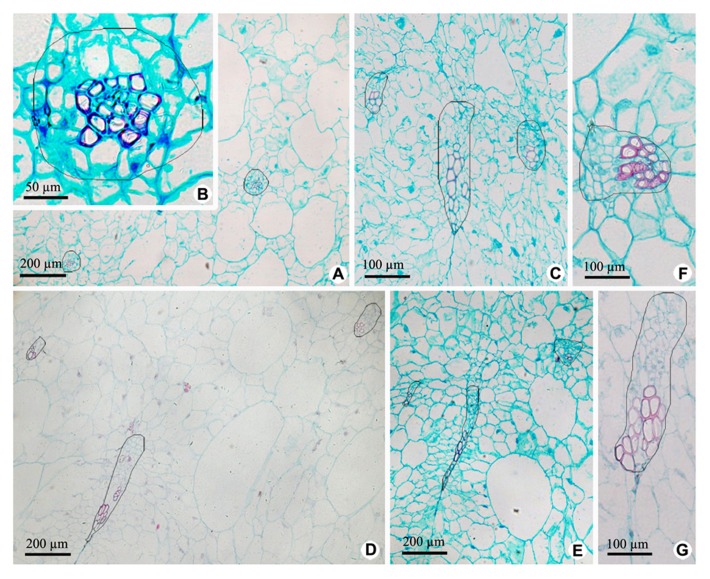
Kiwi fruit is of great agricultural, botanical, and economic interest. The flower of kiwi fruit has axile placentation, which is typical for Actinidiaceae. Axile placentation is thought derived through fusion of conduplicate carpels with marginal placentation according to the traditional doctrine. Recent progress in angiosperm systematics has refuted this traditional doctrine and placed ANITA clade rather than Magnoliaceae as the basalmost clade. However, the former traditional doctrine stays in the classrooms as the only teachable theory for the origin of carpels. To test the validity of this doctrine, we performed anatomical study on kiwi fruit. Our study indicates that the placenta has a vascular system independent of that of the ovary wall, the ovules/seeds are attached to the placenta that is a continuation of floral axis enclosed by the lateral appendages that constitute the ovary wall, and there are some amphicribral bundles in the center of placenta and numerous amphicribral bundles supplying ovules/seeds in kiwi fruit. The amphicribral vascular bundles supplying the ovules/seeds are comparable to those usually seen in branches, but not comparable to those seen in leaves or their derivatives. This comparison indicates that the placenta in kiwi fruit cannot be derived from the fusion of collateral ventral bundles of conduplicate carpels, as suggested by traditional doctrine. Instead the vascular organization in placenta of kiwi suggests that the placenta is a shoot apex-bearing ovules/seeds laterally. This conclusion is in line with the recently raised Unifying Theory, in which the placenta is taken as an ovule-bearing branch independent of the ovary wall (carpel in strict sense). Similar vascular organization in placenta has been seen in numerous isolated taxa besides kiwi fruit. Therefore whether such a pattern is applicable for other angiosperms is an interesting question awaiting answering.
奇异果具有重要的农业、植物学和经济意义。奇异果的花具有中轴胎座,这是猕猴桃科的典型特征。根据传统学说,中轴胎座被认为是通过对折的心皮融合和边缘胎座衍生而来的。被子植物系统发育的最新进展反驳了这一传统学说,并将 ANITA 分支而不是木兰科作为最基部的分支。然而,前传统学说仍然停留在课堂上,作为心皮起源的唯一可教理论。为了检验这一学说的有效性,我们对奇异果进行了解剖学研究。我们的研究表明,胎座具有独立于子房壁的血管系统,胚珠/种子附着在胎座上,胎座是由构成子房壁的侧附属物包围的花轴的延续,胎座的中心有一些异面叶束,并且有许多异面叶束为胚珠/种子提供养分。为胚珠/种子提供异面叶束的维管束与通常在枝条中看到的维管束相似,但与叶片或其衍生物中看到的维管束不同。这种比较表明,奇异果的胎座不能像传统学说所建议的那样,由对折心皮的侧生维管束融合而来。相反,奇异果胎座的血管组织表明,胎座是一个侧向带有胚珠/种子的茎尖。这一结论与最近提出的统一理论一致,该理论将胎座视为一个独立于子房壁(严格意义上心皮)的带有胚珠的分支。除了奇异果外,在许多孤立的类群中也观察到了类似的胎座血管组织。因此,这种模式是否适用于其他被子植物是一个有趣的问题,有待解答。