Mineharu Yohei, Castro Maria G, Lowenstein Pedro R, Sakai Nobuyuki, Miyamoto Susumu
Division of Neuroendovascular Therapy, Institute of Biomedical Research and Innovation.
Neurol Med Chir (Tokyo). 2013;53(11):741-54. doi: 10.2176/nmc.ra2013-0234. Epub 2013 Oct 21.
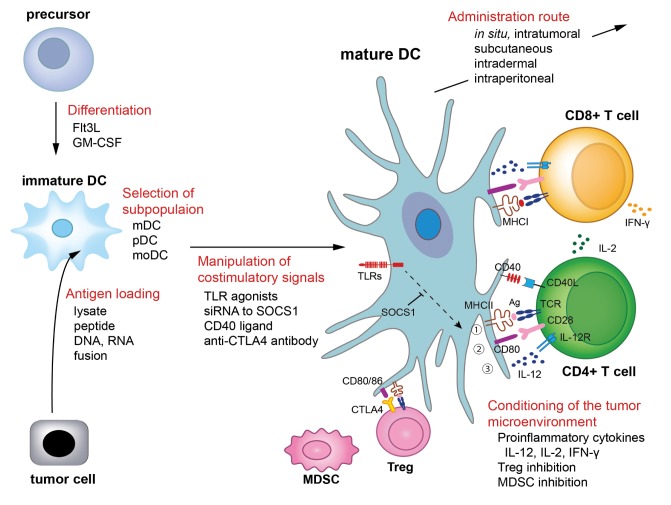
High grade glioma is a highly invasive brain tumor and recurrence is almost inevitable, even after radical resection of the tumor mass. Cytotoxic immune responses and immunological memory induced by immunotherapy might prevent tumor recurrence. Dendritic cells (DCs) are professional antigen-presenting cells of the innate immune system with the potential to generate robust antigen-specific T cell immune responses. DC-based immunotherapeutic strategies have been intensively studied in both preclinical and clinical settings. Although advances have been made in the experimental use of DCs, there are still considerable challenges that need to be addressed for clinical translation. In this review, we describe the variability of regimens currently available for DC-based immunotherapy and then review strategies to optimize DC therapeutic efficacy against glioma.
高级别胶质瘤是一种具有高度侵袭性的脑肿瘤,即使在肿瘤块根治性切除后,复发几乎也是不可避免的。免疫疗法诱导的细胞毒性免疫反应和免疫记忆可能会预防肿瘤复发。树突状细胞(DCs)是先天性免疫系统的专职抗原呈递细胞,具有产生强大的抗原特异性T细胞免疫反应的潜力。基于DC的免疫治疗策略已在临床前和临床环境中得到深入研究。尽管在DC的实验应用方面取得了进展,但在临床转化方面仍有相当多的挑战需要解决。在这篇综述中,我们描述了目前基于DC的免疫治疗可用方案的变异性,然后回顾了优化DC对胶质瘤治疗效果的策略。